

What Happens to My Job When I’m on Disability?

What Happens to My Job When I’m on Disability? Will I Lose My Position If I Claim?
Going on disability does not automatically protect my job. Disability pay replaces part of my paycheck. Job protection comes from different laws, like the FMLA and the ADA, and those laws have limits.
It’s easy for me to think a disability check means my job is safe until I get better. It doesn’t work that way. So in this guide, I walk through what really happens to my job when I’m on disability, in plain words.
The short answer: what happens to my job when I’m on disability?
Here is what I need to know up front:
- My disability check and my job are separate. One pays me. The other is about whether my boss must hold my spot.
- The FMLA can hold my job for up to 12 weeks a year, if I qualify.
- The ADA can give me extra help, like more time off or changes to my job, if my employer has 15 or more workers.
- Some states add more protection on top of the federal rules.
- I can be let go while on disability in some cases. But I can’t be fired because of my disability or because I took protected leave.
- Social Security disability is different. It covers long-term conditions and has its own rules about working.
One note before I go on. This guide covers rules in the United States. It is general information, not legal advice. Laws differ by state, so I check with my HR office or an employment lawyer about my own case.
What kind of disability am I on?
“On disability” can mean five different things. Each one has its own rules for my pay and my job. So the first thing I do is figure out which one I have.
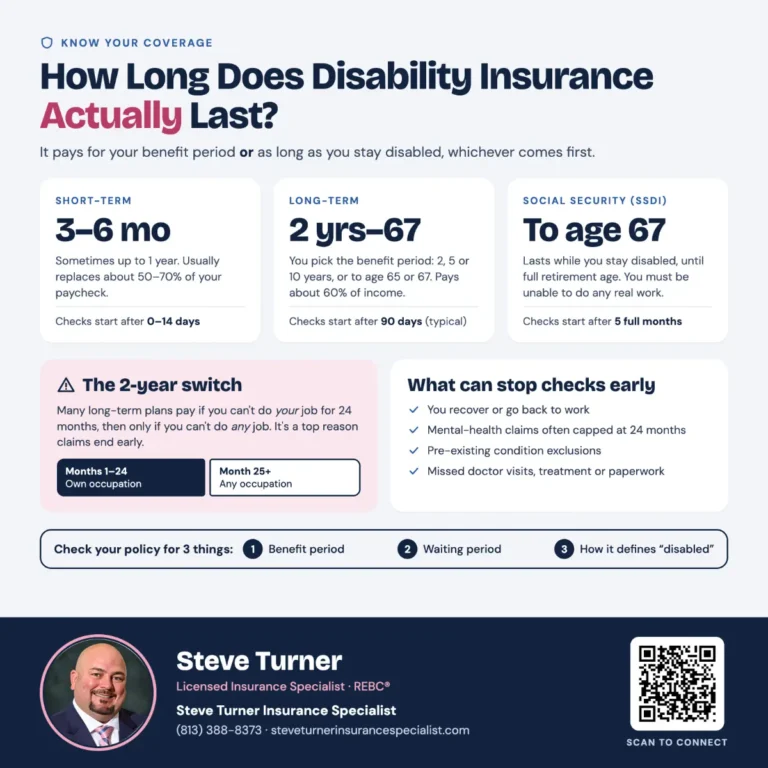
- Short-term disability (STD). This is insurance, often through my job. It pays part of my wages for a few weeks or months while I heal.
- Long-term disability (LTD). This is also insurance. It starts when short-term pay ends, and it can last for years.
- State disability or paid medical leave. Some states run their own programs. As of 2026, 14 states and Washington, D.C. have passed paid family and medical leave laws. A few of those programs still don’t pay benefits.
- Workers’ compensation. This covers me if I get hurt or sick because of my job.
- Social Security disability (SSDI or SSI). This federal program helps people whose condition keeps them from working for at least a year.
Here is how they compare:
| Type | Who pays me | How long it can last | Does it protect my job by itself? |
|---|---|---|---|
| Short-term disability | Insurance company or my employer | Weeks to months | No |
| Long-term disability | Insurance company | Years | No |
| State program | The state | Set by each state | Sometimes |
| Workers’ comp | My employer’s insurance | Until I heal or settle | No, but most states don’t let my boss punish me for filing |
| SSDI or SSI | Social Security | As long as I qualify | No |
The last column is the big one. Most of these programs pay me. Only a few of them tell my employer to hold my job.
Does disability pay protect my job?
No. Disability pay by itself does not protect my job. This is the part that trips up most people, so I’ll say it plainly.
A disability plan is a promise of money. It says, “If you can’t work, we will pay you part of your wages.” It does not say, “Your employer must keep you.”
That means two things can be true at once:
- I can be approved for disability pay and still lose my job.
- I can lose my job and, under many plans, still keep getting disability pay. My claim has to have started while I was covered, and I have to keep meeting the plan’s rules.
So I ask two different questions, and I ask them to different people.
Question 1: Will I get paid? I ask the insurance company, my state program, or Social Security.
Question 2: Is my job safe? I ask my HR office. The answer depends on job-protection laws, not on my disability check.
What laws protect my job while I’m on disability?
Three kinds of laws do most of the work: the FMLA, the ADA, and state laws. I may be covered by one, by all three, or by none.
1. The Family and Medical Leave Act (FMLA)
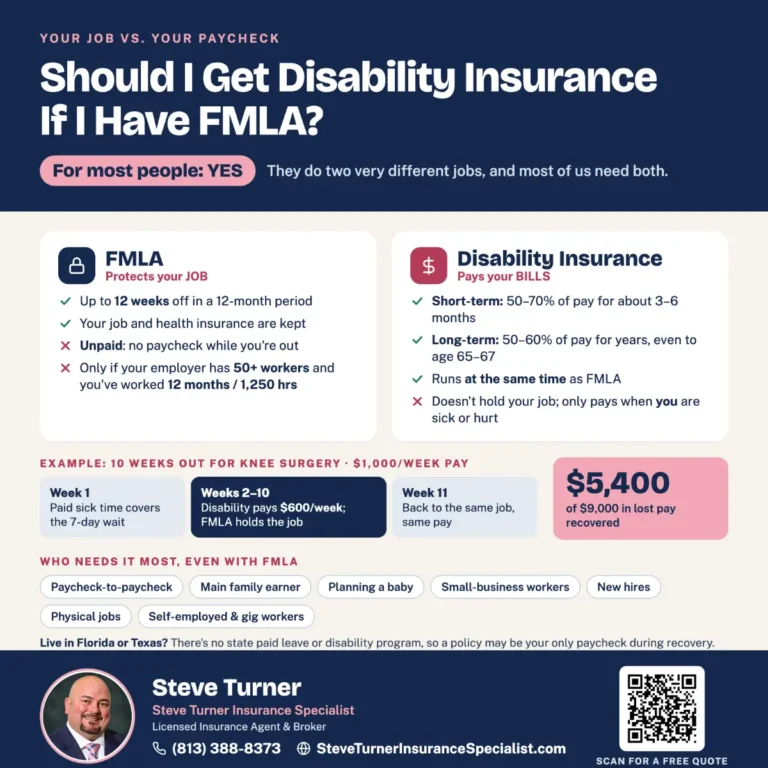
The FMLA is a federal law. It gives me up to 12 weeks of unpaid leave in 12 months for a serious health condition. My employer must hold my job during that time.
I qualify if all three of these are true:
- I have worked for my employer for at least 12 months.
- I worked at least 1,250 hours in the last 12 months. That is about 24 hours a week.
- My employer has 50 or more workers within 75 miles of my workplace.
Here is what the FMLA gives me:
- My job back. I return to the same job or one that is nearly the same, with the same pay and benefits.
- My health insurance. My employer keeps my group health plan going on the same terms.
- Flexible time. I can take leave all at once, or in small pieces when my health calls for it.
What it does not give me is pay. FMLA leave is unpaid. That is why many people use FMLA and short-term disability together. One protects the job. The other helps pay the bills.
2. The Americans with Disabilities Act (ADA)
The ADA covers employers with 15 or more workers. It says my employer can’t treat me worse because of a disability. It also says my employer must give me a “reasonable accommodation.” That means a change that helps me do my job.
Extra unpaid leave can be an accommodation. So even when my 12 FMLA weeks are gone, or I never had FMLA at all, I can ask for more time. My employer has to consider it unless it would cause “undue hardship.” That means too much trouble or cost for the business.
There is a limit. I need to give a return date, or at least a good guess; if I can’t say when or if I’ll come back, my employer doesn’t have to keep waiting.
3. State and local laws
Many states go further than the federal rules. Some cover smaller employers. Some give more weeks. Some state paid leave programs protect my job, and some only pay me. I check my own state’s labor department website to find out.
Can I be fired while I’m on disability?
Yes, I can be fired while on disability, but not for the wrong reason. The reason is what matters.
Most jobs in the U.S. are “at-will.” That means my employer can let me go for almost any reason that isn’t illegal. Being on disability does not switch that off.
Reasons that are usually illegal:
- Firing me because I have a disability.
- Firing me because I asked for or took FMLA leave.
- Firing me because I asked for an accommodation.
- Firing me because I filed a workers’ comp claim.
- Counting my protected leave days against me in a review or an attendance policy.
Reasons that can be legal:
- A layoff that would have hit my job even if I had been at work.
- Poor work or rule violations before my leave, if my employer can show it.
- My protected leave ran out, I can’t come back, and more leave would be an undue hardship.
- I can’t do the main duties of my job, even with reasonable changes.
- I work for a small employer that isn’t covered by the FMLA or ADA, and my state adds no extra rules.
Timing can be a clue. If I had good reviews and got fired right after asking for leave, that looks suspicious. So I write down dates, save emails, and keep copies of my reviews.
What do I do if I think I was fired unfairly?
- For FMLA problems, I can file a complaint with the U.S. Department of Labor’s Wage and Hour Division at 1-866-487-9243.
- For ADA problems, I can file a charge with the Equal Employment Opportunity Commission (EEOC) at 1-800-669-4000.
- If I’m not sure about something, I can talk to an employment lawyer. Some offer a free first meeting.
There are deadlines. An EEOC charge is usually due within 180 days, or 300 days in many states. So I don’t wait.
What happens to my health insurance and other benefits?
My benefits depend on what kind of leave I’m on and what my employer’s plan says. Here is what happens to each one.
Health insurance
- During FMLA leave: My employer must keep my group health plan active, as if I were working. I still owe my share of the cost. Since I may not have a paycheck, I might have to mail a check or pay online.
- After FMLA ends: It depends on my employer’s policy. Some keep coverage going during disability leave. Others stop it.
- If I lose coverage: I can usually buy it through COBRA if my employer has 20 or more workers. COBRA lets me keep the same plan, usually for up to 18 months. But I may pay the full price, up to 102% of what the plan costs. I get 60 days to sign up.
- Other choices: Losing job-based coverage lets me sign up for a Marketplace plan outside the normal sign-up window. If my income is low, I may also qualify for Medicaid.
Paid time off (PTO)
My employer may have me use my sick days or vacation days during leave. I may also stop earning new PTO while I’m out. My handbook has the rule.
Retirement plan
The money in my 401(k) stays mine. But if I’m not getting a paycheck from my employer, there may be nothing to take savings from. That can also mean no employer match for a while.
Here is a tip that saves a lot of pain. I ask HR, “Which benefits keep going, for how long, and what do I owe each month?” Then I get the answer in writing.
What happens when my leave runs out?
When my protected leave ends, my job is no longer held for me by default. But that doesn’t mean I’m out of options. This is the point where many people lose their jobs, so I plan for it early.
Here is a common timeline. Mine may look different, since every plan has its own dates.
- Weeks 1 to 12: I’m on FMLA leave. My job is protected. Short-term disability pays part of my wages.
- Week 13 and after: My FMLA is used up. Short-term disability may keep paying, but the job protection is gone unless another law or policy applies.
- Around month 3 to 6: Short-term disability often ends. Long-term disability may begin.
- After that: I may get long-term disability pay for a long time, even if I no longer work for my employer.
Before my leave ends, I have four choices:
- Go back to work, with or without changes to my job.
- Ask for more leave under the ADA. I give my employer a doctor’s note with a clear return date. My FMLA running out is not, by itself, enough reason to say no.
- Ask about my employer’s own leave policy. Some employers offer extra personal or medical leave.
- Ask to move to an open job I can do if I can’t do my old one.
Some employers have a rule like “anyone gone more than six months is let go.” A rule like that is allowed. But my employer may have to make an exception as a reasonable accommodation, unless it would cause undue hardship.
The most important thing I do is speak up before my last day of leave. If I say nothing and don’t show up, my employer may treat that as quitting.
What happens when I go back to work after disability?
When I’m ready to return, I may need a doctor’s note, and I can ask for changes that help me do my job. Here is how it goes.
- I get a release from my doctor. My employer can ask for a note that says I’m able to work. The note may list limits, like “no lifting over 20 pounds.”
- I tell HR about any limits. My employer can’t make me wait until I’m “100% healed” if I can do my job with reasonable changes.
- We talk it through. The law calls this the “interactive process.” It just means my employer and I go back and forth to find a fix that works.
Changes I can ask for include:
- A part-time or shorter schedule for a while
- Extra breaks
- Working from home some days
- A different chair, desk, or tools
- Moving small tasks I can’t do to someone else
- Time off for doctor visits or therapy
- A move to an open job I’m qualified for
My employer does not have to say yes to everything. It can offer a different change that also works. And it doesn’t have to remove the main duties of my job, give me a promotion, or approve a change that causes undue hardship.
Can I go back part-time and still get disability pay?
Often, yes. Many disability plans have a “partial” or “return-to-work” benefit. It pays some money while I work fewer hours. I call my insurance company before I start. That way I don’t get overpaid and have to pay money back.
What if I’m on Social Security disability (SSDI)?
SSDI does not protect my job at all. But it does let me try working again without losing my check right away.
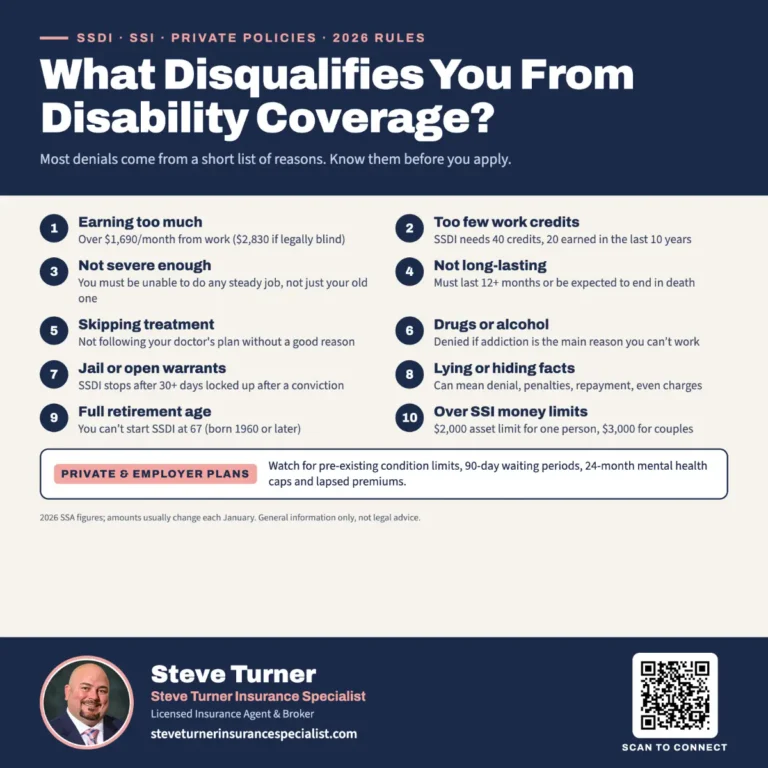
SSDI is for long-term conditions. To qualify, my condition has to keep me from working for at least 12 months, or be expected to. By the time I’m approved, I may have already left my job. So the bigger question for most people on SSDI is, “Can I work again, and what happens to my check?”
Here are the 2026 rules I need to know:
| Rule | What it means for me | 2026 number |
|---|---|---|
| Trial Work Period | I can test working for 9 months and keep my full check, no matter how much I earn | A month counts if I earn over $1,210 |
| Extended Period of Eligibility | After the trial, I get my check in any month my pay is under the limit | 36 months |
| Earnings limit (called SGA) | Earning more than this can stop my check | $1,690 a month, or $2,830 if I’m blind |
| Expedited Reinstatement | If my check stopped because of work and I have to quit again, I can ask to restart it without a brand-new claim | Within 5 years |
| Medicare | My Medicare can keep going after I go back to work | At least 93 months after the trial ends |
A few more things I keep in mind:
- The 9 trial months don’t have to be consecutive. They are counted over a rolling 5-year window.
- I must report my work to Social Security. If I don’t, I could be overpaid and have to pay it back.
- The Ticket to Work program is free. It offers job training and help finding work to people ages 18 to 64 who get disability benefits.
- SSI has different rules. SSI is based on low income, not work history. It has no trial work period.
How do I protect my job while I’m on disability?
I protect my job by knowing my rights, putting things in writing, and staying in touch. Here are the 10 steps I take.
- Read my employee handbook. I look for the leave, disability, and attendance rules.
- Ask HR if I qualify for FMLA. I ask for the answer in writing.
- Give notice as early as I can. For planned care, like surgery, FMLA usually requires 30 days’ notice.
- Turn in my doctor’s forms on time. Late paperwork can delay or deny my leave.
- Keep copies of everything. That means forms, emails, letters, and doctor’s notes.
- Write down who I talked to and when. A simple notebook works.
- Stay in touch during leave. I answer HR calls and letters, and I update them on my return date.
- Know my end date. I mark the day my protected leave runs out on my calendar.
- Ask for more time or job changes before that date. I do it in writing, with a doctor’s note.
- Stay within my doctor’s limits. If my claim says I can’t lift, I don’t post photos of myself moving furniture. That could cost me my pay and my job.
One more thing. I don’t have to tell my boss my whole medical history. My employer can ask for proof that I need leave. But my medical records must be kept private and apart from my regular work file.
Frequently asked questions
Can my employer replace me while I’m on disability?
My employer can hire someone to cover my work while I’m out. But if I’m on FMLA leave, I still get my job, or one nearly the same, when I return. Once my protected leave ends, my employer may be able to fill my job for good.
How long does my employer have to hold my job?
Under the FMLA, up to 12 weeks in 12 months. Under the ADA, there is no set number. It depends on what is reasonable for my employer. Some states add more time.
Do short-term disability and FMLA run at the same time?
Usually, yes. My employer can count my disability leave as FMLA leave. So I don’t get 12 fresh weeks of FMLA after my disability pay ends.
Can I look for another job while I’m on disability?
Yes. But if I start a new job, I tell my insurance company or Social Security right away. New work can change or stop my payments.
What if my employer has fewer than 15 workers?
Then the FMLA and ADA likely don’t cover me. I check my state and city laws, which often cover smaller employers. I also check my handbook and any contract I signed.
The bottom line
Being on disability is hard enough without worrying about my job. So I keep three things straight:
- A disability check pays me. It does not hold my job.
- The FMLA, the ADA, and my state’s laws protect my job, and each has limits.
- I speak up early, in writing, before my leave ends.
If something feels wrong, I call my state labor office, the Department of Labor, the EEOC, or an employment lawyer.
Why choose Steve Turner Insurance Specialist?
Because I’m an “Insurance Specialist.” An “insurance specialist” is a broad term that includes insurance agents and insurance brokers, but the key difference is who the agent represents versus who the broker represents.
An “insurance agent” works directly for an insurance company and sells its specific policies to clients.
An “insurance broker” acts as an independent intermediary, comparing policies from multiple companies to find the best fit for their client’s needs, essentially representing the client rather than the insurance company.
I am both a licensed Insurance Agent and a licensed Insurance Broker.
My number one goal in life is to help people and ensure, without a shadow of a doubt, that you and your family are secure and protected. I will always be by your side, helping you mitigate risk by providing the industry’s best and most affordable insurance solutions.
I will find insurance plans for the entire family to help cover whatever life throws at you. I can help you save on severe medical emergencies, find a health insurance plan with low- or no-cost doctor visits and affordable prescription medications, and protect your family in the event of an unexpected accident or illness.
Best of all, it doesn’t cost you anything extra to use an experienced Insurance Agent and Broker like me to help you find the Insurance Plans that fit your individual, family, or business needs.
The companies that sell the insurance plans “you choose“ pay me – you don’t pay me. Calling any big insurance company directly won’t get you a lower price, as they will forward your call to the next available insurance agent on their list. You won’t have had any opportunity to learn about the insurance agent you’re speaking with in advance, understand their qualifications or experience level, or make an informed choice about who you want to work with.
Tap the Contact Me text or icon and get in touch by phone or email, or schedule a “No Obligation” chat through my calendar. I look forward to speaking with you!
OUR CLIENT REVIEWS


CONTACT STEVE TURNER INSURANCE AGENT & BROKER
I’m here to take your calls and emails and answer your questions 7 Days a week from 7:00 a.m. to 8:00 p.m., excluding posted holidays.
Steve Turner is a licensed agent and broker and a long-standing member of the National Association of Benefits and Insurance Professionals®. Steve holds the prestigious Registered Employee Benefits Consultant® designation. NABIP® is the preeminent organization for health insurance and employee benefits professionals and works diligently to ensure all Americans have access to high-quality, affordable healthcare and related services.
Steve Turner is a licensed agent appointed by Florida Blue.
Richard Steven Turner’s official Florida state insurance license number (operating as Steve Turner Insurance Specialist) is W333468
EMAIL ME: 24×7
OFFICE LOCATION
Website: steveturnerinsurancespecialist.com
Email: [email protected]
Phone and Text: +1-813-388-8373
Business Hours:
Monday: 7:00 a.m. – 8:00 p.m.
Tuesday: 7:00 a.m. – 8:00 p.m.
Wednesday: 7:00 a.m. – 8:00 p.m.
Thursday: 7:00 a.m. – 8:00 p.m.
Friday: 7:00 a.m. – 8:00 p.m.
Saturday: 7:00 a.m. – 8:00 p.m.
Sunday: 7:00 a.m. – 8:00 p.m.
DISABILITY INSURANCE POSTS
INSURANCE OFFERINGS
What Happens to My Job When I’m on Disability?
HEALTH INSURANCE

MEDICARE ADVANTAGE

MEDICARE SUPPLEMENT

PRESCRIPTION DRUGS

LIFE INSURANCE

DISABILITY INSURANCE

DENTAL INSURANCE

GROUP HEALTH INSURANCE

ACCIDENT INSURANCE

LONG TERM CARE INSURANCE

MEDICAID INSURANCE

MEDICARE INSURANCE

MEDICARE PART A INSURANCE

MEDICARE PART B INSURANCE

MEDICARE PART C INSURANCE

MEDICARE PART D INSURANCE

MEDICARE PLAN G INSURANCE

MEDICARE PLAN N INSURANCE

SERVICE AREA
MEDICARE STATEMENT
We do not offer every plan available in your area. Currently, we represent 7 organizations that offer 70 products in your area. Please contact Medicare.gov or 1-800-MEDICARE for information on all your options.
Steve Turner is a licensed insurance agent and is not connected with or endorsed by the United States Government or the Federal Medicare Program. The Medicare Annual Enrollment Period is October 15 to December 7.
There’s no one-size-fits-all answer. Carefully consider your health status, expected medical needs, prescription drugs, budget, preferred doctors and hospitals, and how comfortable you are with network rules. During the Annual Enrollment Period, you can research the plans available in your Florida county using the Medicare Plan Finder at Medicare.gov, compare costs and benefits, and get free, unbiased counseling from Florida’s SHINE (Serving Health Insurance Needs of Elders) program at floridashine.org or 1-800-963-5337. You can also call 1-800-MEDICARE (1-800-633-4227; TTY 1-877-486-2048), 24 hours a day, 7 days a week.