

Why Do Doctors Prefer Medicare Supplement Plans in 2027?

Why Do Doctors Prefer Medicare Supplement Plans in 2027? Understanding Provider Network and Acceptance Advantages
Many doctors prefer Medicare Supplement plans because they are simple, they pay on time, and they rarely get in the way of care. That is the short answer. In this article, I’ll walk you through the long answer in plain words.
I first got curious about this question when I kept hearing the same thing over and over. A friend’s doctor told her, “If you can, keep Original Medicare and get a supplement.” Then a nurse at my own checkup said almost the same words. I wanted to know why so many people in white coats seemed to agree.
So I dug in. I read the rules, looked at the 2027 numbers, and asked a lot of questions. Here is what I learned, written the way I wish someone had explained it to me.
This matters right now. Medicare Open Enrollment runs from October 15 to December 7 each year. The choice you make now sets up your coverage for 2027. If you are turning 65 soon, your choice may matter even more, as you’ll see below.
One quick note before we start: I’m not your doctor, lawyer, or licensed agent. This guide helps you ask better questions, not a final answer for your health or money.
What Is a Medicare Supplement Plan?
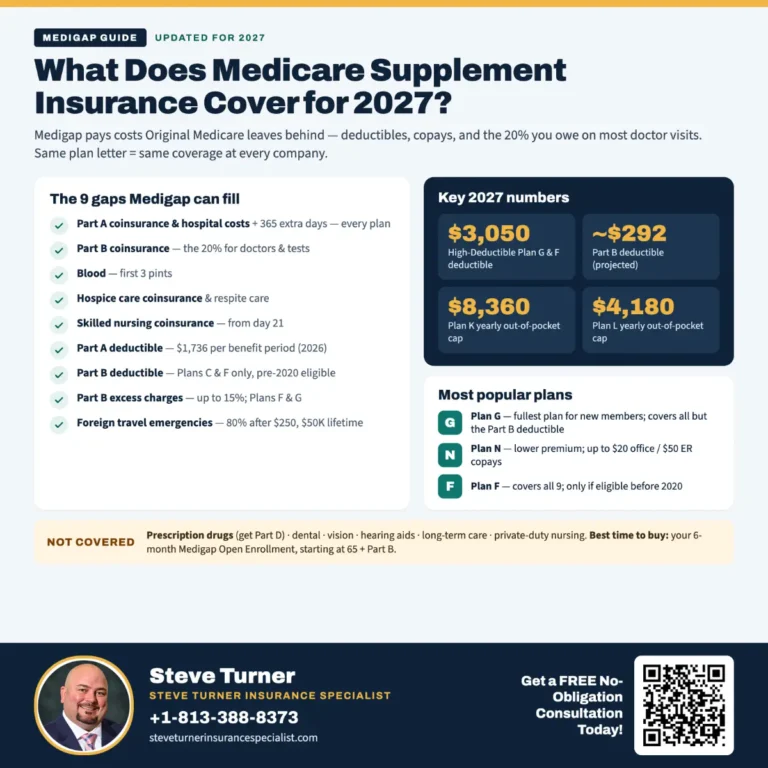
A Medicare Supplement plan helps pay the bills that Original Medicare leaves behind. People also call it “Medigap” because it fills the gaps.
Here is how I like to picture it. Original Medicare (Part A and Part B) is like a bucket with holes. It pays a big part of your hospital and doctor bills, but not all of it. For most doctor visits, Part B pays about 80%. You pay the other 20%, and there is no top limit on that 20%. A Medigap plan plugs most of those holes.
Here are the basic facts I wish I had known sooner:
- It works with Original Medicare. You must have Part A and Part B first. The supplement sits on top.
- Private companies sell it. But the government sets the rules for what each plan covers.
- Plans have letters. You’ll see Plan G, Plan N, and others. A Plan G from one company covers the same things as a Plan G from another company. Only the price and services differ.
- It does not cover drugs. You need a separate Part D plan for your pills.
- It does not add extras. Dental, vision, and hearing are usually not included.
- There is no network. You can see any doctor in the U.S. who takes Medicare.
That last point matters. Keep it in mind, because it is the main reason doctors like these plans so much.
How is this different from Medicare Advantage?
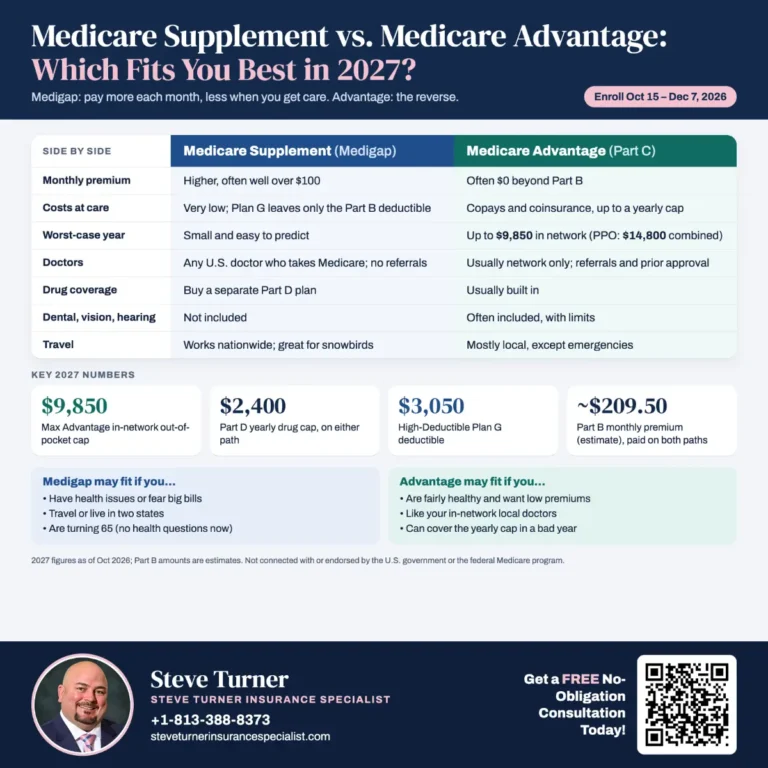
Medicare Advantage (Part C) is a whole different road. Instead of Original Medicare plus a supplement, a private company runs your Medicare for you. These plans often have low or $0 premiums and fun extras like gym memberships. But they usually come with networks, copays, and rules about getting approval first.
So when people ask, “Why do doctors prefer Medicare Supplement plans?” what they really mean is: Why do doctors prefer patients with Original Medicare plus a supplement instead of a Medicare Advantage plan? That’s the question I’ll answer next.
8 Reasons Doctors Prefer Medicare Supplement Plans in 2027
When I lined up everything I learned, the reasons fell into eight simple groups. Not every doctor feels the same way, of course. But these are the ones I heard and read about again and again.
1. No prior authorization fights (for most care)
Prior authorization means the doctor has to ask the insurance company for permission before giving you a test, treatment, or surgery. Doctors really dislike it. It takes time, piles up paperwork, and can delay your care.
Medicare Advantage plans use it a lot. Original Medicare uses it for only a short list of services. That means when you have a supplement, your doctor can usually order what you need and get started.
2. The doctor gets paid without a fight
With Original Medicare plus a supplement, payment is pretty simple:
- The doctor sends the bill to Medicare.
- Medicare pays its share.
- The claim often passes straight over to your supplement company, which pays most or all of the rest.
The supplement company can’t second-guess Medicare. If Medicare approves the service, the Medigap plan pays its part. Doctors love that, because it means fewer denied claims and fewer phone calls.
3. Less paperwork for the office staff
Every Medicare Advantage company has its own forms, portals, and rules. A busy clinic may deal with a dozen different plans. With Original Medicare, there is one main set of rules. That saves the office hours each week, and that time can go back to patients.
4. No networks to worry about
With a supplement, you can see any doctor or hospital in the country that accepts Medicare. The doctor never has to say, “Sorry, you’re not in my network.” They also don’t have to worry about whether the specialist they want to send you to is “in-plan.”
5. Referrals are easy
Many Medicare Advantage HMO plans require a referral before you see a specialist. Original Medicare does not. Your doctor can say, “Go see a heart doctor,” and you can book any cardiologist who takes Medicare. No extra forms.
6. Patients don’t skip care because of cost
Doctors want you to show up for your follow-up visits. With a good supplement like Plan G, your costs are low and predictable. You are less likely to put off a scan or skip a visit because of a surprise bill. That helps doctors keep you healthy.
7. Fewer surprise bills for the patient
No doctor enjoys telling a patient that a bill will be large. With most Medigap plans, the doctor can feel confident that your share is small. That makes the conversation easier and builds trust.
8. Doctors can focus on medicine
This is the big one under all the others. Most doctors went to school to treat people, not to argue with insurance companies. When a plan stays out of the way, doctors can do the job they love.
Medigap vs. Medicare Advantage: What Doctors See
From the doctor’s side of the desk, the two choices look very different. Here is a simple side-by-side view I put together.
| What the doctor deals with | Original Medicare + Medigap | Medicare Advantage |
|---|---|---|
| Networks | None. Any doctor who takes Medicare. | Usually yes (HMO or PPO). |
| Referrals to specialists | Not needed | Often needed in HMOs |
| Prior authorization | Rare, for a short list of services | Common for tests, scans, and procedures |
| Who decides payment | Medicare’s rules | The private plan’s rules |
| Rules to learn | One main set | A different set for each plan |
| Claim denials | Less common | More common |
The network gap is bigger than I thought
This part surprised me. A KFF study looked at Medicare Advantage networks in 2022. It found that, on average, people in those plans could reach only about 48% of the local doctors that people on Original Medicare could see.
In the narrowest plans, it was only about one-third. That means two out of every three local doctors were out of network for those patients.
Think about what that means for a doctor. If you switch to a plan they are not in, they may have to stop seeing you. Many doctors hate that. They want to keep caring for the patients they know.
Is Medicare Advantage bad?
No, I don’t think so. Lots of people are happy with their Medicare Advantage plans. They like the low premiums, the extra benefits, and the yearly cap on what they pay. It can be a good fit, especially if you are healthy and your doctors are in the network.
But if you ask “Which one makes a doctor’s job easier?”, the answer is almost always Original Medicare with a supplement.
Prior Authorization in 2027: Why It Still Matters
Prior authorization is the number one reason doctors give for liking supplement plans. So I looked at the latest numbers.
What the numbers show
KFF studied Medicare Advantage prior authorization data for 2024. Here is what stood out to me:
- Nearly 53 million prior authorization requests went to Medicare Advantage plans in 2024.
- About 4.1 million of those requests (7.7%) were denied in full or in part.
- Only about 1 in 9 denials (11.5%) was ever appealed.
- About 4 out of 5 appeals (80.7%) won. The first “no” was fully or partly reversed.
That last number tells a big story. Many denials get flipped when someone fights them. But most people never fight. And every fight takes time from your doctor’s office.
Compare that to Original Medicare. According to Fierce Healthcare’s report on the KFF study, only about 625,000 requests were sent in Original Medicare that same year. That’s because only a small list of services needs approval there.
What changes in 2027?
A federal rule takes full effect in 2027. Under it, Medicare Advantage plans must set up an electronic system for prior authorization requests. They already must respond to urgent requests within 72 hours and regular ones within 7 days. They also have to give a clear reason when they say no.
That should help. But it doesn’t remove prior authorization. It just makes it faster and more open. Doctors will still have to ask permission for many services.
A fair warning about Original Medicare
I want to be honest here. Original Medicare still requires prior authorization for some services. In 2026, Medicare started a test program called WISeR. It adds prior authorization for a short list of services in six states: Arizona, New Jersey, Ohio, Oklahoma, Texas, and Washington. It will run through 2031.
If you live in one of those states, ask your doctor if any care you need is on the list. Still, the WISeR list is short compared to what most Medicare Advantage plans review.
Which Medicare Supplement Plans Do Doctors Like Best?
Doctors don’t usually tell you which letter to pick. But when they talk about supplements, three plans come up the most.
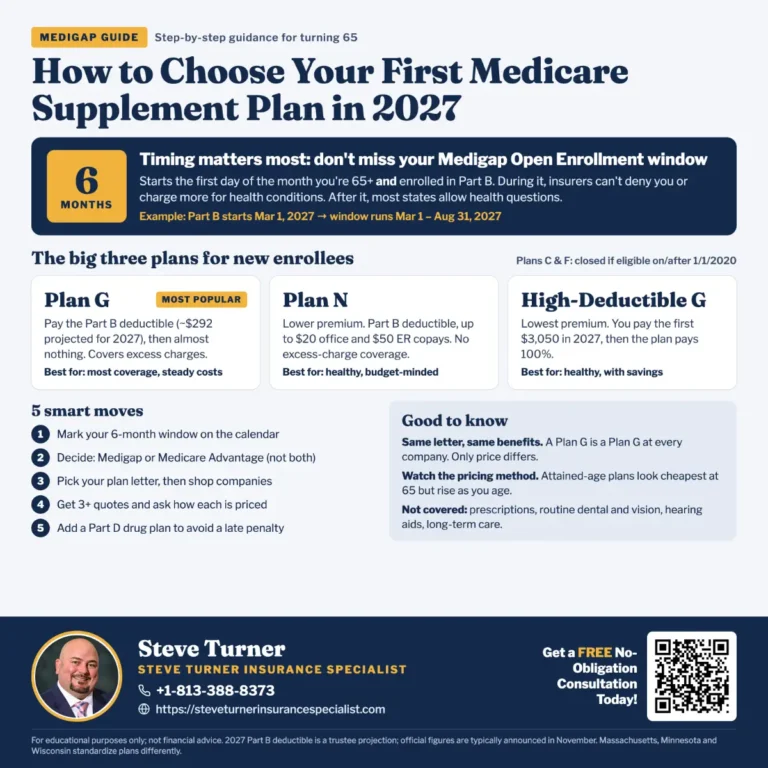
Plan G: the crowd favorite
Plan G is the most popular plan for people new to Medicare. After you pay the yearly Part B deductible, Plan G pays almost everything else Medicare approves.
What Plan G covers:
- The Part A hospital deductible
- Your 20% share of doctor bills after the Part B deductible
- “Excess charges” (I’ll explain those in a second)
- Extra hospital days after Medicare runs out
- Some emergency care when you travel outside the U.S.
What are excess charges? Some doctors don’t accept Medicare’s full price. They may charge up to 15% more. Plan G pays that extra for you. Plan N does not.
Plan N: lower premium, small copays
Plan N costs less each month than Plan G. In return, you pay small copays. You may pay up to $20 for some office visits and up to $50 for some ER visits. It also doesn’t cover excess charges.
Plan N can be a smart pick if you are fairly healthy and your doctors accept Medicare’s full price.
High-Deductible Plan G: lowest premium, more risk
This plan has the same benefits as Plan G, but you pay more before it starts. CMS says the 2027 deductible is $3,050, up from $2,950 in 2026. The monthly premium is much lower.
This can work if you rarely see the doctor and have savings to cover a bad year.
What about Plan F?
Plan F covers even more than Plan G, including the Part B deductible. But you can only buy it if you were eligible for Medicare before January 1, 2020. If you’re turning 65 now, Plan F is not an option for you.
Quick comparison
| Plan | Monthly premium | Your costs when you get care | Covers excess charges? |
|---|---|---|---|
| Plan G | Higher | Just the Part B deductible | Yes |
| Plan N | Medium | Part B deductible + small copays | No |
| High-Deductible G | Lowest | Up to $3,050 in 2027 before it pays | Yes, after deductible |
What Will It Cost in 2027? (And the Downsides)
Doctors may love supplement plans, but you pay for them. So let’s talk money.
The 2027 numbers so far
Medicare usually shares the final Part B numbers in November. Until then, here is what we know as of mid-October 2026:
- Part B premium: Medicare’s trustees project about $209.50 a month for 2027, up from $202.90 in 2026. Some private experts guess it could land higher.
- Part B deductible: Projected to rise from $283 to about $292.
- Part D drug deductible: Already set at $700 for 2027, up from $615.
- High-Deductible Plan G deductible: Set at $3,050 for 2027.
On top of all that, you pay a monthly premium for your supplement. That price depends on where you live, your age, the company, and the plan letter. The best way to know is to get real quotes for your ZIP code.
The downsides I want you to know
I promised to be fair, so here are the trade-offs:
- You pay a monthly premium. Medicare Advantage plans often cost $0 extra per month. A supplement does not.
- You need a separate drug plan. That’s another premium to budget for.
- No built-in extras. Dental, vision, and hearing usually cost extra.
- Switching later can be hard. This is the big one. Keep reading.
The timing trap
When you first get Part B at age 65 or older, you get a one-time, six-month window to buy any Medigap plan. During that time, companies can’t turn you down or charge more because of your health.
After that window closes, most states let companies ask health questions. If you have health problems, they could say no or charge you more. So if you pick Medicare Advantage now and want a supplement later, you might not be able to get one.
That’s why I think the first choice you make at 65 matters most. Some states have special rules that make switching easier, so check yours.
Who is a good fit for a supplement?
In my view, a Medigap plan makes the most sense if you:
- Want to keep the doctors you have now
- See specialists often, or expect to
- Travel a lot or live in two states during the year
- Hate paperwork and surprise bills
- Can afford a steady monthly premium
Frequently Asked Questions
Q: Do all doctors accept Medicare Supplement plans?
A: If a doctor accepts Medicare, they accept your supplement. There is no separate network. The supplement pays after Medicare does.
Q: Will my doctor make more money if I have a supplement?
A: Not really. Medicare sets the price for each service. The doctor likes the supplement because it’s easier and faster to get paid, not because the pay is much higher.
Q: Can a doctor refuse to see me if I have Medicare Advantage?
A: Yes. If the doctor is not in your plan’s network, they may not see you, or you may pay more. With Original Medicare and a supplement, that is far less of a worry.
Q: Can I switch from Medicare Advantage to a supplement during Open Enrollment?
A: You can switch back to Original Medicare from October 15 to December 7. But in most states, the supplement company can still ask health questions. Apply for the supplement first, and only drop your Advantage plan once you’re approved.
Q: Is Plan G worth it in 2027?
A: For many people, yes. It gives you low, easy-to-predict costs. But it depends on your health, budget, and state. Compare quotes before you decide.
Q: Does a supplement cover prescription drugs?
A: No. You’ll need a separate Part D plan. The 2027 Part D deductible is $700.
Q: Where can I get free, unbiased help?
A: Every state has a free SHIP program (State Health Insurance Assistance Program). They give free Medicare counseling and don’t sell anything.
My Final Take
So, why do doctors prefer Medicare Supplement plans in 2027? After all my digging, it comes down to one word: simple.
With Original Medicare and a supplement, doctors don’t have to check networks, chase approvals, or fight denied claims nearly as often. They get paid on time. Their patients can afford their care. And they get to spend more time doing what they trained to do.
That doesn’t mean a supplement is right for everyone. It costs more each month, and you need a drug plan too. But if you want freedom to see any doctor and fewer headaches, it is worth a hard look, especially if you’re turning 65 and your six-month window is open.
My advice? Ask your own doctor what they think. Get quotes for your ZIP code. Talk to your free local SHIP counselor. Then choose what fits your health, your budget, and your peace of mind.
Why choose Steve Turner Insurance Specialist?
Because I’m an “Insurance Specialist.” An “insurance specialist” is a broad term that includes insurance agents and insurance brokers, but the key difference is who the agent represents versus who the broker represents.
An “insurance agent” works directly for an insurance company and sells its specific policies to clients.
An “insurance broker” acts as an independent intermediary, comparing policies from multiple companies to find the best fit for their client’s needs, essentially representing the client rather than the insurance company.
I am both a licensed Insurance Agent and a licensed Insurance Broker.
My number one goal in life is to help people and ensure, without a shadow of a doubt, that you and your family are secure and protected. I will always be by your side, helping you mitigate risk by providing the industry’s best and most affordable insurance solutions.
I will find insurance plans for the entire family to help cover whatever life throws at you. I can help you save on severe medical emergencies, find a health insurance plan with low- or no-cost doctor visits and affordable prescription medications, and protect your family in the event of an unexpected accident or illness.
Best of all, it doesn’t cost you anything extra to use an experienced Insurance Agent and Broker like me to help you find the Insurance Plans that fit your individual, family, or business needs.
The companies that sell the insurance plans “you choose“ pay me – you don’t pay me. Calling any big insurance company directly won’t get you a lower price, as they will forward your call to the next available insurance agent on their list. You won’t have had any opportunity to learn about the insurance agent you’re speaking with in advance, understand their qualifications or experience level, or make an informed choice about who you want to work with.
Tap the Contact Me text or icon and get in touch by phone or email, or schedule a “No Obligation” chat through my calendar. I look forward to speaking with you!
OUR CLIENT REVIEWS


CONTACT STEVE TURNER INSURANCE AGENT & BROKER
I’m here to take your calls and emails and answer your questions 7 Days a week from 7:00 a.m. to 8:00 p.m., excluding posted holidays.
Steve Turner is a licensed agent and broker and a longstanding member of the National Association of Benefits and Insurance Professionals®. Steve holds the prestigious Registered Employee Benefits Consultant® designation. NABIP® is the preeminent organization for health insurance and employee benefits professionals and works diligently to ensure all Americans have access to high-quality, affordable Healthcare and related services.
Steve Turner is a licensed agent appointed by Florida Blue.
EMAIL ME: 24×7
OFFICE LOCATION
Website: steveturnerinsurancespecialist.com
Email: [email protected]
Phone and Text: +1-813-388-8373
Business Hours:
Monday: 7 a.m. to 8 p.m.
Tuesday: 7 a.m. to 8 p.m.
Wednesday: 7 a.m. to 8 p.m.
Thursday: 7 a.m. to 8 p.m.
Friday: 7 a.m. to 8 p.m.
Saturday: 7 a.m. to 8 p.m.
Sunday: 7 a.m. to 8 p.m.
SOCIAL FOLLOW + SHARE
MEDICARE SUPPLEMENT POSTS
INSURANCE OFFERINGS
Why Do Doctors Prefer Medicare Supplement Plans in 2027?
HEALTH INSURANCE

MEDICARE ADVANTAGE

MEDICARE SUPPLEMENT

PRESCRIPTION DRUGS

LIFE INSURANCE

DISABILITY INSURANCE

DENTAL INSURANCE

GROUP HEALTH INSURANCE

ACCIDENT INSURANCE

LONG TERM CARE INSURANCE

MEDICAID INSURANCE

MEDICARE INSURANCE

MEDICARE PART A INSURANCE

MEDICARE PART B INSURANCE

MEDICARE PART C INSURANCE

MEDICARE PART D INSURANCE

MEDICARE PLAN G INSURANCE

MEDICARE PLAN N INSURANCE

SERVICE AREA
MEDICARE STATEMENT
The Medicare Annual Enrollment Period is October 15th to December 7th. Steve Turner is not connected with or endorsed by the United States Government or the Federal Medicare Program. Some plans may not be available in your area, and any information I provide is limited to those offered. Please contact Medicare.gov or 1-800-MEDICARE for information on all your options.
There’s no one-size-fits-all answer. Carefully evaluate your health status, anticipated medical needs, prescription drug usage, budget, preferred doctors and hospitals, and tolerance for network rules. During the Medicare Annual Enrollment Period (October 15th to December 7th), research the specific plans available in your Florida county using the Medicare Plan Finder on Medicare.gov, compare costs and benefits, and consider free, personalized counseling from Florida’s SHINE (Serving Health Insurance Needs of Elders) program.