

Accident Insurance Coverage
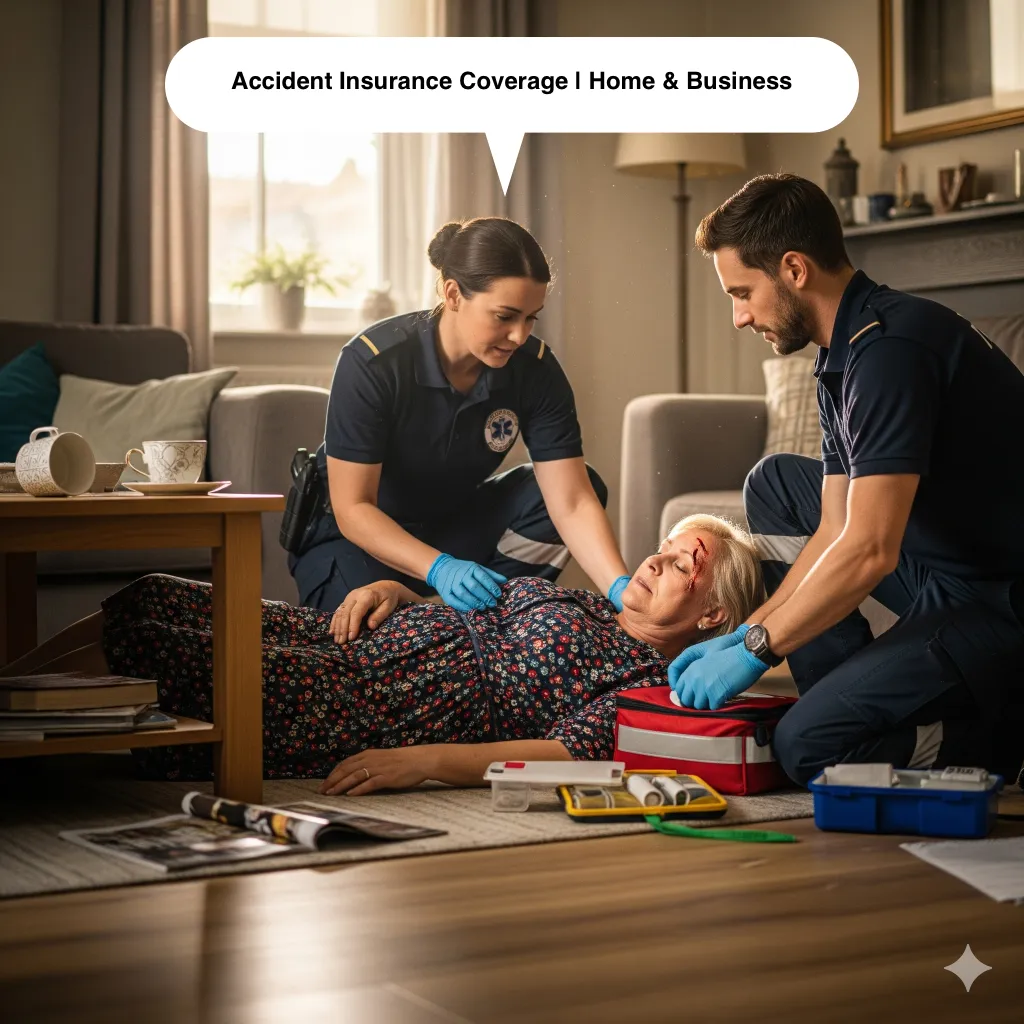
Accident Insurance Coverage
As an insurance agent and broker with many years of experience, one of the most common and important questions I help clients navigate is, “What exactly is accident insurance, and what does it cover?” It’s a product that often gets confused with health insurance, disability insurance, or life insurance, but it plays a unique and vital role in a well-rounded financial safety net. [Accident Insurance Coverage]
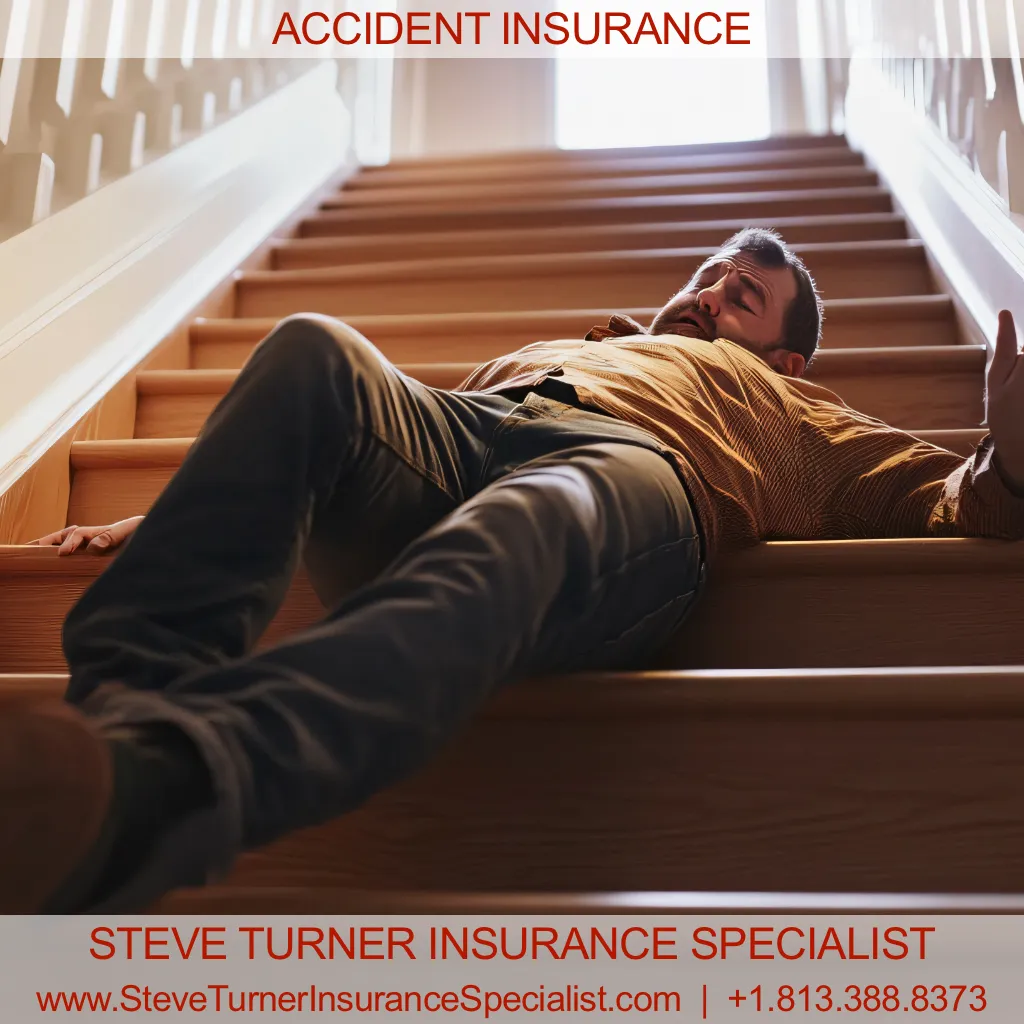
Think of your primary health insurance as your army—it’s there for the big battles against sickness, disease, and major medical needs. Accident insurance is your specialized medic. It’s not meant to replace your army, but to run onto the battlefield when a specific event—a sudden, unexpected, and unintentional accident—causes a physical injury. Its job is to patch immediate financial holes and provide cash to cover costs your “army” doesn’t cover.
This guide provides a comprehensive, expert-level understanding of what this valuable coverage entails, what it doesn’t cover, and how it applies to you and your business. [Accident Insurance Coverage]
How Accident Insurance Coverage Works: The Core Concept
Before we dive into what is and isn’t covered, it’s crucial to understand the basic mechanics of an accident policy. Unlike health insurance, which is a “reimbursement-style” plan that pays a percentage of your medical bills directly to doctors and hospitals, accident insurance is a defined-benefit or indemnity plan.
This is a critical distinction. It means the policy pays a fixed, predetermined cash benefit directly to you, the policyholder, for specific injuries and events listed in the policy. [Accident Insurance Coverage]
- Example: Your health insurance might cover 80% of a $1,500 emergency room bill, leaving you to pay the remaining $300. An accident insurance policy, in contrast, might have a benefit that states: “Emergency Room Visit: Pays $250.”
When you file a claim with the proper medical documentation, the insurance company sends you a $250 check. You can use that cash for anything you want—the $300 ER bill, your health insurance deductible, groceries, rent or mortgage, or lost wages from missing a day of work. That flexibility is its greatest strength. [Accident Insurance Coverage]
The policy is built around a Schedule of Benefits, a detailed menu of injuries and services, each with a specific dollar amount. The more severe the injury, the higher the cash payout. [Accident Insurance Coverage]
Part 1: Accident Insurance Coverage for a Person (Individual & Family Plans)
This is the most common type of accident insurance, purchased by individuals or offered to employees as a voluntary benefit. It’s designed to protect your personal finances from the shock of an unexpected injury. [Accident Insurance Coverage]
List of What IS Typically Covered by Personal Accident Insurance
Here is a detailed breakdown of the benefits you can expect to find in a robust personal accident insurance policy. Exact dollar amounts vary significantly based on the plan you choose. [Accident Insurance Coverage]
- Emergency Services & Initial Care
- Ambulance (Ground & Air): Provides a fixed benefit, such as $200 for a ground ambulance or $2,000 for an air ambulance, to cover the cost of emergency transportation from the accident scene.
- Emergency Room (ER) Visit: A lump-sum payment, typically between $100 and $500, simply for being treated in an ER as a result of a covered accident.
- Urgent Care Visit: If the injury isn’t severe enough for an ER, many policies offer a smaller benefit (e.g., $75) for treatment at an urgent care facility.
- Initial Physician’s Visit: A benefit for the first doctor’s appointment to treat the injury.
- Diagnostic Exams (X-rays, CT Scans, MRIs): Pays a set amount for specific diagnostic tests needed to determine the extent of your injuries. An X-ray might pay $50, while an MRI could pay $400.
- Hospitalization & Surgery
- Hospital Admission: A significant one-time benefit, often $1,000 to $2,500, paid when you are admitted to a hospital as an inpatient due to an accident.
- Daily Hospital Confinement: An additional per-day benefit, such as $200 per day, for each day you are confined to the hospital, often for up to a year.
- Intensive Care Unit (ICU) Confinement: A higher per-day benefit, often double the regular confinement benefit (e.g., $400 per day), for time spent in the ICU.
- Surgical Procedures: The policy outlines specific benefits for various types of surgery. An outpatient knee surgery might pay $1,000, while a major open abdominal surgery could pay $4,000. Benefits are often tiered by complexity.
- Specific Injuries (The “Schedule of Benefits”)
- Fractures: This is a cornerstone of accident insurance. The plan pays a fixed benefit based on the specific bone and whether the fracture is open (compound) or closed (simple). For example, a broken finger might pay $200, a broken collarbone $800, and a complex hip fracture could pay up to $6,000. [Accident Insurance Coverage]
- Dislocations: Like fractures, the policy pays a set amount for reducing a dislocated joint. A dislocated shoulder might pay $600, while a dislocated kneecap could pay $1,500. [Accident Insurance Coverage]
- Burns: Benefits are typically paid based on the percentage of body area burned and the severity (2nd or 3rd degree). A moderate burn might pay $1,000, while a severe, widespread burn could pay $15,000 or more. [Accident Insurance Coverage]
- Concussions: A lump-sum benefit for a medically diagnosed concussion, often around $500.
- Lacerations (Cuts): Pays a benefit based on the length of the cut and whether or not it requires stitches. A small cut that needs stitches might pay $100, while a larger one could pay $500. [Accident Insurance Coverage]
- Eye Injuries: Pays a benefit for removing a foreign object from the eye or treating a chemical burn.
- Dental Injuries: Pays a benefit for injuries to sound, natural teeth, such as a broken or knocked-out tooth in an accident. This covers accidental injury, not cavities or wisdom tooth removal. [Accident Insurance Coverage]
- Torn Knee Cartilage (Meniscus): Covers surgical repair of a torn meniscus.
- Ruptured Achilles Tendon: A benefit for the surgical repair of this common but debilitating injury. [Accident Insurance Coverage]
- Follow-Up Care & Recovery
- Physical Therapy: A per-visit benefit, such as $50 per session, for a set number of visits (e.g., up to 20 trips) to help you recover.
- Medical Appliances: A benefit that covers the cost of items like crutches, wheelchairs, braces, or walkers.
- Follow-up Physician’s Visits: A smaller per-visit benefit for doctor’s appointments after your initial treatment.
- Prosthetic Limbs: A significant benefit paid towards the cost of a prosthetic device if an accident results in the loss of a limb.
- Catastrophic Outcomes (Accidental Death & Dismemberment – AD&D)
- Accidental Death: The policy pays an enormous, lump-sum benefit to your beneficiary if you die as a direct result of a covered accident (typically within 90 days of the event). This can range from $25,000 to over $250,000. [Accident Insurance Coverage]
- Dismemberment: Pays a percentage of the accidental death benefit for the loss of a limb or the loss of sight, hearing, or speech. For example, the loss of one hand or one foot might pay 50% of the benefit, while the loss of two limbs (or total loss of sight) would pay the complete 100%. [Accident Insurance Coverage]
- Paralysis (Quadriplegia, Paraplegia): A catastrophic benefit, often equal to the full death benefit, paid upon the diagnosis of permanent paralysis resulting from an accident. [Accident Insurance Coverage]
- Coma: A benefit paid if an accident results in a coma that lasts for a specified period. [Accident Insurance Coverage]
- Additional Benefits (Riders & Clauses)
- Lodging & Transportation: If the accident happens far from home, or if you need to travel to a specialized hospital, this benefit pays a per-day amount for a family member’s hotel stay and transportation costs. [Accident Insurance Coverage]
- Family Wellness Benefit: To encourage preventive care, some policies offer a small annual benefit (e.g., $50) for undergoing a routine health screening, such as a physical, a mammogram, or a blood test. [Accident Insurance Coverage]
List of What is NOT Covered by Accident Insurance (Common Misconceptions)
As an agent, clarifying what a policy doesn’t cover is just as important as explaining what it does. Many people assume accident insurance is a catch-all, which can lead to disappointment when it’s time to make a claim. Here are the things most accident policies explicitly exclude:
- Sickness and Illness: This is the single most important exclusion. Accident insurance provides zero coverage for any medical condition that is not the direct result of a covered accident. This includes, but is not limited to:
- Cancer
- Heart attacks
- Strokes
- Diabetes
- Pneumonia
- COVID-19
- Arthritis
- Alzheimer’s Disease
- Multiple Sclerosis (MS)
- Any other disease or degenerative condition.
- Pre-existing Conditions: The policy does not cover injuries caused or contributed to by a pre-existing health condition. If you have osteoporosis and suffer a fracture from a minor stumble that wouldn’t have injured a healthy person, the claim could be denied. [Accident Insurance Coverage]
- Repetitive Stress Injuries: These are injuries that occur over time due to repeated motions. They are not considered “accidents” because they don’t result from a single, identifiable event. Common examples include:
- Carpal tunnel syndrome
- Tendonitis
- Bursitis
- Plantar fasciitis
- Self-Inflicted Injuries & Suicide Attempts: Any injury that is intentionally self-inflicted is never covered.
- Injuries Sustained While Committing a Felony: If you are injured while breaking the law, your policy will not pay a benefit.
- Injuries Sustained While Under the Influence (DUI/DWI): Most policies contain a strict exclusion for injuries sustained in an accident where you are the operator of a vehicle and found to be legally intoxicated.
- Injuries from War: Any injury sustained as a result of a declared or undeclared act of war is excluded.
- High-Risk Hobbies & Occupations (unless specifically covered by a rider): Standard policies often exclude injuries from activities considered especially dangerous. You must read your policy carefully if you participate in:
- Professional or semi-professional sports
- Auto, boat, or motorcycle racing
- Skydiving or bungee jumping
- Piloting a private aircraft
- Mountaineering
- Cosmetic Surgery: Insurance does not cover elective cosmetic procedures. However, some policies may provide a benefit for reconstructive plastic surgery that is medically necessary as a result of a covered accident. [Accident Insurance Coverage]
Part 2: Accident Insurance Coverage for a Business
While individuals purchase accident insurance to protect their personal finances, businesses typically buy it to manage risk, provide valuable benefits to employees and participants, and help them care. The coverage structure differs and serves different purposes. [Accident Insurance Coverage]
Types of Business Accident Insurance Coverage and What They Cover
- Group Accident Insurance (as a Voluntary Employee Benefit)
- What it is: This is the most common form. A business offers a personal accident insurance plan (identical to the one described in Part 1) to its employees on a group basis. It’s typically a “voluntary” benefit, meaning the employee pays the full premium, but they get access to lower group rates and the convenience of payroll deduction. [Accident Insurance Coverage]
- What it Covers for the Employee: The same benefits as a personal plan: fractures, dislocations, hospitalization, AD&D, etc.
- What it Covers for the Business: It doesn’t pay the business directly. Its value is in risk management and employee relations. It provides a low-cost, high-value benefit that helps attract and retain talent. It also ensures that if an employee has an off-the-job accident, they have a financial cushion, which can help reduce stress and facilitate a sooner return to work. [Accident Insurance Coverage]
- Business Travel Accident (BTA) Insurance
- What it is: A company-paid policy for employees only while they are traveling on company business.
- What it Covers: It typically focuses on the most catastrophic outcomes. It provides benefits for accidental death, dismemberment, and paralysis sustained while traveling for work. It can also include benefits for medical evacuation, repatriation of remains, and emergency family travel assistance. This protects the company from potential liability and provides a crucial benefit for employees who travel frequently. [Accident Insurance Coverage]
- Student Accident Insurance
- What it is: K-12 schools, universities, and daycare centers purchase it to cover students.
- What it Covers: It provides accident medical benefits for injuries that occur during school hours or at school-sponsored events (like sports or field trips). It usually functions as a secondary payer to the parents’ primary health insurance, helping to cover deductibles and copays. This builds goodwill with parents and helps protect the school from lawsuits. [Accident Insurance Coverage]
- Participant Accident Insurance
- What it is: Purchased by organizations that have non-employee participants, such as youth sports leagues, non-profit volunteer groups, or summer camps.
- What it Covers: It provides accident medical benefits and accidental death and dismemberment (AD&D) coverage for participants who are injured during a sponsored activity. For example, it would cover a Little League player who breaks an arm sliding into a base or a volunteer who is injured while building a house for charity. This is a critical risk management tool for these organizations. Fits into [Insurance Coverage]
What Business Accident Insurance Does NOT Cover
- Workers’ Compensation Claims: Accident insurance does not replace workers’ compensation. A group accident policy specifically excludes injuries that are covered by workers’ comp. BTA insurance supplements, not replaces, workers’ comp obligations.
- General Liability Claims: It does not cover injuries to third parties (like spectators or customers). That is the role of a General Liability policy.
- Property Damage: It does not cover damage to buildings, equipment, or vehicles.
- Sickness or Illness: Like the personal policy, business accident plans do not cover non-accidental medical conditions.
In my many years of experience, I’ve seen firsthand how a well-placed accident policy can be the difference between a minor inconvenience and a full-blown financial crisis for a family. For a business, it’s an intelligent tool for managing risk and demonstrating care. The key is understanding its specific role—as a specialized medic for accidents—and ensuring it’s part of a broader strategy that includes comprehensive health and liability coverage. Always read the schedule of benefits and exclusions carefully, and consult with a qualified agent to find the plan that best fits your unique needs. [Accident Insurance Coverage]
OUR CLIENT REVIEWS


OUR SERVICES
CONTACT STEVE TURNER INSURANCE AGENT & BROKER
I’m here to take your calls and emails and answer your questions 7 Days a week from 7:00 a.m. to 8:00 p.m., excluding posted holidays.
Steve Turner is a licensed agent and broker and a long-standing member of the National Association of Benefits and Insurance Professionals®. Steve holds the prestigious Registered Employee Benefits Consultant® designation. NABIP® is the preeminent organization for health insurance and employee benefits professionals and works diligently to ensure all Americans have access to high-quality, affordable healthcare and related services.
Steve Turner is a licensed agent appointed by Florida Blue.
Richard Steven Turner’s official Florida state insurance license number (operating as Steve Turner Insurance Specialist) is W333468
EMAIL ME: 24×7
OFFICE LOCATION
Website: steveturnerinsurancespecialist.com
Email: [email protected]
Phone and Text: +1-813-388-8373
Business Hours:
Monday: 7:00 a.m. – 8:00 p.m.
Tuesday: 7:00 a.m. – 8:00 p.m.
Wednesday: 7:00 a.m. – 8:00 p.m.
Thursday: 7:00 a.m. – 8:00 p.m.
Friday: 7:00 a.m. – 8:00 p.m.
Saturday: 7:00 a.m. – 8:00 p.m.
Sunday: 7:00 a.m. – 8:00 p.m.
ACCIDENT INSURANCE POSTS

INSURANCE OFFERINGS
Accident Insurance Coverage | What Floridians Must Know!
HEALTH INSURANCE
MEDICARE ADVANTAGE

MEDICARE SUPPLEMENT

PRESCRIPTION DRUGS
LIFE INSURANCE

DISABILITY INSURANCE
DENTAL INSURANCE
GROUP HEALTH INSURANCE
ACCIDENT INSURANCE
LONG TERM CARE INSURANCE
MEDICAID INSURANCE
MEDICARE INSURANCE

MEDICARE PART A INSURANCE
MEDICARE PART B INSURANCE
MEDICARE PART C INSURANCE
MEDICARE PART D INSURANCE
MEDICARE PLAN G INSURANCE

MEDICARE PLAN N INSURANCE

SERVICE AREA
MEDICARE STATEMENT
We do not offer every plan available in your area. Currently, we represent 7 organizations that offer 70 products in your area. Please contact Medicare.gov or 1-800-MEDICARE for information on all your options.
Steve Turner is a licensed insurance agent and is not connected with or endorsed by the United States Government or the Federal Medicare Program. The Medicare Annual Enrollment Period is October 15 to December 7.
There’s no one-size-fits-all answer. Carefully consider your health status, expected medical needs, prescription drugs, budget, preferred doctors and hospitals, and how comfortable you are with network rules. During the Annual Enrollment Period, you can research the plans available in your Florida county using the Medicare Plan Finder at Medicare.gov, compare costs and benefits, and get free, unbiased counseling from Florida’s SHINE (Serving Health Insurance Needs of Elders) program at floridashine.org or 1-800-963-5337. You can also call 1-800-MEDICARE (1-800-633-4227; TTY 1-877-486-2048), 24 hours a day, 7 days a week.