
Why Get Accident Insurance in 2027? An Insurance Pro’s Guide to Covering the Gaps
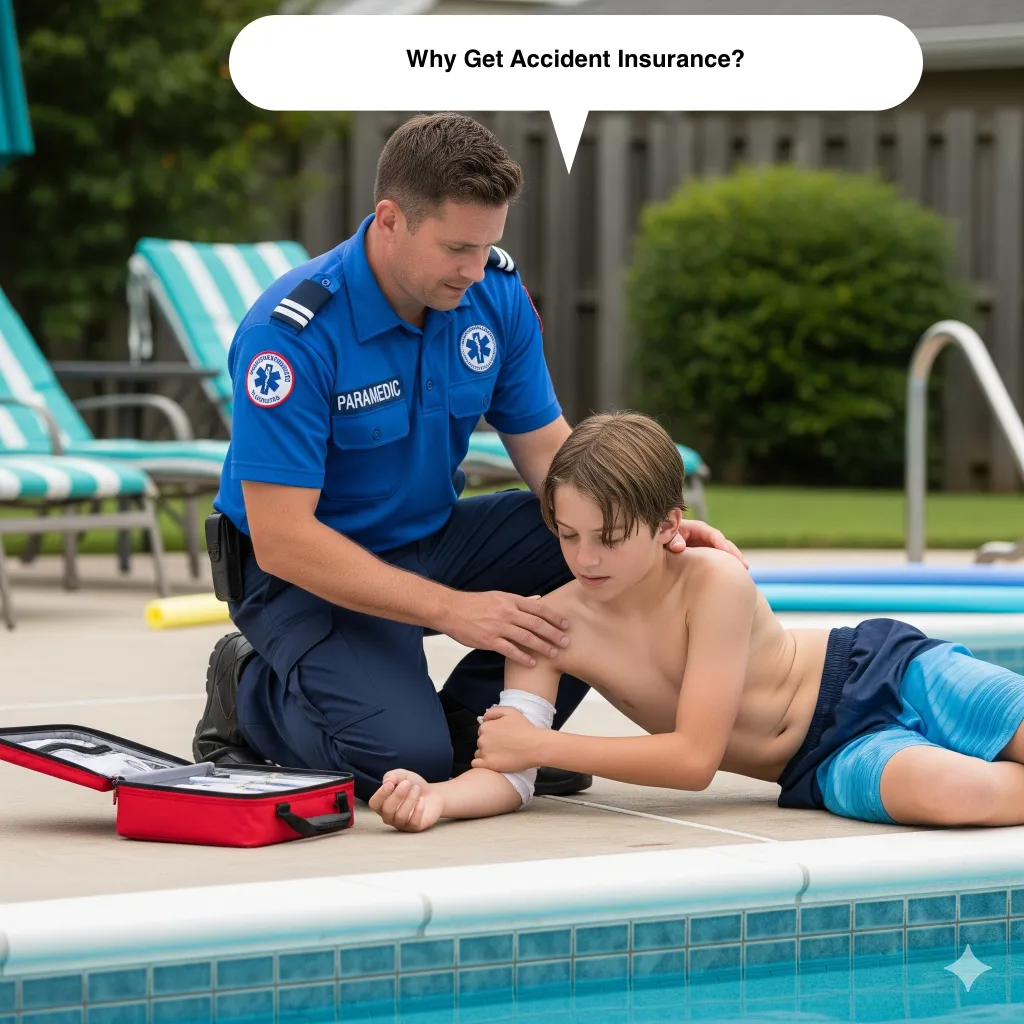
Why Get Accident Insurance in 2027? An Insurance Pro’s Guide to Covering the Gaps
Why Get Accident Insurance in 2027? An Insurance Pro’s Guide to Covering the Gaps
By Steve Turner, Licensed Life & Health Agent, Florida License W333468] · 10+ years advising families and employers
Quick answer: Accident insurance is worth it for most people on a high-deductible health plan, anyone without enough savings to cover their deductible plus a few weeks of lost pay, and active families with kids in sports. It pays a fixed cash benefit after a covered injury, which you can use for deductibles, bills, or lost income. It is not a substitute for health insurance, and people with low deductibles and strong savings may not need it.
In 10+ years as a licensed insurance agent, I’ve reviewed coverage for countless households and employers. Most come to me with a solid plan for their home, car, and life insurance, and many fund a health savings account. Yet I keep finding the same blind spot: no plan for the cash they will need after an ordinary accident.
A fall from a ladder while cleaning gutters. A bike crash on a weekend ride. A child’s collision on the soccer field. Your health insurance will help, but in 2027 it will rarely cover everything, and the higher costs are often the deductible, the coinsurance, and the paychecks you miss while you heal.
This guide explains how accident insurance works with 2027 health plan rules, when it makes financial sense, when it doesn’t, and what I check before recommending a policy to a client or employer.
How accident insurance works in 2027
Accident insurance is a supplemental, limited-benefit policy. After a covered injury, it pays a set dollar amount for each item on its schedule of benefits, such as an ER visit, a fracture, or a hospital stay. The money goes to you, not the hospital, and you decide how to spend it.
Three points matter before you go further:
- It supplements health insurance; it does not replace it. It is not major medical coverage and does not satisfy ACA coverage requirements.
- You still file a claim. Insurers require proof of the injury and treatment, usually a claim form plus medical records or bills.
- It works alongside an HSA. Under IRS rules, accident coverage is “permitted” coverage, so owning it does not disqualify you from contributing to a health savings account.
Why the gap is growing in 2027
Health plan cost-sharing limits rose again for 2027, which means more of a serious injury’s bill can land on you before your plan pays in full.
| 2027 limit | Self-only | Family | Set by |
|---|---|---|---|
| ACA out-of-pocket maximum (most plans) | $12,000 | $24,000 | HHS/CMS |
| HSA-qualified HDHP out-of-pocket maximum | $8,700 | $17,400 | IRS |
| HSA-qualified HDHP minimum deductible | $1,750 | $3,500 | IRS |
| HSA contribution limit | $4,500 | $9,000 | IRS |
The ACA self-only cap jumped $1,400 from $10,600 in 2026, the largest one-year rise in more than a decade. Some 2027 bronze Marketplace plans may go as high as $15,600. Sources are listed at the end of this article.
6 reasons individuals and families buy accident insurance
1. It helps you meet a high deductible
High-deductible plans keep premiums lower, but one serious injury can require you to pay the full deductible before your plan pays much. Family deductibles of $6,000 or more are common among the clients I see.
Here is a scenario I’ve seen many times. A teenager breaks his leg playing basketball. The day includes an ambulance ride, an ER visit, X-rays, a specialist consult, and surgery to set the bone. With a $6,000 family deductible, the family owes that $6,000 before the plan shares the cost of the surgery. A typical accident policy might pay:
| Benefit (illustrative) | Payment |
|---|---|
| Ambulance (ground) | $200 |
| Emergency room visit | $250 |
| X-ray | $50 |
| Leg fracture, surgical repair | $2,500 |
| Hospital admission | $1,000 |
| Total cash paid to the family | $4,000 |
Amounts are examples only. Actual benefits depend on the plan, the state, and the schedule you choose.
That $4,000 covers two-thirds of the deductible and turns a crisis into a manageable bill.
2. It covers coinsurance and costs your plan excludes
After the deductible, most plans still charge 10% to 20% coinsurance up to the out-of-pocket maximum, which can reach $12,000 per person in 2027. Out-of-network specialists, travel to a specialty center, and lodging may not be covered. A cash benefit can pay for any of these.
3. It can replace lost income
Health insurance pays providers; it does not pay your salary. Hourly workers, freelancers, and small business owners can lose all income during a two-week recovery, and salaried workers can burn through sick and vacation days. Because the benefit is paid to you, you can use it to cover the paycheck you missed. If you need sustained income protection, pair it with disability insurance, which is built for that job.
4. It pays the bills that don’t stop
Rent or mortgage, car payments, utilities, and groceries keep coming. An injury adds new costs too: over-the-counter medication, rides to appointments, childcare, and meal delivery. Cash on hand keeps these off a credit card.
5. It protects your savings
One accident can drain an emergency fund or tempt you to tap retirement or college savings. A modest premium creates a dedicated buffer for injuries, so your savings stay ready for job loss, home repairs, and long-term goals.
6. AD&D adds a lump sum for the worst cases
Many policies include accidental death and dismemberment (AD&D) coverage. It pays a larger lump sum if an accident causes death or the loss of a limb or sight. It complements life insurance; it does not replace it, because it pays only for accidental causes.
5 common myths about accident insurance
Myth 1: “My health insurance is enough.”
Health insurance is the foundation, but it leaves you paying the deductible, coinsurance, and every non-medical cost. With 2027 out-of-pocket caps as high as $12,000 per person, that exposure is real money for most households.
Myth 2: “Workers’ comp will cover me.”
Workers’ compensation covers only job-related injuries. According to the National Safety Council, about 86% of medically consulted injuries to workers in 2022 happened off the job, at home, on the road, or during leisure. Your weekend ladder fall and your child’s playground injury get nothing from workers’ comp.
Myth 3: “I’m young and healthy, so I don’t need it.”
Accidents don’t check your health history. In my experience, young and active people file more accident claims because they’re the ones playing sports, hiking, and biking. Accident coverage is often most valuable for exactly this group.
Myth 4: “I have savings for emergencies.”
An emergency fund is excellent discipline. But I ask clients: did you build it to hand over to a hospital after one fall? Accident insurance can absorb the first hit so your savings stay available for job loss or other crises.
Myth 5: “It’s too expensive.”
Individual accident coverage is generally one of the lower-cost supplemental products, and group plans through an employer often cost less. Premiums vary by age, state, benefit level, and whether you cover a spouse or children, so get a quote instead of guessing. Then compare it with the real question: could you pay a $6,000 deductible and miss two weeks of pay at the same time?
[Optional: add a sample monthly premium range from your own book of business, labeled with the state and year.]
Who may not need accident insurance?
I don’t recommend this coverage to everyone. You may be able to skip it if:
- Your health plan has a low deductible and low out-of-pocket maximum.
- You have savings that easily cover your full out-of-pocket maximum plus a month of expenses.
- You already have strong short-term disability coverage, and the gap you’re worried about is income, not medical bills.
- You’d be paying for overlapping coverage, such as a second accident policy or hospital indemnity plan with similar benefits.
What to check before you buy
Policies differ more than most buyers realize. Here’s the checklist I use with clients:
- Schedule of benefits: Do the payouts for common injuries (fractures, dislocations, ER visits, concussions) meaningfully cover your deductible?
- On-the-job vs. 24-hour coverage: Off-the-job policies exclude workplace injuries; 24-hour policies cover both.
- Exclusions: Look for limits on high-risk sports, intoxication, motor racing, and pre-existing injuries.
- Who’s covered: Confirm spouse and child options and the age limits for dependents.
- Portability: If you buy through work, can you keep it if you leave the job?
- Wellness or health screening benefit: Some plans pay a small yearly amount for a checkup, which offsets part of the premium.
- Claims process: Check the filing deadline, documents required, and typical payment time.
- Taxes: Benefits from a policy you pay for with after-tax dollars are generally not taxable. Employer-paid or pre-tax premiums can change that, so confirm with a tax professional.
5 reasons businesses offer accident insurance
For employers, accident insurance is less about one family’s budget and more about recruiting, retention, and risk management.
1. It strengthens benefits at little cost to the company
Voluntary group accident plans are typically paid by employees through payroll deduction. The employer’s cost is mostly administration, yet the company can offer a richer benefits package in a tight hiring market.
2. It makes a high-deductible plan easier to accept
Many employers now offer an HDHP as their main or only medical plan. Employees often worry about the deductible, which can be $3,500 or more for family coverage in 2027. Pairing the HDHP with group accident coverage gives employees a direct way to handle that exposure after an injury.
3. It protects employees who travel (Business Travel Accident)
Employers have a duty of care to staff traveling on company business. A business travel accident (BTA) policy, bought by the company, typically covers accidental death, dismemberment, and, in many plans, emergency medical evacuation during work trips. It reassures employees’ families and supports the company’s risk program.
4. It covers non-employees (Participant Accident)
Sports leagues, camps, nonprofits with volunteers, and event organizers can buy participant accident coverage. It helps pay out-of-pocket medical costs for participants injured during your activity, reducing pressure to pursue a claim against your organization. It does not replace general liability insurance.
5. It reduces financial stress at work
The NSC estimates that off-the-job injuries cost employers about 440 million days of lost production time in 2024, compared with 70 million from on-the-job injuries. An employee worried about paying for a child’s ER visit is distracted, and a tool that eases that stress supports focus and loyalty.
Frequently asked questions
What does accident insurance cover?
It pays fixed cash benefits for injuries from covered accidents, such as fractures, dislocations, burns, concussions, ER visits, ambulance rides, hospital stays, and follow-up care. Illnesses are not covered.
Is accident insurance the same as health insurance?
No. Health insurance pays providers for medical care. Accident insurance pays you a set amount per covered injury, which you can use for any expense. It is supplemental and does not meet ACA coverage requirements.
Can I have accident insurance and an HSA?
Yes. The IRS treats accident coverage as permitted coverage, so it does not affect your eligibility to contribute to an HSA. For 2027, HSA limits are $4,500 for self-only and $9,000 for family coverage.
Does accident insurance pay if I’m hurt at work?
Only if your policy is 24-hour coverage; off-the-job policies exclude injuries covered by workers’ compensation. Check the policy wording before you buy.
Are accident insurance benefits taxable?
Generally not, if you pay premiums with after-tax dollars. If your employer pays the premium or you pay pre-tax, benefits may be taxable. Ask a tax professional about your situation.
Is accident insurance worth it in 2027?
For many people, yes. It is most valuable if you have a high deductible, limited savings, an active lifestyle, or kids in sports. It is least valuable if your deductible is low and your savings comfortably cover your out-of-pocket maximum.
The bottom line
You can’t predict when an accident will happen, but you can decide how prepared you’ll be for the bill. For individuals and families, accident insurance is a cash buffer that protects your budget, income, and savings as 2027 out-of-pocket limits climb. For businesses, it’s a low-cost way to strengthen benefits, support an HDHP, and manage risk.
Next step: Pull up your 2027 health plan summary, note your deductible and out-of-pocket maximum, and ask yourself how you’d pay both after an injury. If the answer worries you, [contact me / CTA link] for a no-obligation comparison of accident plans available in [state].
Sources
- IRS Rev. Proc. 2026-24 (2027 HSA and HDHP limits)
- Wagner Law Group: IRS announces 2027 HSA, HDHP and HRA limits
- Lawley: 2027 ACA out-of-pocket maximum ($12,000 / $24,000)
- HUB International: 2027 ACA, HSA, HDHP and EBHRA limits
- healthinsurance.org: out-of-pocket limits, 2026 vs 2027 and bronze plan exception
- National Safety Council Injury Facts: Worker off-the-job safety
Disclosures
This article is for general education and is not tax, legal, or financial advice. Accident insurance is a limited-benefit supplemental policy, not health insurance, and does not satisfy ACA minimum essential coverage. Benefits, exclusions, availability, and pricing vary by insurer and state. Review the policy and outline of coverage before buying.
OUR CLIENT REVIEWS


CONTACT STEVE TURNER, LICENSED INSURANCE AGENT & BROKER
Questions? Call, text, or book a time below; I answer calls and emails 7 Days a week from 7:00 a.m. to 8:00 p.m., excluding posted holidays.
EMAIL ME: 24×7
OFFICE LOCATION
Address: 14502 N Dale Mabry Hwy, Suite 200, Tampa, FL 33618
Website: steveturnerinsurancespecialist.com
Email: [email protected]
Phone and Text: +1-813-388-8373
Business Hours:
Monday: 7:00 a.m. / 8:00 p.m.
Tuesday: 7:00 a.m. / 8:00 p.m.
Wednesday: 7:00 a.m. / 8:00 p.m.
Thursday: 7:00 a.m. / 8:00 p.m.
Friday: 7:00 a.m. / 8:00 p.m.
Saturday: 7:00 a.m. / 8:00 p.m.
Sunday: 7:00 a.m. / 8:00 p.m.
ACCIDENT INSURANCE POSTS

MEDICARE STATEMENT
We do not offer every plan available in your area. Currently, we represent 7 organizations that offer 70 products in your area. Please get in touch with Medicare.gov or 1-800-MEDICARE for information on all your options.
Steve Turner is a licensed insurance agent and is not connected with or endorsed by the United States Government or the Federal Medicare Program. The Medicare Annual Enrollment Period is October 15 to December 7.
There’s no one-size-fits-all answer. Carefully consider your health status, expected medical needs, prescription drugs, budget, preferred doctors and hospitals, and how comfortable you are with network rules. During the Annual Enrollment Period, you can use the Medicare Plan Finder at Medicare.gov to research plans available in your Florida county, compare costs and benefits, and get free, unbiased counseling from Florida’s SHINE (Serving Health Insurance Needs of Elders) program at floridashine.org or 1-800-963-5337. You can also call 1-800-MEDICARE (1-800-633-4227; TTY 1-877-486-2048), 24 hours a day, 7 days a week.
Steve Turner

Steve Turner, CLU®, REBC® Licensed Florida health insurance agent · License W333468
Steve Turner is a licensed agent and broker and a long-standing member of the National Association of Benefits and Insurance Professionals NABIP®, the preeminent organization for health insurance and employee benefits professionals, and works diligently to ensure all Americans have access to high-quality, affordable healthcare and related services. Steve also holds the prestigious Registered Employee Benefits Consultant® (REBC®) designation. Steve also holds the “Chartered Life Underwriter” designation (CLU®), a professional credential for individuals specializing in life insurance and estate planning. The American College of Financial Services confers it. For over 10 years, Steve has helped individuals, families, Medicare beneficiaries, and small businesses find the right coverage to meet their needs. Steve has earned 180+ Google reviews from happy clients.
Steve Turner is a licensed agent appointed by Florida Blue.