

What Does Medicare Advantage Insurance Really Cost Me?

What Does Medicare Advantage Insurance Really Cost Me? Understanding Total Out-of-Pocket Costs and Premiums
When I first looked at Medicare Advantage plans, I saw one big word everywhere: FREE. “$0 premium!” the ads said. My mailbox filled up with shiny cards. My TV showed smiling people on beaches.
So I asked a simple question. What does Medicare Advantage insurance really cost me?
It turns out the answer is not $0. It is also not scary. It’s more than one number. In this guide, I will walk you through every cost I found, in plain words. I will show you real 2027 numbers, sample yearly bills, and the tricks I use to keep my costs low.
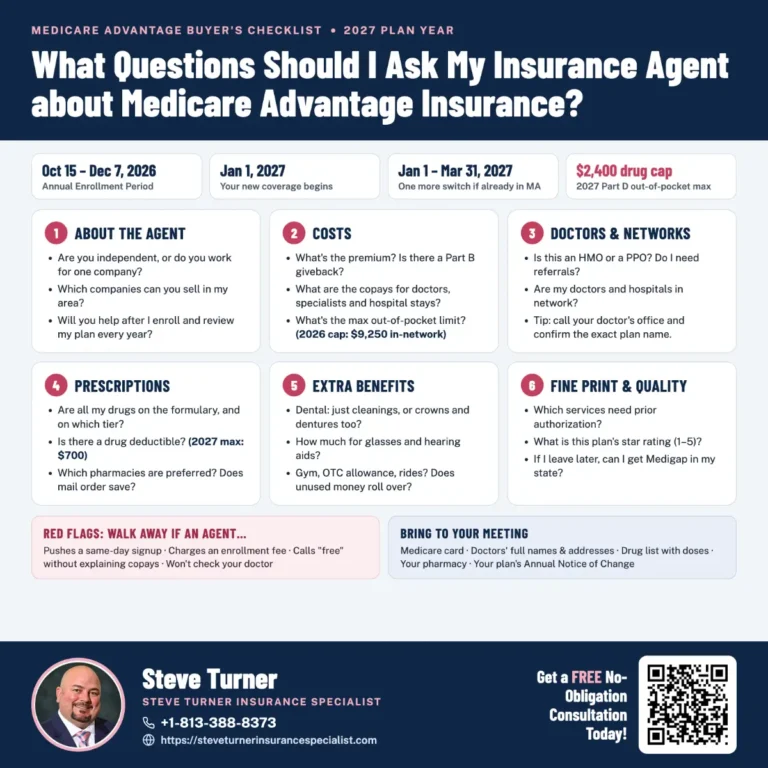
The timing matters, too. Medicare’s Annual Enrollment Period runs from October 15 to December 7, 2026. Any plan you pick in that window starts on January 1, 2027. So now is the best time to learn what you will really pay.
The Short Answer: What Medicare Advantage Really Costs
Here is the quick version before we dig in. With a Medicare Advantage plan in 2027, I can expect to pay:
- The Part B premium – about $209.50 a month (a projection; the official number comes out in November 2026). This is about $2,514 a year, and almost everyone pays it.
- The plan’s own premium – often $0. The average across all plans is about $12 a month for 2027, says Medicare.
- Copays and coinsurance – small fees each time I see a doctor, get a test, or stay in the hospital.
- Drug costs – capped at $2,400 a year for covered drugs in 2027.
- A safety cap on medical bills – no plan can make me pay more than $9,850 in a year for covered in-network care. Many plans set a much lower cap.
So, in a healthy year, I might pay a little more than $2,500 total. In a rough year, I could pay $10,000 or more. Where I land depends on my health, my plan, and the choices I make.
Let’s break each piece down.
The 7 Costs I Pay With Medicare Advantage
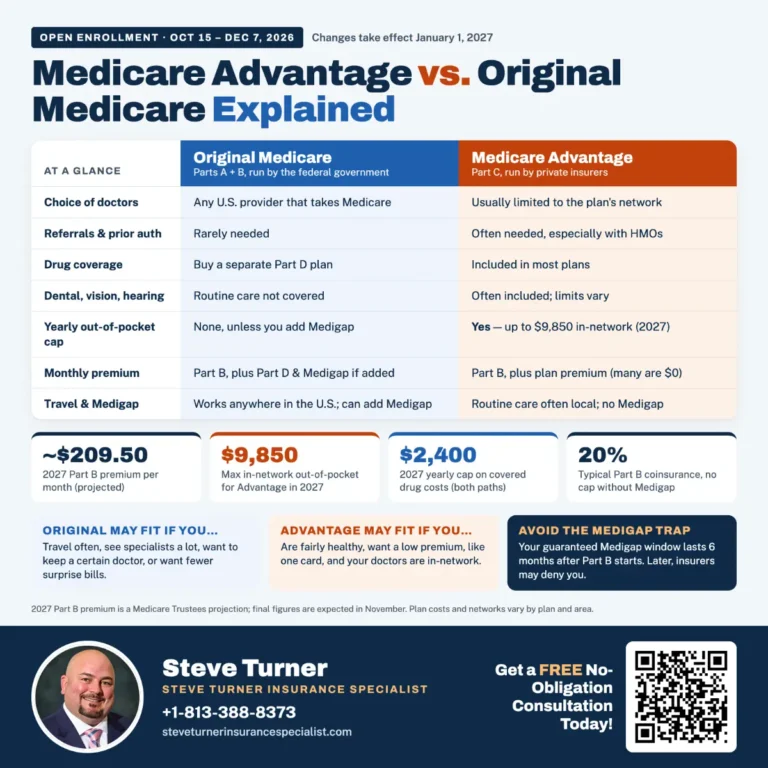
Medicare Advantage is also called Part C. It lets you get Medicare through a private insurance company, like Humana, UnitedHealthcare, or Aetna. The plan replaces Original Medicare (Parts A and B). Most plans also cover drugs (Part D).
Here are the seven costs I learned to watch.
1. The Part B Premium (Yes, I Still Pay It)
This was my biggest surprise. Even with a “$0” plan, I still pay my Part B premium. Medicare Advantage does not replace it.
- 2026: $202.90 a month
- 2027: about $209.50 a month (projected by the Medicare Trustees)
Most people have this taken right out of their Social Security check. So I never see a bill, but I do pay it.
If I earn a lot of money, I pay more. This extra charge is called IRMAA. It is based on my tax return from two years ago.
2. The Plan Premium
This is the monthly fee for the Medicare Advantage plan itself. Many plans charge $0. Others charge $20, $50, or even $100 or more.
For 2027, Medicare says the average plan premium is about $12 a month, down from $14.37 in 2026. A higher premium often buys lower copays or a bigger network.
3. The Deductible
A deductible is what I pay before my plan starts to help. Many Medicare Advantage plans have no medical deductible. Some do, though, especially PPO plans.
Drug coverage can have its own deductible. In 2027, a drug deductible can be up to $700, up from $615 in 2026. Many plans charge less, or nothing, for cheap generic drugs.
4. Copays
A copay is a set fee I pay each time I get care. Here are typical examples I have seen. Your plan will be different.
| Service | Common copay range |
|---|---|
| Primary care doctor | $0 – $20 |
| Specialist | $20 – $60 |
| Urgent care | $25 – $65 |
| Emergency room | $90 – $140 |
| Hospital stay | $250 – $450 a day for the first 5–7 days |
| Skilled nursing | $0 for the first 20 days, then about $200+ a day |
I watch the hospital line most. A five-day stay at $400 a day is $2,000.
5. Coinsurance
Coinsurance is a percent of the bill, not a set fee. For example, I might pay 20% for an MRI, chemotherapy, or medical equipment like a walker or oxygen.
Twenty percent of a $5,000 bill is $1,000. That adds up fast.
6. Prescription Drug Costs
If my plan includes Part D, I pay copays at the pharmacy. Cheap generics may cost $0 to $10. Brand-name drugs can cost $47 or more a month.
The good news: in 2027, the most I can pay for covered drugs is $2,400 a year. Once I hit that cap, I pay $0 for covered drugs the rest of the year.
7. The Out-of-Pocket Maximum (My Safety Net)
Every Medicare Advantage plan has a yearly limit on medical costs. This is called the MOOP (maximum out-of-pocket).
- 2027 legal limit: $9,850 for in-network care
- 2027 limit for PPOs: $14,800 for in-network and out-of-network care combined
- Typical plan: about $6,500 in-network for 2027, up from $5,900 in 2026
Once I hit my MOOP, my plan pays 100% of covered medical care for the rest of the year.
Two things do not count toward the MOOP: my monthly premiums and my drug costs. Drugs have their own $2,400 cap.
The Hidden Costs Nobody Puts in the Ads
Some costs don’t show up as a dollar sign on the plan page. But they can still cost me money, time, or stress. Here are the ones I check for.
- Out-of-network care. Most Medicare Advantage plans are HMOs. If I see a doctor outside the network, I may pay the full bill. PPOs let me go out of network, but I pay more.
- Prior authorization. Many plans require my doctor to get approval before some tests, surgeries, or hospital stays. If the plan says no, I may have to wait, appeal, or pay out of pocket.
- Referrals. HMO plans often need a referral from my main doctor before I see a specialist. If I skip it, they may not cover the visit.
- Travel limits. Most plans only cover routine care in my local area. If I spend winters in another state, I may only be covered for emergencies.
- Dental, vision, and hearing caps. These extras are great, but they often have yearly limits, like $1,000 for dental. A crown or implant can cost much more. Some experts expect plans to quietly trim these perks in 2027.
- Plans can change each year. My doctor can leave the network. My drug can move to a pricier tier. Every fall, my plan mails me an Annual Notice of Change (ANOC). I read it every single year.
- Plans can leave my area. Some insurers are pulling plans for 2027. Humana alone expects its plan exits to affect about 600,000 members. If my plan ends, I have to pick a new one.
None of these is a reason to avoid Medicare Advantage. They are just things I want to know before I sign up.
What I Might Pay in a Real Year: 3 Examples
Numbers are easier to understand with a story. So I made three sample years. Each one uses a $0-premium plan with a $6,500 MOOP (about average for 2027) and the projected 2027 Part B premium of $209.50 a month.
These are examples, not quotes. Your plan’s copays will be different.
Example 1: The Healthy Year
I feel good. I see my doctor for a checkup and take one cheap generic pill.
- Part B premium: $2,514
- Plan premium: $0
- 4 primary care visits at $0: $0
- 2 specialist visits at $40: $80
- Generic drug at $5 a month: $60
- Total for the year: about $2,654
Example 2: The “Something Came Up” Year
I hurt my knee. I need an MRI, some physical therapy, and a brand-name drug.
- Part B premium: $2,514
- Plan premium: $0
- 6 specialist visits at $45: $270
- 1 MRI: $250
- 1 ER visit: $125
- 10 physical therapy visits at $30: $300
- Drugs at $50 a month: $600
- Total for the year: about $4,059
Example 3: The Hard Year
I have a heart problem. I stay in the hospital, then go to rehab. I also need costly drugs.
- Part B premium: $2,514
- Plan premium: $0
- Medical bills hit my MOOP: $6,500
- Drugs hit the yearly cap: $2,400
- Total for the year: about $11,414
Here they are side by side:
| Kind of year | Premiums | Medical costs | Drug costs | Total |
|---|---|---|---|---|
| Healthy | $2,514 | $80 | $60 | $2,654 |
| Something came up | $2,514 | $945 | $600 | $4,059 |
| Hard year | $2,514 | $6,500 | $2,400 | $11,414 |
If my plan had the highest legal MOOP of $9,850, the hard year would cost me about $14,764. That is why I never pick a plan by premium alone. I always look at the MOOP.
Medicare Advantage vs. Original Medicare + Medigap: Which Costs Less?
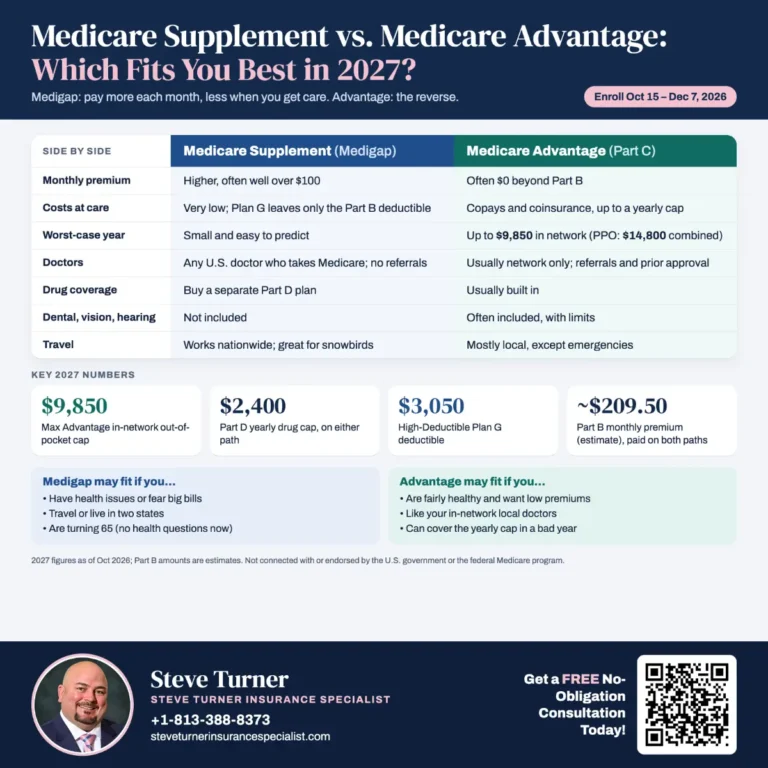
The other main path is Original Medicare plus a Medigap (Medicare Supplement) plan and a separate Part D drug plan. Here is how I think about the two.
With Original Medicare alone, I pay 20% of most doctor bills, and there is no yearly cap. That is why most people add Medigap. A popular choice is Plan G, which pays almost everything except the Part B deductible.
Here is a rough 2027 comparison. I used about $175 a month for Plan G, but real prices often run from about $100 to $250 or more, based on age, state, and company. Standalone drug plans average about $36 a month in 2027.
| Cost item | Medicare Advantage ($0 plan) | Original Medicare + Plan G + Part D |
|---|---|---|
| Part B premium | $2,514 | $2,514 |
| Plan premiums | $0 | about $2,532 (Plan G + Part D) |
| Part B deductible | Usually not charged | about $292 |
| Healthy year total | about $2,654 | about $5,398 |
| Hard year total | about $11,414 (up to $14,764) | about $7,738 |
What this tells me:
- In a healthy year, Medicare Advantage usually costs less.
- In a hard year, Medigap usually costs less, and the cost is easier to predict.
- Medigap lets me see any doctor in the U.S. who takes Medicare. No networks, and almost no prior approvals.
- Medicare Advantage often adds dental, vision, hearing, and gym perks that Original Medicare does not cover.
One big warning: If I start with Medicare Advantage and want to switch to Medigap later, the Medigap company may be able to turn me down or charge more because of my health. In most states, I only get a guaranteed right to buy Medigap at certain times. If I ever switch, I get my Medigap approval in writing before I drop my Advantage plan.
8 Ways I Lower My Medicare Advantage Costs
Here is my personal checklist. These steps have saved me real money.
- I make a list first. Before I shop, I write down my doctors, my hospital, and every drug I take, with the dose.
- I use the Medicare Plan Finder. At Medicare.gov/plan-compare, I type in my drugs and ZIP code. The tool shows my estimated yearly cost for each plan, not just the premium.
- I compare the MOOP, not just the premium. A $30 premium with a $4,000 MOOP can beat a $0 premium with a $9,850 MOOP if I get sick.
- I check the hospital copay. I look at the cost per day and how many days it lasts. This is where big bills hide.
- I look for a Part B giveback. Some plans pay back part of my Part B premium each month. This shows up as a bigger Social Security check. It is not offered everywhere.
- I apply for Extra Help. If my income and savings are limited, the Extra Help program can lower my drug costs a lot. I can apply through Social Security.
- I check for a Medicare Savings Program. My state may pay my Part B premium if my income is low enough. I call my state Medicaid office to ask.
- I ask for free help. My state’s SHIP program gives free, unbiased Medicare advice. I can find mine at shiphelp.org.
And I never forget the calendar:
- October 15 – December 7, 2026: Annual Enrollment. I can switch to any plan for 2027.
- January 1 – March 31, 2027: Medicare Advantage Open Enrollment. If I’m already in an Advantage plan, I get one more chance to switch plans or go back to Original Medicare.
Medicare Advantage Cost FAQ
These are the questions friends ask me most.
Is a $0 Medicare Advantage plan really free?
No. The $0 is only the plan’s premium. I still pay my Part B premium, about $209.50 a month in 2027. I also pay copays when I get care.
How do insurance companies offer $0 plans?
Medicare pays the insurance company a set amount each month to cover me. The company uses that money to pay for my care and extras. For 2027, Medicare raised these payments by about 2.48% on average.
What is the most I could pay in one year?
For covered in-network medical care, no plan can charge me more than $9,850 in 2027. Drugs are capped at $2,400. Add my premiums, and my worst case is about $14,764 on a $0 plan, if I stay in-network.
Does my drug spending count toward my MOOP?
No. Drugs have their own separate cap. In 2027, that cap is $2,400 a year.
Are Medicare Advantage premiums going up in 2027?
On average, they are going down. Medicare says the average plan premium drops from $14.37 to about $12 a month. But your own plan could still go up, so read your Annual Notice of Change.
Will my plan’s MOOP go up?
Maybe. About six in ten returning drug plans are raising their in-network cap for 2027. The typical cap is going from $5,900 to $6,500.
Is Medicare Advantage cheaper than Medigap?
In healthy years, usually yes. In years with big medical bills, Medigap often costs less in total. It comes down to my health, my budget, and how much risk I can handle.
Can I switch plans if I picked the wrong one?
Yes. I can switch during Annual Enrollment each fall. If I’m in an Advantage plan, I get one more switch from January 1 to March 31. Some life events, like moving, also let me switch.
My Bottom Line
So, what does Medicare Advantage insurance really cost me? The honest answer is: it depends on the year.
In a good year, I pay about $2,500 to $3,000, mostly my Part B premium. In a hard year, I could pay $10,000 or more. The “$0 premium” is real, but it is only one piece of the puzzle.
Here is what I remember every fall:
- The Part B premium never goes away.
- The MOOP matters more than the premium if I get sick.
- My doctors and drugs must be covered, or the plan is not a deal.
- Plans change every year, so I compare every year.
Open enrollment starts October 15. I grab my list of doctors and drugs, sit down with the Medicare Plan Finder, and look at the full yearly cost. If I feel stuck, I call my free local SHIP counselor. Taking one hour now can save me thousands in 2027.
Note: 2027 Part B premium and deductible figures are projections from the 2026 Medicare Trustees Report. Medicare will release the official numbers in November 2026. Copay examples are for illustration only. This article is for general education and is not insurance, legal, or financial advice.
Why choose Steve Turner Insurance Specialist?
Because I’m an “Insurance Specialist.” An “insurance specialist” is a broad term that includes insurance agents and insurance brokers, but the key difference is who the agent represents versus who the broker represents.
An “insurance agent” works directly for an insurance company and sells its specific policies to clients.
An “insurance broker” acts as an independent intermediary, comparing policies from multiple companies to find the best fit for their client’s needs, essentially representing the client rather than the insurance company.
I am both a licensed Insurance Agent and a licensed Insurance Broker.
My number one goal in life is to help people and ensure, without a shadow of a doubt, that you and your family are secure and protected. I will always be by your side, helping you mitigate risk by providing the industry’s best and most affordable insurance solutions.
I will find insurance plans for the entire family to help cover whatever life throws at you. I can help you save on severe medical emergencies, find a health insurance plan with low- or no-cost doctor visits and affordable prescription medications, and protect your family in the event of an unexpected accident or illness.
Best of all, it doesn’t cost you anything extra to use an experienced Insurance Agent and Broker like me to help you find the Insurance Plans that fit your individual, family, or business needs.
The companies that sell the insurance plans “you choose“ pay me – you don’t pay me. Calling any big insurance company directly won’t get you a lower price, as they will forward your call to the next available insurance agent on their list. You won’t have had any opportunity to learn about the insurance agent you’re speaking with in advance, understand their qualifications or experience level, or make an informed choice about who you want to work with.
Tap the Contact Me text or icon and get in touch by phone or email, or schedule a “No Obligation” chat through my calendar. I look forward to speaking with you!
OUR CLIENT REVIEWS


CONTACT STEVE TURNER INSURANCE AGENT & BROKER
I’m here to take your calls and emails and answer your questions 7 Days a week from 7:00 a.m. to 8:00 p.m., excluding posted holidays.
Steve Turner is a licensed agent and broker and a long-standing member of the National Association of Benefits and Insurance Professionals®. Steve holds the prestigious Registered Employee Benefits Consultant® designation. NABIP® is the preeminent organization for health insurance and employee benefits professionals and works diligently to ensure all Americans have access to high-quality, affordable healthcare and related services.
Steve Turner is a licensed agent appointed by Florida Blue.
Richard Steven Turner’s official Florida state insurance license number (operating as Steve Turner Insurance Specialist) is W333468
EMAIL ME: 24×7
OFFICE LOCATION
Website: steveturnerinsurancespecialist.com
Email: [email protected]
Phone and Text: +1-813-388-8373
Business Hours:
Monday: 7:00 a.m. – 8:00 p.m.
Tuesday: 7:00 a.m. – 8:00 p.m.
Wednesday: 7:00 a.m. – 8:00 p.m.
Thursday: 7:00 a.m. – 8:00 p.m.
Friday: 7:00 a.m. – 8:00 p.m.
Saturday: 7:00 a.m. – 8:00 p.m.
Sunday: 7:00 a.m. – 8:00 p.m.
MEDICare advAntage INSURANCE POSTS
INSURANCE OFFERINGS
What Does Medicare Advantage Insurance Really Cost Me?
HEALTH INSURANCE

MEDICARE ADVANTAGE

MEDICARE SUPPLEMENT

PRESCRIPTION DRUGS

LIFE INSURANCE

DISABILITY INSURANCE

DENTAL INSURANCE

GROUP HEALTH INSURANCE

ACCIDENT INSURANCE

LONG TERM CARE INSURANCE

MEDICAID INSURANCE

MEDICARE INSURANCE

MEDICARE PART A INSURANCE

MEDICARE PART B INSURANCE

MEDICARE PART C INSURANCE

MEDICARE PART D INSURANCE

MEDICARE PLAN G INSURANCE

MEDICARE PLAN N INSURANCE

SERVICE AREA
MEDICARE STATEMENT
We do not offer every plan available in your area. Currently, we represent 7 organizations that offer 70 products in your area. Please contact Medicare.gov or 1-800-MEDICARE for information on all your options.
Steve Turner is a licensed insurance agent and is not connected with or endorsed by the United States Government or the Federal Medicare Program. The Medicare Annual Enrollment Period is October 15 to December 7.
There’s no one-size-fits-all answer. Carefully consider your health status, expected medical needs, prescription drugs, budget, preferred doctors and hospitals, and how comfortable you are with network rules. During the Annual Enrollment Period, you can research the plans available in your Florida county using the Medicare Plan Finder at Medicare.gov, compare costs and benefits, and get free, unbiased counseling from Florida’s SHINE (Serving Health Insurance Needs of Elders) program at floridashine.org or 1-800-963-5337. You can also call 1-800-MEDICARE (1-800-633-4227; TTY 1-877-486-2048), 24 hours a day, 7 days a week.