

Long Term Care Insurance Coverage In Florida
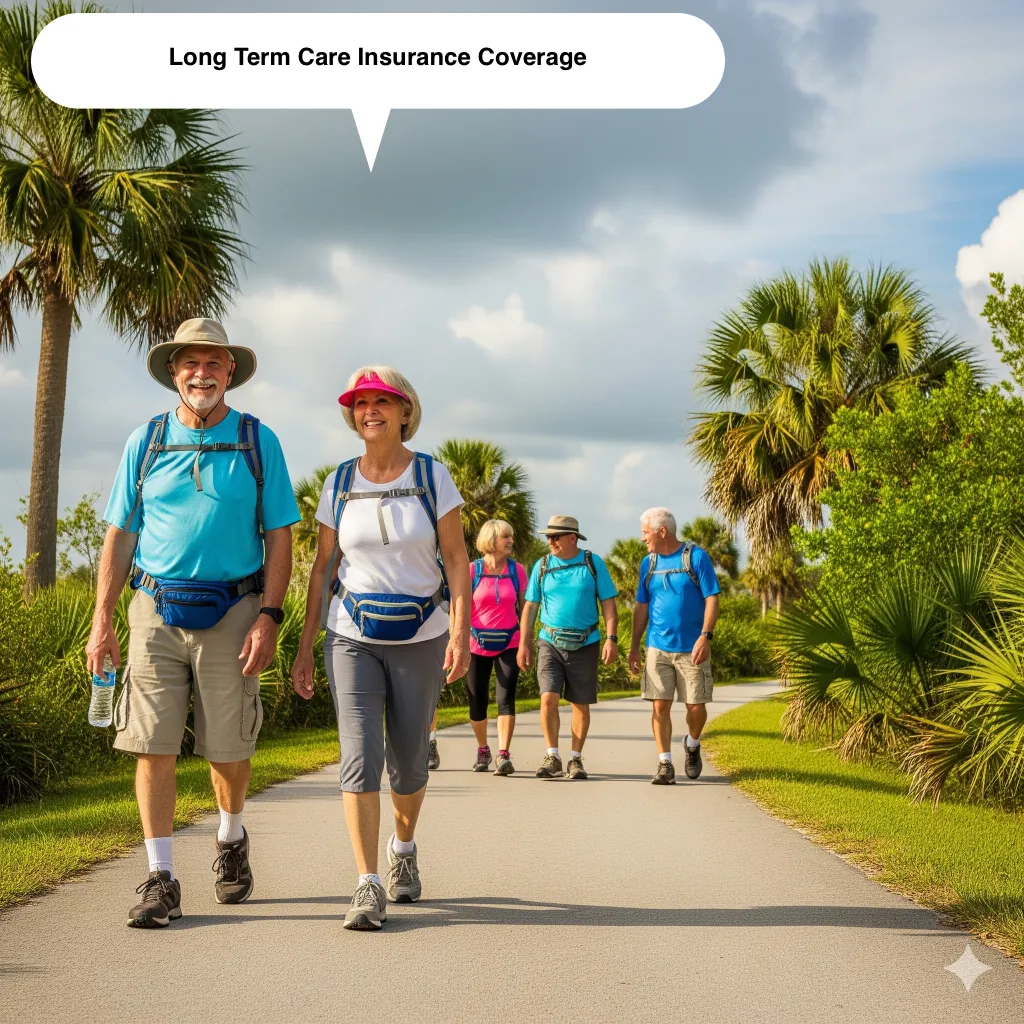
Long Term Care Insurance Coverage In Florida
Long-Term Care Insurance Coverage in Florida
If you live in Florida and are planning seriously for retirement, there is one question that deserves much more attention than it usually gets:
What does long-term care insurance coverage in Florida actually include?
That sounds like a simple question, but it is one of the most misunderstood topics in retirement planning. Many Floridians assume long-term care insurance works like health insurance. It does not. Others assume Medicare will pay for most long-term care if they ever need it. Usually, it will not. Medicare says it generally does not cover most long-term custodial care, whether that care is received at home, in the community, in assisted living, or in a nursing home. (Medicare)
That gap matters because long-term care is not rare. The Administration for Community Living says that someone turning 65 today has almost a 70% chance of needing some type of long-term services and supports in the future, and about 20% will need care for more than five years. ACL also notes that, overall, more people use long-term care at home, and for longer, than in facility settings. (ACL Administration for Community Living)
So if Medicare is limited and the need for care is common, what exactly does long-term care insurance coverage in Florida do?
In plain English, it is designed to help pay for the ongoing help a person needs when they can no longer safely care for themselves because of physical frailty, chronic illness, disability, or cognitive decline. Florida’s consumer guidance explains that long-term care helps individuals maintain their level of functioning rather than improve or cure a medical condition. It often includes help with Activities of Daily Living, such as bathing, eating, dressing, toileting, continence, and transferring. (FLDFS)
That distinction is the foundation of everything else in this article.
Health insurance is built around diagnosis, treatment, and recovery.
Long-term care insurance is built around supervision, assistance, safety, and day-to-day functioning.
That is why understanding coverage matters so much. Not every policy covers the same services in the same way. Florida’s Department of Financial Services says long-term care policies are not standardized, which means each insurer defines benefits, exclusions, and coverage terms in the contract. (FLDFS)
This guide explains what long-term care insurance coverage in Florida usually includes, what it often excludes, how benefits are triggered, how Florida’s Partnership Program changes the conversation, and what readers should check before assuming they are protected.
Why Long-Term Care Insurance Coverage in Florida Matters
Florida is one of the most important states in the country for this topic, not just because of its large retiree population, but because Florida residents often have a very specific planning goal: they want to preserve independence without destroying their retirement savings.
That usually means one of three things:
- staying at home as long as possible,
- using assisted living before nursing home care becomes necessary,
- or protecting a spouse and family from the financial impact of a long care event.
All three goals depend on understanding what a policy really covers.
Current care-cost data help explain why this planning matters. CareScout’s 2025 survey reports a national median annual cost of $74,400 for assisted living, $114,975 for a semi-private nursing home room, and $129,575 for a private nursing home room. The same source notes that home care is also costly and continues to rise. In Florida specifically, a March 2026 CareScout release reported annual median statewide costs of $66,000 for assisted living communities, $124,100 for a semi-private nursing home room, and $146,000 for a private room, along with substantial home-care costs. (CareScout)
Those numbers matter because coverage is not abstract. A policy is only valuable if it helps with real expenses in real settings.
And that leads to the first big truth:
Long-term care insurance coverage in Florida is less about “medical treatment” and more about paying for help when life becomes harder to manage safely on your own.
What Long-Term Care Insurance Is Designed to Cover
A good long-term care policy is meant to help fund services for someone who can no longer function independently due to prolonged illness, disability, frailty, or cognitive impairment. The NAIC shopper’s guide explains that long-term care services may include help with Activities of Daily Living, home care, respite care, hospice care, and adult day care, and that this care may be delivered in the home, an assisted living facility, a nursing home, an adult day center, or a hospice setting. Florida’s own long-term care guide describes similar types of care and stresses that long-term care includes both skilled and custodial services. (NAIC)
That means a strong Florida long-term care policy may cover care in a range of settings, including:
- your own home,
- assisted living,
- nursing home care,
- adult day care,
- respite care,
- hospice-related long-term care support,
- and certain supportive services like care coordination.
But before a policy pays any of that, the insured usually has to qualify under the contract’s benefit rules.
The Foundation of Coverage: How a Florida LTC Policy Usually Works
Before people focus on individual benefits, they need to understand the mechanics of how long-term care insurance coverage in Florida is usually structured.
Benefit Triggers
You do not simply decide one day to use your policy because you feel older, tired, or more vulnerable. Most policies require a licensed or certified professional to determine that you meet the contract’s benefit trigger. Florida law and state consumer guidance reflect the standard industry framework: benefit eligibility is commonly tied to either a loss of functional capacity or cognitive impairment. Florida statute says assessments of Activities of Daily Living and cognitive impairment must be performed by licensed or certified professionals such as physicians, nurses, or social workers. (Online Sunshine)
Usually, one of two things has to happen:
First, the insured must be unable to perform at least two of the six Activities of Daily Living, often called ADLs. Florida’s consumer materials list those ADLs as bathing, continence, dressing, eating, toileting, and transferring. (FLDFS)
Second, the insured may qualify because of cognitive impairment, such as Alzheimer’s disease or another form of dementia, if substantial supervision is needed for health and safety. Florida’s consumer guidance highlights that people with cognitive impairment often need supervision, protection, or verbal reminders to manage everyday life. (FLDFS)
This matters because long-term care insurance coverage in Florida is not triggered only by physical weakness. A person may still walk, feed themselves, and dress independently, yet still qualify because dementia makes living alone unsafe.
Elimination Period
Most long-term care policies also have an elimination period. This works like a deductible measured in time rather than dollars. Florida’s long-term care guide explains that elimination periods can range from zero to 180 days, with 90 days being common. (FLDFS)
That means even when a claim is valid, benefits may not begin immediately. Families often have to pay for care during that waiting period.
Daily or Monthly Benefit and Benefit Pool
Most policies define a maximum daily or monthly benefit amount. Some use a daily rate. Others use a monthly pool. Many modern designs are easier for consumers to manage because they give more monthly flexibility. Florida’s guide explains that benefit choices may include daily, weekly, monthly, or yearly maximums depending on the policy. (FLDFS)
The policy also usually has a total pool of money or benefit duration. For example, a policy might pay up to a certain amount per month for three years, five years, or another selected period. Once the benefit pool is exhausted, the insurance coverage stops unless the policy includes some form of extension or rider.
Inflation Protection
Because people often buy coverage years before they use it, inflation protection can be one of the most important parts of long-term care insurance coverage in Florida. Florida’s Partnership Program requires inflation protection, and Florida’s state materials emphasize that inflation protection is designed to help benefits keep up with rising care costs. (Florida Health Care Admin)
This is crucial in a state where care costs are already high and likely to keep rising.
What Long-Term Care Insurance Coverage in Florida Usually Includes
Now to the question most readers really mean when they search the keyword: what does it actually cover?
Home Health Care and In-Home Personal Care
For many Floridians, home care is the most important benefit of all.
ACL says more people use long-term care at home than in facilities, and for longer overall. That makes home-care coverage central, not optional, in a strong policy. The NAIC guide and Florida consumer guidance both describe home care as a common component of long-term care insurance. (ACL Administration for Community Living)
Depending on the policy, long-term care insurance coverage in Florida may help pay for:
- home health aides,
- personal care attendants,
- assistance with bathing, dressing, toileting, and mobility,
- some skilled nursing services as part of the plan of care,
- physical, occupational, or speech therapy in covered circumstances,
- and supervision related to cognitive decline.
Why does this matter so much? Because most people do not want to go straight to a facility. They want help at home first. A policy that pays meaningfully for home care can preserve independence, delay institutional placement, and reduce the burden on a spouse or adult child. (ACL Administration for Community Living)
Assisted Living Facility Care
Assisted living is one of the most searched and most misunderstood parts of long-term care insurance coverage in Florida.
The NAIC says assisted living care is often covered, and Florida’s materials describe long-term care as including services in settings beyond traditional nursing homes. Florida AHCA explains that assisted living facilities in Florida are licensed to provide routine personal care under a Standard license and may also hold specialty licenses, such as Extended Congregate Care or Limited Nursing Services, to help residents age in place more safely. (NAIC)
That means long-term care insurance coverage in Florida can often be used for assisted living, but only if:
- the policy covers assisted living,
- the insured meets the benefit trigger,
- the elimination period is satisfied,
- and the facility meets the policy’s licensing or definition requirements.
This is where readers often get surprised. Moving into assisted living does not automatically trigger coverage. The person still has to qualify medically or functionally under the contract. (FLDFS)
Nursing Home Care
This is the benefit most people think of first, but it is only part of the picture.
Long-term care insurance coverage in Florida often includes nursing home care for people who need a higher level of supervision or hands-on support. Medicare makes clear that custodial nursing home care is generally not covered if it is the only care needed. That is one of the main reasons private long-term care coverage exists. (Medicare)
A nursing home benefit can be financially significant because nursing home care remains one of the most expensive care settings. Florida-specific CareScout release data put the 2025 statewide annual median at $124,100 for a semi-private room and $146,000 for a private room. (Business Wire)
A policy that covers nursing home care can therefore act as a major asset-protection tool, especially for middle- and upper-middle-income retirees who do not want a prolonged care event to consume a large share of their savings.
Adult Day Care
Adult day care is often overlooked, but it is one of the most practical benefits in long-term care insurance coverage in Florida.
The NAIC shopper’s guide includes adult day care among the common long-term care services these policies may cover. Adult day care can help families who want to keep a loved one at home but need supervision, structure, or care during the day while a family caregiver works or rests. (NAIC)
For some families, this benefit can delay assisted living or nursing home placement and help keep a loved one in familiar surroundings longer.
Respite Care
Caregiver burnout is real, and good policy design recognizes it.
Long-term care insurance coverage in Florida may include respite care, which helps pay for temporary substitute care when a spouse, child, or other caregiver needs relief. The NAIC guide lists respite care as a common long-term care service. (NAIC)
This can be one of the most emotionally valuable benefits in a policy because it protects not only the insured but also the unpaid caregiver who may be holding the entire care plan together.
Hospice-Related Support
Hospice is usually paid primarily under Medicare when eligibility rules are met, but long-term care insurance can still matter around hospice situations because it may help cover long-term care support, facility costs, or custodial services that Medicare hospice does not fully pay. The NAIC guide lists hospice care among the kinds of long-term care services policies may cover, while Medicare explains that it generally does not pay room and board for hospice in facilities except in limited respite or short-term inpatient circumstances. (NAIC)
This means long-term care insurance coverage in Florida may still be very useful even after hospice begins, especially in facility-based situations.
Care Coordination and Care Management
Many strong policies include some form of care coordination. Florida’s long-term care guide discusses care planning and the role of organized services in a long-term care setting. Consumer guidance widely recognizes that coordinating care can be one of the hardest parts of a claim. (FLDFS)
This benefit is often undervalued. Families do not just need money. They often need help figuring out what kind of care is appropriate, which providers are qualified, and how to structure the plan of care.
Home Modifications and Related Supportive Benefits
Some policies offer limited coverage for home modifications or supportive equipment, especially when the goal is to keep the insured safely at home longer. These benefits vary a great deal by policy, which is why Florida’s warning that policies are not standardized is so important. (FLDFS)
A policy may, for example, include a modest one-time benefit for safety modifications like grab bars or ramps. Another may not.
This is exactly why consumers need to read beyond the headline sales language.
What Long-Term Care Insurance Coverage in Florida Often Does Not Cover
Knowing what is covered is only half the story. A large part of planning well is knowing what to not assume.
Doctor Bills, Hospital Bills, and Traditional Medical Treatment
This is the most important misconception to correct.
Long-term care insurance is generally not there to pay your surgeon, hospital, anesthesiologist, or physician the way health insurance does. Medicare and other health insurance usually handle acute medical treatment. Medicare’s own materials distinguish long-term care from medical coverage and say it does not provide most long-term custodial care. (Medicare)
So if someone has surgery, Medicare and health insurance may help with the surgery itself. Long-term care insurance may become relevant later if the person then needs extended help with bathing, dressing, supervision, or daily living.
Family Caregiver Wages Under Many Traditional Policies
Many readers hope a long-term care policy will simply let them pay an adult child or spouse directly for care. Sometimes that can happen under certain cash-benefit or indemnity-style designs, but it is not safe to assume it under a traditional reimbursement-based policy. USA.gov says some long-term care insurance policies allow family members to get paid as caregivers, but advises people to check the policy and get written confirmation. (FLDFS)
So when discussing long-term care insurance coverage in Florida, the correct answer is not “yes” or “no” across the board. It is:
some policies may allow it, but many do not, and the contract decides.
Full Room and Board in Every Setting
This is another area where assumptions cause problems.
Some policies reimburse the full assisted living bill. Some pay only the covered care portion. Some facility-based hospice or assisted living arrangements may still leave the insured responsible for non-covered room-and-board elements, depending on the policy structure and the way the facility bills. Medicare is also explicit that it generally does not cover room and board for hospice in facility settings. (Medicare)
That is why it is essential to ask how the policy treats the bill:
is it reimbursing the full facility charge, or only the care-services portion?
Care Outside the United States
Many policies limit or exclude benefits outside the United States. Since policy terms vary, the only safe assumption is that international coverage should be verified directly in the contract. Florida’s repeated warning that policies are not standardized applies here too. (FLDFS)
If someone plans to retire abroad, this is not a detail to skim past.
Care That Is Outside the Approved Plan of Care
Many policies require care to fit within an approved plan of care. This means not every informal arrangement, companion arrangement, or convenience expense will qualify. The claims process and plan-of-care requirements matter because long-term care insurance is paying for covered services under defined rules, not simply cutting an unrestricted check in every case. Florida statute requires policies to include a clear description of the process for appealing and resolving benefit determinations, which shows how formal this process can be. (Online Sunshine)
Non-Qualifying Mental Health Treatment
Long-term care insurance coverage in Florida is usually aimed at loss of function and cognitive impairment, not general inpatient mental health treatment by itself. A psychiatric condition does not automatically equal a valid long-term care claim unless the policy’s functional or cognitive trigger is met. Florida’s guidance distinguishes cognitive impairment from other categories of care need by focusing on the need for supervision, protection, or verbal reminders in daily life. (FLDFS)
The Florida Long-Term Care Partnership Program
This is one of the most important parts of long-term care insurance coverage in Florida, and it deserves its own section.
Florida AHCA says the Florida Long-Term Care Partnership Program is a partnership between Medicaid and private long-term care insurers. The program is designed to encourage people to buy private long-term care coverage by offering dollar-for-dollar asset protection if they later need to apply for long-term care Medicaid assistance. AHCA also says Partnership policies are tax-qualified and include inflation protection. (Florida Health Care Admin)
Here is what that means in plain English.
If a qualifying Partnership policy pays out benefits, the amount it pays can be disregarded from Medicaid spend-down calculations later. So if a Florida Partnership-qualified policy pays $250,000 in benefits and the insured later needs Medicaid long-term care assistance, that same amount of assets may be protected. Florida’s Department of Financial Services says this asset-disregard feature is the main advantage of a Partnership policy. (FLDFS)
That does not mean every policy in Florida is a Partnership policy. And it does not guarantee Medicaid eligibility. AHCA’s materials expressly note that buying a Partnership policy does not guarantee eligibility for Medicaid. (Florida Health Care Admin)
But for Florida residents with meaningful assets, the program can add a layer of value beyond the basic monthly benefit.
Florida-Specific Assisted Living and Facility Licensing
Because this article is about long-term care insurance coverage in Florida, one Florida-specific issue matters a lot: facility licensing.
Florida AHCA explains that assisted living facilities may operate under a Standard license and may also hold specialty licenses such as ECC, LNS, or LMH depending on the services they provide. HealthFinder Florida also describes these license categories and explains that LNS allows certain nursing services while ECC allows more comprehensive support so residents can age in place. (Florida Health Care Admin)
Why should policyholders care?
Because many long-term care policies define covered facilities in part by licensing status. A facility may advertise itself as a retirement or senior-living option, but the policy may require that it meet a certain regulatory definition or license standard to qualify for benefits.
So long-term care insurance coverage in Florida is not just about the policy. It is also about whether the chosen facility matches the policy’s definition.
Traditional Policies vs. Hybrid Policies
Long-term care insurance coverage in Florida can come through different product structures, and that affects how benefits work.
Traditional Standalone Long-Term Care Insurance
This is the classic design. It is purchased mainly to pay for long-term care. It often provides the strongest pure care leverage per premium dollar, though exact value depends on the contract. Florida’s consumer materials focus heavily on this style of policy when describing standard long-term care features such as elimination periods, ADL triggers, and inflation protection. (FLDFS)
Potential advantages include:
- straightforward long-term care focus,
- strong home-care and facility-care design when the policy is well built,
- and potential eligibility for the Florida Partnership Program.
Potential concerns include:
- the possibility of never using the benefits,
- complexity around rate history and policy design,
- and less emotional appeal for buyers who dislike paying for protection they may never use.
Hybrid Life Insurance Plus Long-Term Care
Florida’s consumer guides also discuss hybrid or linked-benefit products that combine life insurance with long-term care benefits. These can appeal to buyers who dislike the “use it or lose it” feel of traditional coverage, because if the insured does not use the long-term care benefit, some death-benefit value may still remain for heirs depending on the policy design. (FLDFS)
Coverage can still be strong, but buyers need to compare carefully because hybrid policies vary a lot in how they pay, how much care leverage they offer, and whether they operate more like reimbursement or cash-indemnity products.
This matters for Florida readers because the phrase “long-term care insurance coverage in Florida” does not refer to just one policy type.
The Role of Medicare, Medicaid, and Private Insurance
A lot of confusion disappears once people understand the jobs of the three main systems.
Medicare
Medicare is mainly health insurance for acute and medical care, not long-term custodial support. It may cover doctor services, hospitals, short-term skilled care under limited rules, and some home health care, but it generally does not cover most long-term custodial care. (Medicare)
Medicaid
Medicaid may cover long-term care for people who meet income and asset rules. In Florida, the Partnership Program can help some policyholders protect more assets if their private policy is exhausted first. But Medicaid is not the same as private-pay flexibility, and it comes with eligibility rules and planning consequences. (Florida Health Care Admin)
Private Long-Term Care Insurance
Private long-term care insurance coverage in Florida fills the gap between those two systems. It gives policyholders a private source of funds for covered long-term care services when they meet the benefit trigger.
That is why the topic matters so much. It is not duplicating Medicare. It is solving a different problem.
Tax Treatment in 2026
Tax treatment is not the main reason to buy a policy, but it is relevant.
For tax years beginning in 2026, IRS Revenue Procedure 2025-32 sets the age-based eligible premium limits for tax-qualified long-term care insurance at:
- $500 for age 40 or under,
- $930 for ages 41 to 50,
- $1,860 for ages 51 to 60,
- $4,960 for ages 61 to 70,
- and $6,200 for age 71 and older. (IRS)
These figures affect how much qualified long-term care insurance premium can be treated as medical care under the tax rules. Because Florida Partnership policies are tax-qualified, this can be a meaningful planning point for some Florida households. AHCA specifically notes that Partnership policies are tax-qualified under federal law. (Florida Health Care Admin)
Still, tax treatment should be seen as an added advantage, not the core reason to buy coverage.
Common Mistakes Florida Buyers Make
One reason people misunderstand long-term care insurance coverage in Florida is that they ask the right question too late.
They wait until:
- a dementia diagnosis,
- a fall,
- a hospitalization,
- or a move into assisted living
before trying to understand the policy.
That timing creates avoidable mistakes.
The biggest mistakes include:
Assuming Medicare Will Cover Most of It
It usually will not for custodial care. This is one of the costliest misunderstandings in retirement planning. (Medicare)
Assuming “Long-Term Care” Means Every Care Setting Is Covered Equally
Policies are not standardized, and coverage varies by contract. Florida says this plainly. (FLDFS)
Ignoring the Elimination Period
A valid claim does not necessarily mean immediate payment. Families need liquidity for the waiting period. (FLDFS)
Not Checking Facility Licensing
This matters more in Florida than many buyers realize because assisted living license type and facility definition can affect coverage. (Florida Health Care Admin)
Skipping Inflation Protection
Care costs rise, and Florida Partnership policies require inflation protection for a reason. (Florida Health Care Admin)
Assuming Family Caregiver Payment Is Automatic
Some policies may allow it. Many do not. It must be verified in writing. (FLDFS)
How to Review a Policy the Right Way
If someone already owns a policy and wants to understand their long-term care insurance coverage in Florida, the smartest review process is usually this:
First, locate the full policy and the Outline of Coverage. Florida’s guides emphasize the importance of reviewing consumer materials and policy language carefully because policies are not standardized. (FLDFS)
Second, look for the exact sections on:
- benefit triggers,
- elimination period,
- home care,
- assisted living,
- nursing home care,
- hospice and respite benefits,
- exclusions,
- inflation protection,
- and appeals.
Third, verify whether the policy is a Florida Partnership-qualified policy. AHCA and Florida DFS both say buyers should confirm whether a policy participates in the Partnership Program rather than assume that it does. (Florida Health Care Admin)
Fourth, confirm whether the policy is reimbursement-based or cash-benefit-based, because that can affect flexibility in how claims are paid.
Fifth, get answers in writing before making a care move based on assumptions.
Frequently Asked Questions
What does long-term care insurance coverage in Florida usually pay for?
It usually helps pay for covered long-term care services such as home care, assisted living, nursing home care, adult day care, respite care, and some related support services once the insured meets the policy’s benefit trigger. The exact services depend on the policy because Florida says long-term care policies are not standardized. (NAIC)
Does long-term care insurance coverage in Florida include home care?
Often yes. Home care is one of the most important and most common benefits in a strong policy, and national guidance says long-term care is frequently used at home. (ACL Administration for Community Living)
Does long-term care insurance coverage in Florida include assisted living?
Often yes, but only if the policy covers assisted living, the insured meets the benefit trigger, and the facility meets policy requirements. Florida assisted living licensing can matter here. (Florida Health Care Admin)
Does it cover nursing home care?
Usually yes, if the policy includes nursing home coverage and the insured qualifies for benefits. This is especially important because Medicare generally does not cover custodial nursing home care when it is the only care needed. (Medicare)
Does long-term care insurance coverage in Florida pay family caregivers?
Sometimes, but not always. Some policies may allow payment to family caregivers, especially under certain flexible designs, but many traditional policies do not automatically reimburse informal family care. This must be verified in the contract. (FLDFS)
What is the Florida Long-Term Care Partnership Program?
It is a public-private program under which qualifying long-term care policies provide dollar-for-dollar asset protection if benefits are exhausted and the policyholder later applies for Florida long-term care Medicaid assistance. Partnership policies are also tax-qualified and include inflation protection. (Florida Health Care Admin)
Does Medicare replace long-term care insurance?
No. Medicare generally does not cover most long-term custodial care. That is why private long-term care insurance exists as a separate planning tool. (Medicare)
Final Takeaway
The best way to think about long-term care insurance coverage in Florida is this:
It is not hospital insurance.
It is not ordinary health insurance.
It is not automatically standardized.
And it is not something to evaluate only after a crisis begins.
It is a private coverage tool designed to help pay for the long-term assistance a person may need when age, illness, frailty, or cognitive decline make independent living harder or unsafe. In Florida, that often means coverage for home care, assisted living, nursing home care, adult day care, respite care, and related supportive services, subject to the policy’s rules, triggers, elimination period, and exclusions. Florida’s Partnership Program adds another layer of value for some buyers by providing dollar-for-dollar asset protection if the policy is qualifying and benefits are later exhausted. (Florida Health Care Admin)
The biggest mistake readers can make is assuming the words “long-term care insurance” automatically mean the same thing across all policies. Florida’s own consumer guidance says otherwise. The contract matters. The facility matters. The benefit trigger matters. The elimination period matters. And the policy design matters. (FLDFS)
That is why the most accurate answer to the keyword is not just a short definition.
It is this:
Long-term care insurance coverage in Florida can be broad and extremely valuable, but only when the policy is built well, understood clearly, and matched to how people actually want to receive care.
OUR CLIENT REVIEWS


CONTACT STEVE TURNER INSURANCE AGENT & BROKER
I’m here to take your calls and emails and answer your questions 7 Days a week from 7:00 a.m. to 8:00 p.m., excluding posted holidays.
Steve Turner is a licensed agent and broker and a longstanding member of the National Association of Benefits and Insurance Professionals®. Steve holds the prestigious Registered Employee Benefits Consultant® designation. NABIP® is the preeminent organization for health insurance and employee benefits professionals and works diligently to ensure all Americans have access to high-quality, affordable Healthcare and related services.
Steve Turner is a licensed agent appointed by Florida Blue.
EMAIL ME: 24×7
OFFICE LOCATION
Website: steveturnerinsurancespecialist.com
Email: [email protected]
Phone and Text: +1-813-388-8373
Business Hours:
Monday: 7 a.m. to 8 p.m.
Tuesday: 7 a.m. to 8 p.m.
Wednesday: 7 a.m. to 8 p.m.
Thursday: 7 a.m. to 8 p.m.
Friday: 7 a.m. to 8 p.m.
Saturday: 7 a.m. to 8 p.m.
Sunday: 7 a.m. to 8 p.m.
SOCIAL FOLLOW + SHARE
LONG-TERM CARE INSURANCE POSTS


INSURANCE OFFERINGS
Long-Term Care Insurance Coverage in Florida
HEALTH INSURANCE

MEDICARE ADVANTAGE

MEDICARE SUPPLEMENT

PRESCRIPTION DRUGS

LIFE INSURANCE

DISABILITY INSURANCE
DENTAL INSURANCE

GROUP HEALTH INSURANCE

ACCIDENT INSURANCE
LONG TERM CARE INSURANCE
MEDICAID INSURANCE

MEDICARE INSURANCE

MEDICARE PART A INSURANCE

MEDICARE PART B INSURANCE
MEDICARE PART C INSURANCE
MEDICARE PART D INSURANCE

MEDICARE PLAN G INSURANCE

MEDICARE PLAN N INSURANCE

SERVICE AREA
MEDICARE STATEMENT
The Medicare Annual Enrollment Period is October 15th to December 7th. Steve Turner is not connected with or endorsed by the United States Government or the Federal Medicare Program. Some plans may not be available in your area, and any information I provide is limited to those offered. Please contact Medicare.gov or 1-800-MEDICARE for information on all your options.
There’s no one-size-fits-all answer. Carefully evaluate your health status, anticipated medical needs, prescription drug usage, budget, preferred doctors and hospitals, and tolerance for network rules. During the Medicare Annual Enrollment Period (October 15th to December 7th), research the specific plans available in your Florida county using the Medicare Plan Finder on Medicare.gov, compare costs and benefits, and consider free, personalized counseling from Florida’s SHINE (Serving Health Insurance Needs of Elders) program.