


Is Long-Term Care Insurance Worth The Cost?
If you are researching long-term care insurance, you are probably not looking for a vague sales pitch. You want a straight answer to a very practical question:
Is long-term care insurance worth the cost?
That is the right question to ask.
Because long-term care insurance can be expensive, the premiums are real. The underwriting can be strict. The policy language can be complicated. And if you never need care, it is easy to wonder whether the money would have been better spent elsewhere.
At the same time, the financial risk it is designed to cover is not small. Medicare generally does not pay for most long-term custodial care, whether provided at home, in assisted living, or in a nursing home. The Administration for Community Living says someone turning 65 today has almost a 70% chance of needing some long-term services and supports in their remaining years, and about 20% will need care for more than five years. CareScout’s 2025 Cost of Care data show a national median cost of $74,400 per year for assisted living, more than $129,000 per year for a private nursing-home room, and high ongoing costs for home care. (ACL Administration for Community Living)
That is why this question is not really about whether long-term care insurance is “cheap.” It is about whether the premium is worth paying to protect yourself from a future care event that could otherwise consume a large part of your retirement savings.
For some people, the answer is clearly yes.
For others, the answer is clearly no.
And for many households, the honest answer is: it depends on your assets, income, age, health, family support, state, and the kind of policy you are considering. Florida’s Department of Financial Services stresses that long-term care insurance policies are not standardized, so benefits, exclusions, and definitions can vary significantly from one insurer to another. (FLDFS)
So let’s answer the question the way a real person needs it answered.
The Short Answer
Long-term care insurance is often worth the cost for people with meaningful assets to protect, who want more choice over where they receive care, who don’t want to rely entirely on family or Medicaid, and who can comfortably afford the premiums without hurting other financial priorities. It is often a weaker fit for people with very limited income or assets because premiums may strain their budgets, and Medicaid may be the fallback anyway. It can also be a weaker fit for very wealthy households that can easily self-fund several years of care without materially changing their financial future. Medicare’s limited role in custodial care and the high current cost of long-term care are the main reasons this tradeoff matters. (Medicare)
That is the big-picture answer.
But it is not enough to help somebody make a real decision. To know whether long-term care insurance is worth the cost for you, you need to understand what the policies do, what they do not do, why people buy them, why some people regret buying them, and which situations make the premiums feel worthwhile.
This guide walks through all of that in plain English.
What “Worth The Cost” Really Means
Much of the confusion comes from the phrase itself.
When people ask whether long-term care insurance is worth the cost, they may mean very different things:
- “Will I get more money back than I pay in?”
- “Will this protect my retirement savings?”
- “Will this keep my spouse from being financially damaged if I need care?”
- “Will this let me stay at home longer?”
- “Will this keep my kids from becoming unpaid caregivers?”
- “Will this help me avoid spending down everything for Medicaid?”
Those are very different standards.
Long-term care insurance is not an investment in the normal sense. It is not a stock, a bond fund, or a rental property. It does not exist primarily to make money. It exists to transfer risk. In that way, it is closer to homeowners’ insurance, disability insurance, or umbrella liability insurance. You do not buy it hoping to use it. You buy it because the event it covers can be financially and emotionally destructive if it happens. The National Institute on Aging explains that long-term care can be expensive and that people often need to combine several funding sources to pay for it. (Medicare)
So the real question is not:
“Will I get my money back?”
The real question is:
“If I need care for several years, do I want that bill hitting my savings, my spouse, my children, or an insurance company?“
That frame makes this topic easier to think about.
Why This Matters More Than Many People Expect
Many people delay long-term care planning because they assume two things that are often wrong.
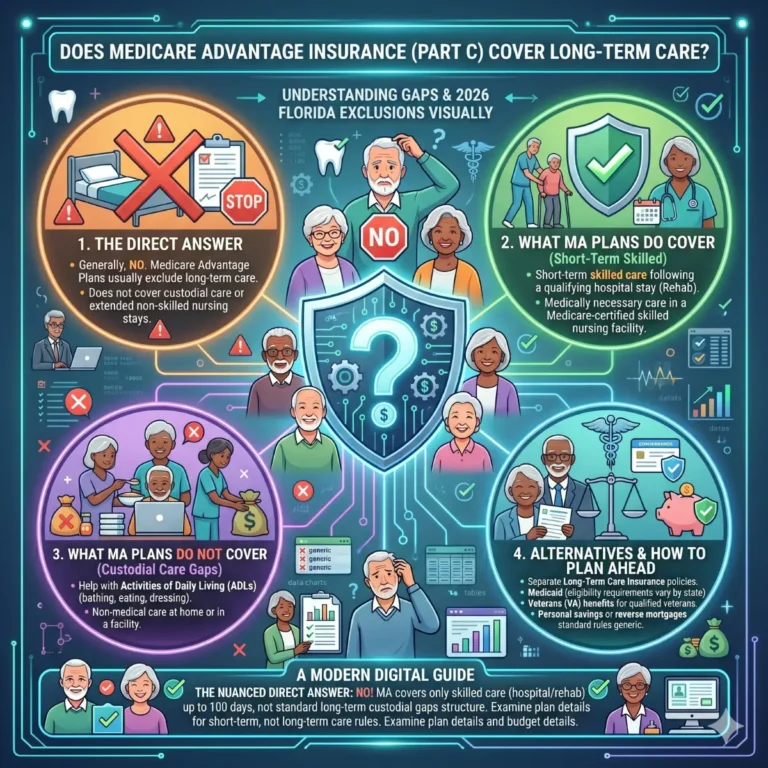
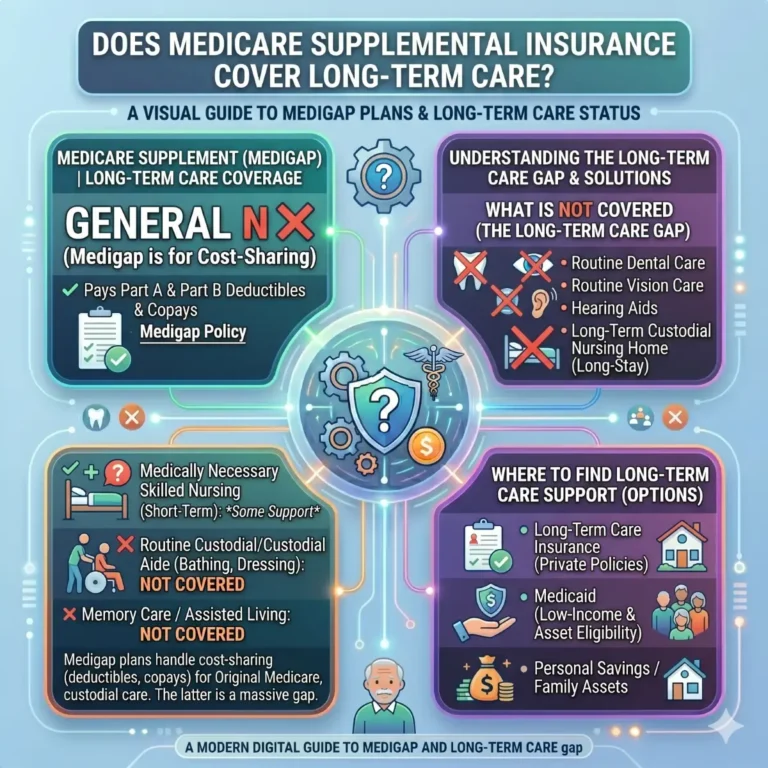
First, they assume Medicare will cover much more than it actually does. Medicare generally does not pay for most long-term or custodial care unless medical care is needed. That means Medicare may still cover doctor visits, hospitalizations, rehabilitation in limited circumstances, and some other medical services. Still, it usually will not pay the ongoing bill for help with bathing, dressing, transferring, supervision due to dementia, or living in assisted living. (Medicare)
Second, they assume long-term care is mostly a nursing-home issue. It is not. The Administration for Community Living says most people who need long-term care receive it at home and, overall, spend more time receiving care at home than in facilities. That means the long-term care question is often really a home-care question, an assisted-living question, a family-caregiver question, and only sometimes a nursing-home question. (ACL Administration for Community Living)
Those two misunderstandings matter because they lead people to underestimate the likelihood and cost of a care event.
And once you realize:
- The odds are meaningful,
- Medicare leaves a large gap,
- and current care costs are high,
The question “Is long-term care insurance worth the cost?” becomes much more serious. (ACL Administration for Community Living)
What Long-Term Care Insurance Usually Covers
Long-term care insurance is generally designed to help pay for services. It supports you when you can no longer perform basic daily activities independently or have a significant cognitive impairment. These policies often cover care in multiple settings, depending on the contract, including the home, assisted living, adult day care, memory care, and nursing homes. The NAIC shopper’s guide explains that long-term care insurance may cover care in settings such as nursing homes, assisted living facilities, adult day care centers, hospice facilities, or the insured’s home, but coverage depends on the policy purchased. (FLDFS)
Most policies use benefit triggers such as:
- inability to perform at least two of the six Activities of Daily Living,
- or qualifying cognitive impairment requiring substantial supervision.
Those six Activities of Daily Living, often called ADLs, usually include bathing, dressing, eating, toileting, continence, and transferring. Florida’s long-term care guidance and national consumer materials both describe this structure. (FLDFS)
This matters because long-term care insurance is not just “nursing-home insurance.” A strong policy may help fund care at home before a crisis forces a move. For many families, that is one of the biggest reasons the coverage may be worth the cost.
The Main Argument For Buying It
Four strong reasons explain why people decide long-term care insurance is worth the cost.
1. It Protects Savings From a Large, Hard-to-Predict Risk
This is the clearest reason.
Care is expensive. CareScout’s 2025 survey reports a national median cost of $74,400 annually for assisted living and more than $129,000 annually for a private nursing-home room. Home care can also be costly, especially when you need many hours per week. These are not small expenses. They are retirement-altering expenses. (CareScout)
A three-year care event can mean hundreds of thousands of dollars. A longer dementia-related event can cost much more. The Administration for Community Living estimates that about 20% of older adults will need long-term care for more than 5 years. That duration risk is what makes the math feel so uncomfortable for many households. (ACL Administration for Community Living)
If you have too much to spend down casually, but not so much wealth that a $300,000 to $600,000 care event would be easy to absorb, long-term care insurance may be worth the cost because it moves a meaningful risk off your balance sheet.
2. It Can Preserve Choice
Without coverage, care decisions are often driven by urgency and price.
With coverage, families may have more flexibility to choose:
- home care instead of immediate institutional care,
- assisted living instead of a more restrictive setting,
- better timing,
- and sometimes better providers.
Since ACL says more long-term care is used at home than in facilities, and for longer overall, a policy that meaningfully supports home-based care can preserve something many people care about deeply: staying in familiar surroundings longer. (ACL Administration for Community Living)
That is hard to quantify on a spreadsheet, but it is very real. For many families, the “worth” of long-term care insurance is not just the dollars paid. It is the options preserved.
3. It Can Reduce Family Caregiver Strain
People often say, “My kids will help me.”
Maybe they will. Many do. But family caregiving is not free just because no invoice arrives.
It costs:
- time,
- income,
- sleep,
- energy,
- missed promotions,
- emotional bandwidth,
- and sometimes the caregiver’s own health.
Long-term care insurance can help pay for professional caregivers, respite care, facility care, or a mix of services that reduces the burden on adult children and spouses. That does not remove emotional stress, but it can prevent the care plan from depending entirely on unpaid labor from family members. The importance of unpaid caregivers is one reason federal and aging-services guidance repeatedly emphasizes home- and community-based supports. (ACL Administration for Community Living)
For many people, that alone makes the premiums feel more justified.
4. It Can Help Delay or Reduce Medicaid Dependence
For some households, this is the deciding factor.
Florida’s Long-Term Care Partnership Program gives qualifying policyholders a form of asset protection. Florida’s Department of Financial Services explains that a Partnership policy’s advantage is asset disregard: a portion of the policyholder’s assets can be disregarded when determining Medicaid long-term care eligibility, equal to the amount of benefits actually paid by the policy. Florida law also codifies this dollar-for-dollar concept. (FLDFS)
In plain English, that means if a qualifying Florida Partnership policy pays out benefits and the insured later needs Medicaid long-term care services, that amount can help protect assets that otherwise might have to be spent down.
That does not mean everyone needs a Partnership policy. But for Florida households concerned about legacy, spouse protection, or spend-down risk, long-term care insurance can be more valuable than the premium alone suggests. (FLDFS)
The Main Argument Against Buying It
A fair article has to say this clearly:
Long-term care insurance is not worth the cost for everyone.
Several legitimate reasons lead people to pass on it.
1. Premiums Can Be Hard to Sustain
If the premiums make your monthly budget feel tight, the policy may create a new problem while trying to solve a future one.
A policy is only useful if you can keep it. If paying for long-term care insurance means underfunding emergency savings, taking on avoidable debt, or reducing contributions to essential retirement goals, the cost may be too high for your current situation. The National Institute on Aging notes that long-term care insurance can be expensive and that buyers should compare carefully. (Medicare)
2. You May Never Need Covered Care
This is the emotional pain point for many buyers.
If you own a traditional policy, pay premiums for years, and die without ever using the benefit, the premiums can feel like lost money. That concern is one of the main reasons hybrid life-and-long-term-care products have become attractive to buyers who dislike the use-it-or-lose-it feeling. Florida consumer guidance notes that policy design can vary widely, so some products address this concern better than others. (FLDFS)
This does not make traditional coverage bad. It just means some people dislike the psychology of paying for protection they may never use.
3. Medical Underwriting Can Shut the Door
Long-term care insurance is easiest to buy when you are younger and healthier. If you wait too long, you may face higher premiums or be declined altogether. NIA notes that age at purchase affects cost, and in practice, health affects insurability. (Medicare)
This creates a frustrating reality:
- Buy earlier, and you may pay longer.
- Wait longer, and the price may rise, or the option may disappear.
4. Some People Can Self-Insure Better
If you have enough wealth that paying for years of home care, assisted living, or even nursing-home care would not meaningfully change your spouse’s security or your long-term goals, you may be better off self-funding. In that case, the premiums may not buy enough incremental peace of mind to justify the cost.
In other words, the policy may be technically good, but still not worth the cost for you.
Who Usually Gets the Most Value?
Long-term care insurance often provides the best value to people in the broad middle zone.
That usually means households with:
- enough savings and income that they want protection,
- but not so much wealth that several years of care would be easy to absorb,
- and not so little that Medicaid is already the likely long-term outcome.
This middle zone is where the math and the emotional value often line up best.
A family with a paid-off house, retirement savings, and moderate to high income may have too much to lose comfortably, yet still be highly vulnerable to a long care event. For them, long-term care insurance may be worth the cost because it can help protect the healthier spouse, preserve more flexibility, and avoid a forced spend-down.
By contrast:
- A household with very limited means may not be able to sustain premiums,
- and a household with very high liquid wealth may not need to pay an insurer to take a risk they can easily handle themselves.
This is why the correct answer is so personal.
Traditional vs. Hybrid: Why Product Type Matters
When people debate whether long-term care insurance is worth the cost, they are often comparing different product types without realizing how much that matters.
Traditional Long-Term Care Insurance
Traditional long-term care insurance is the classic standalone design. It is built primarily to pay for care. Buyers often like it because it can provide strong care leverage for the premium.
Why it may be worth the cost:
- Often, more pure long-term care coverage per premium dollar,
- Usually designed specifically around care benefits,
- May qualify for Florida Partnership benefits if structured correctly. (FLDFS)
Why it may not feel worth the cost:
- No death benefit if never used,
- Some buyers worry about future premium increases,
- Emotionally harder for people who dislike paying for unused insurance.
Hybrid Life Insurance Plus Long-Term Care
These products combine life insurance with long-term care benefits. If the insured needs care, the policy can pay toward those expenses. If not, a death benefit can still go to beneficiaries. Florida consumer guidance describes these linked-benefit structures and how life and long-term care features can work together. (FLDFS)
Why it may be worth the cost:
- addresses the “use it or lose it” objection,
- can feel more palatable to buyers who want either care value or legacy value,
- may offer more premium predictability depending on the design.
Why it may not feel worth the cost:
- often more expensive upfront,
- sometimes less care leverage per dollar than the strongest traditional policies,
- more complexity.
This matters because some people who say “long-term care insurance is not worth it” really mean “the kind of policy I looked at was not worth it to me.”
That is a different claim.
Is It Worth the Cost If You Plan to Age in Place?
For many people, this is the core question.
They do not want to move into a facility unless necessary. They want to stay home.
If that is your goal, long-term care insurance may be worth the cost only if the policy has strong home-care benefits. Since ACL says that, overall, more people use long-term care services at home and for longer than in facilities, home care isn’t a side feature. It is central to modern long-term care planning. (ACL Administration for Community Living)
A policy that mainly emphasizes facility care but skimps on home care may not align with how most people actually want to receive help.
That is one reason policy design matters so much. The wrong policy can make long-term care insurance look not worth the cost. The right policy can make it look essential.
Is It Worth The Cost In Florida?
Florida changes the conversation in a few important ways.
First, Florida has a large retiree population and an active long-term care planning market. Second, Florida participates in the Long-Term Care Partnership Program, which can provide dollar-for-dollar asset protection for qualifying policyholders who later need Medicaid long-term care services. Florida’s Department of Financial Services and Florida statute both confirm this structure. (FLDFS)
That means the value of a policy in Florida is not just:
- the monthly benefit,
- the daily benefit,
- or the total pool of money.
It may also include:
- asset protection,
- better care flexibility,
- and more control over how and when Medicaid planning becomes relevant.
For many Floridians, especially those with meaningful but not unlimited assets, that can make long-term care insurance more cost-effective than it appears at first glance.
The Care Cost Math: Why People Change Their Minds
Many people think the premiums sound expensive until they compare them to the actual cost of care.
Current CareScout figures put national median costs at:
- $74,400 a year for assisted living,
- over $129,000 a year for a private nursing-home room,
- and still-significant costs for home care. (CareScout)
Now imagine:
- three years in assisted living,
- or four years of substantial home care,
- or one long dementia event that begins with home care and ends in memory care or a nursing facility.
The cost is no longer abstract.
Even if a policy pays only part of the bill, that partial protection may preserve significant savings.
This is the heart of the value proposition:
The premium is small compared with the risk being transferred.
That does not automatically make the policy worth it. But it explains why many people who once dismissed it start taking it seriously once they run the numbers.
Tax Advantages: Helpful, But Not the Main Reason
Tax treatment can improve value, but it shouldn’t be the only reason to buy.
For taxable years beginning in 2026, IRS Revenue Procedure 2025-32 sets the age-based limits for eligible long-term care insurance premiums at:
- $500 for those aged 40 or under,
- $930 for ages 41 to 50,
- $1,860 for ages 51 to 60,
- $4,960 for ages 61 to 70,
- and $6,200 for those aged 71 and older. (IRS)
These limits affect how much qualified long-term care insurance premiums may be treated as medical care under the tax rules. Depending on the person’s situation, that can improve the net cost of coverage. Self-employed treatment can also be more favorable in some cases, depending on the tax rules. (IRS)
This is good news, but view it as extra value rather than the main driver of the decision. The big question is still whether the policy is likely to protect enough value to justify the premium.
The Biggest Mistakes People Make
Mistake 1: Comparing Premiums to Zero Instead of Comparing Them to Care Costs
People often say, “That premium sounds high.”
Maybe it is. But the real comparison is not premium versus nothing. It is premium versus the cost of a real care event in a world where Medicare usually does not cover most custodial long-term care. (Medicare)
Mistake 2: Assuming Medicare Will Step In
This is one of the most common and most expensive misunderstandings. Medicare generally does not cover the long-term custodial care that drives the biggest bills. (Medicare)
Mistake 3: Buying Only on Price
A cheap policy with weak home-care benefits, inadequate inflation protection, or a low benefit amount may not justify even its lower premium. Florida’s consumer guidance warns that policy terms are not standardized and should be compared carefully. (FLDFS)
Mistake 4: Waiting Too Long
Because age and health affect insurability and price, waiting can backfire. You may end up paying more later. You may find the product unavailable to you on acceptable terms. (Medicare)
Mistake 5: Thinking of It Like an Investment Account
This leads people to ask the wrong question. A long-term care policy is not there to outperform the market. It is there to protect you from a specific category of risk.
A Simple Framework To Decide If It’s Worth It
Here is a practical way to think about it.
Long-term care insurance is more likely to be worth the cost if:
- You have assets you genuinely want to protect,
- A long care event would significantly damage your retirement plan,
- You want to preserve home-care or assisted-living options,
- You do not want to rely fully on children or Medicaid,
- and you can comfortably afford the premiums.
It is less likely to be worth the cost if:
- The premiums would strain your budget,
- Medicaid is already the most likely path,
- or you can easily self-fund even a severe long-term care event.
That framework is much more useful than any blanket “always yes” or “always no.”
Frequently Asked Questions
Is long-term care insurance worth the cost if I never use it?
That depends on how you think about insurance. If you judge it only by direct payout, you may say no. If you judge it by the fact that it protected you from carrying a major financial risk on your own, you may say yes. This is the same tension people have with many forms of insurance. Hybrid policies are often attractive to people who dislike this issue. (FLDFS)
Is long-term care insurance worth the cost for middle-class retirees?
Often, this group gets the most value. They may have too much to lose, but not enough wealth to absorb years of expensive care comfortably. Medicare generally does not solve this problem, and Florida Partnership policies can add asset-protection value for some buyers. (Medicare)
Is long-term care insurance worth the cost in Florida?
It often can be, especially because Florida’s Partnership Program can provide dollar-for-dollar asset disregard for qualifying policyholders who later need Medicaid long-term care services. That feature can add planning value beyond the monthly benefit itself. (FLDFS)
What is the biggest reason people buy it?
Usually, asset protection and care choice. People want to avoid the possibility that one spouse’s care needs will consume a large part of the retirement plan or force the family into cost-driven decisions. Current care-cost data and Medicare’s limited custodial coverage make this concern rational. (CareScout)
What is the biggest reason people do not buy it?
Usually, the cost is followed by the fear of paying for years and never using it, and the difficulty of choosing among complex policies. Florida’s consumer guidance notes that these policies aren’t standardized, which adds to that hesitation. (FLDFS)
Can I rely on Medicare and my family?
You can try, but that is a risky assumption. Medicare generally does not cover most custodial long-term care, and relying on family can create financial and emotional strain that many households underestimate. (Medicare)
Final Verdict: Is Long-Term Care Insurance Worth The Cost?
For the right person, yes.
But not because it is cheap.
And not because it guarantees that you “come out ahead” financially in the same way an investment account might.
It can be worth the cost because it may:
- protect retirement savings from a major care event,
- preserve more control over where care happens,
- reduce dependence on unpaid family caregiving,
- support aging in place,
- protect a spouse,
- and, in Florida, potentially add Medicaid asset-protection value through a qualifying Partnership policy. (ACL Administration for Community Living)
For the wrong person, though, it may not be worth the cost. If the premiums are financially uncomfortable, if Medicaid is already the most likely long-term outcome, or if the household is wealthy enough to self-insure easily, the value proposition may be weak.
So the most honest answer is this:
Long-term care insurance is worth the cost when the premiums are sustainable, the policy is strong, and the financial risk of needing care is large enough that you truly want to transfer it.
That is the real decision.
Not:
“Do I like paying premiums?”
But:
“If I need years of help with daily living, do I want to pay for that with my own assets, with my family’s time, with Medicaid rules, or with an insurance contract I put in place while I still had the choice?“
That is the question readers should leave this article asking.
And for many households, once they see the real risks and costs, the answer becomes much clearer.
OUR CLIENT REVIEWS


CONTACT STEVE TURNER INSURANCE AGENT & BROKER
I’m here to take your calls and emails and answer your questions 7 Days a week from 7:00 a.m. to 8:00 p.m., excluding posted holidays.
Steve Turner is a licensed agent and broker and a long-standing member of the National Association of Benefits and Insurance Professionals®. Steve holds the prestigious Registered Employee Benefits Consultant® designation. NABIP® is the preeminent organization for health insurance and employee benefits professionals and works diligently to ensure all Americans have access to high-quality, affordable healthcare and related services.
Steve Turner is a licensed agent appointed by Florida Blue.
Richard Steven Turner’s official Florida state insurance license number (operating as Steve Turner Insurance Specialist) is W333468
EMAIL ME: 24×7
OFFICE LOCATION
Website: steveturnerinsurancespecialist.com
Email: [email protected]
Phone and Text: +1-813-388-8373
Business Hours:
Monday: 7:00 a.m. – 8:00 p.m.
Tuesday: 7:00 a.m. – 8:00 p.m.
Wednesday: 7:00 a.m. – 8:00 p.m.
Thursday: 7:00 a.m. – 8:00 p.m.
Friday: 7:00 a.m. – 8:00 p.m.
Saturday: 7:00 a.m. – 8:00 p.m.
Sunday: 7:00 a.m. – 8:00 p.m.
LONG-TERM CARE INSURANCE POSTS

INSURANCE OFFERINGS
Is Long-Term Care Insurance Worth The Cost in Florida?
HEALTH INSURANCE

MEDICARE ADVANTAGE

MEDICARE SUPPLEMENT

PRESCRIPTION DRUGS

LIFE INSURANCE

DISABILITY INSURANCE

DENTAL INSURANCE

GROUP HEALTH INSURANCE

ACCIDENT INSURANCE

LONG TERM CARE INSURANCE

MEDICAID INSURANCE

MEDICARE INSURANCE

MEDICARE PART A INSURANCE

MEDICARE PART B INSURANCE

MEDICARE PART C INSURANCE

MEDICARE PART D INSURANCE

MEDICARE PLAN G INSURANCE

MEDICARE PLAN N INSURANCE

SERVICE AREA
MEDICARE STATEMENT
We do not offer every plan available in your area. Currently, we represent 7 organizations that offer 70 products in your area. Please contact Medicare.gov or 1-800-MEDICARE for information on all your options.
Steve Turner is a licensed insurance agent and is not connected with or endorsed by the United States Government or the Federal Medicare Program. The Medicare Annual Enrollment Period is October 15 to December 7.
There’s no one-size-fits-all answer. Carefully consider your health status, expected medical needs, prescription drugs, budget, preferred doctors and hospitals, and how comfortable you are with network rules. During the Annual Enrollment Period, you can research the plans available in your Florida county using the Medicare Plan Finder at Medicare.gov, compare costs and benefits, and get free, unbiased counseling from Florida’s SHINE (Serving Health Insurance Needs of Elders) program at floridashine.org or 1-800-963-5337. You can also call 1-800-MEDICARE (1-800-633-4227; TTY 1-877-486-2048), 24 hours a day, 7 days a week.