
10 Important Dental Checkup Steps for Good Oral Health
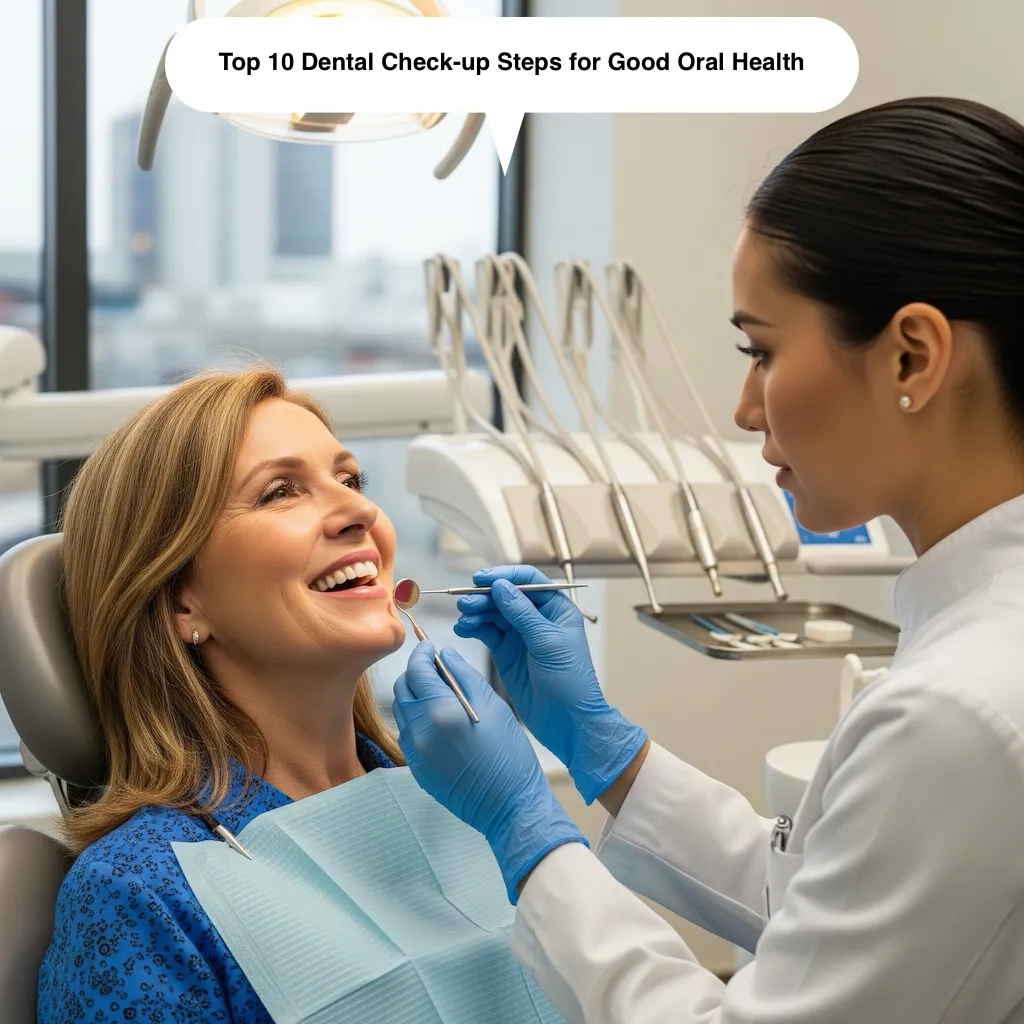
10 Important Dental Checkup Steps for Good Oral Health
Below is a fully rewritten, expanded version of your article, rebuilt around the actual keyword “10 Important Dental Checkup Steps for Good Oral Health” and based on the draft you provided. The original draft had useful raw material, but it repeated insurance points and did not fully explain how a checkup usually works from the patient’s perspective. This version turns it into a clearer, more helpful, search-focused article centered on what readers actually want to know: what happens during a dental checkup, each step matters, what is routine versus optional, and how those steps work together to protect long-term oral health.
10 Important Dental Checkup Steps for Good Oral Health
A dental checkup is something people know they are supposed to do, but many still do not fully understand what it entails.
Most adults know the broad message: go to the dentist regularly, get your teeth cleaned, catch problems early, and try not to wait until something hurts. But if you ask most patients what actually happens during a checkup, they would only name one or two parts. They remember the cleaning. They remember the scraping. They remember X-rays now and then. But they often do not realize how many distinct clinical steps are packed into a routine appointment, or how each step helps protect their oral health in different ways.
That matters because when you understand the structure of a dental checkup, you make better choices. You are more likely to keep preventive visits, ask useful questions, notice early warning signs, and follow home-care advice that lowers your risk of cavities and gum disease. The draft you provided pointed in that direction by listing 10 “important” steps. Still, it mixed useful preventive ideas with repetitive dental-insurance language and did not always explain why each step matters clinically. This rewrite keeps the core idea while turning it into a more practical, comprehensive guide.
A good dental checkup includes more than a glance at your teeth. It is a layered preventive visit. The dentist and hygienist are gathering information, checking for disease, cleaning what you cannot remove at home, evaluating your gums and soft tissues, looking for early damage, answering your questions, and helping you build a better routine for the months ahead. The American Dental Association explains that regular oral home care is crucial to oral health. Still, it also emphasizes the value of regular dental visits as part of a complete preventive strategy. MouthHealthy, the ADA’s patient education site, says regular dental visits matter because they help prevent problems from developing and help spot issues early when treatment is likely to be simpler and more affordable. (ada.org)
This guide walks through the 10 important steps of a dental checkup for Good Oral Health, explains what each step typically involves, shows why it matters, and helps you understand what your dental team is really doing during a preventive visit.
Why dental checkups matter more than most people realize
The biggest reason dental checkups are important: many oral health problems do not hurt right away.
A small cavity between two teeth may not cause symptoms early. Gum inflammation may only show up as occasional bleeding when you brush. Oral soft tissue changes may be painless. Bite problems, grinding, wear, dry mouth, and early bone loss often creep in quietly. By the time pain becomes the reason you finally make an appointment, the problem is often bigger, more expensive, and harder to treat.
That is exactly why preventive visits exist. MouthHealthy says regular dental visits help prevent problems from developing and enable dentists to find them early. The same resource notes that some diseases or medical conditions have symptoms that can appear in the mouth, which means dental checkups can reveal more than tooth problems alone. (mouthhealthy.org)
A dental checkup also becomes part of your daily home care, but while essential, it has limits. The ADA explains that home oral care is a major contributor to oral health, but it also recognizes that professional care remains a key part of maintaining a healthy mouth. Plaque can harden into tartar, and tartar generally cannot be removed with ordinary brushing or flossing once it is set. Cleveland Clinic says professional dental cleanings remove plaque and tartar, helping lower the risk of cavities and gum disease. (my.clevelandclinic.org)
This is why a checkup is not a “nice idea.” It is part of the long-term strategy for keeping small issues small.
What a routine dental checkup usually includes
A typical preventive dental appointment usually combines some or all of the following:
- health history review,
- oral exam,
- gum evaluation,
- X-rays when needed,
- oral cancer screening,
- professional cleaning,
- home-care coaching,
- and a final treatment discussion or follow-up plan.
Not every office uses the same sequence, and not every patient needs every service at every visit. A child, an adult with excellent oral health, a patient with heavy tartar buildup, and someone with signs of gum disease may all have somewhat different appointments. But the core structure is consistent.
It is also important to understand that a routine checkup is not the same as deep periodontal treatment. If the gums show signs of more advanced disease, the visit may shift to a discussion of scaling and root planing rather than a standard preventive cleaning. MouthHealthy explains that if gum disease is mild and caught early, a professional cleaning may be enough, but if pockets between the teeth and gums are too deep, a deeper cleaning below the gumline may be needed. (mouthhealthy.org)
That distinction helps explain why some appointments feel simple, and others lead to more complex conversations.
With that foundation in place, here are 10 important steps to support oral health during a dental checkup.
1. Scheduling and keeping regular dental checkup appointments
The first important step in a dental checkup is not even a checkup chair. It is the decision to schedule and keep regular appointments before a problem arises.
This sounds obvious, but it is the step on which everything else depends. A perfect dentist cannot help you catch issues early if you only go when a tooth breaks or pain becomes impossible to ignore. MouthHealthy says regular dental visits matter because they help prevent many problems from developing in the first place and identify them early, when treatment is more likely to be easier and more affordable. (mouthhealthy.org)
The “every six months” rule is common, but not every patient has the same ideal schedule. Some people with excellent oral health do well on a standard twice-a-year routine. Others with heavy tartar buildup, a history of gum disease, dry mouth, diabetes, or a high risk of cavities may need more frequent professional care. The ADA emphasizes that oral health recommendations should be personalized, and the same logic applies to recall intervals. (ada.org)
Why is this first step so important? Because the power of a dental checkup comes from consistency. One visit can help. Regular visits create a trend line. Your dentist and hygienist can compare changes over time. They can see whether an area is stable, worsening, or improving. They can catch a cavity when it is still tiny. They can notice subtle recession, wear, inflammation, or a change in a soft-tissue area before it becomes serious.
This is also the step most likely to save you money over time. Preventive care usually feels less urgent than restorative care, but it is often the thing that prevents more costly, later treatment. A small filling is usually much easier than a root canal and crown. Mild gum inflammation is easier to manage than advanced periodontal disease. A regular checkup allows you to catch problems before they escalate.
So yes, scheduling regular checkups is not just an “option.” It is the step that makes the rest of the preventive system possible.
2. Reviewing your medical history and current medications
The second important step in the dental checkup is the medical checkup review.
This part of the appointment can feel repetitive. Many patients think, “I already wrote this down,” or “Why do they keep asking about medications?” But this is one of the most important safety and decision-making steps of the entire visit.
Dentists and hygienists need to know about:
- new diagnoses,
- recent surgeries,
- allergies,
- pregnancy,
- blood pressure issues,
- diabetes,
- heart conditions,
- immune system problems,
- and medications that may affect bleeding, healing, dryness, or the risk of infection.
The ADA notes that antibiotic prophylaxis before dental procedures is recommended only for certain patients with specific heart-related risks, not for everyone, which is one reason your health history must be updated accurately. The ADA also states that preventive, diagnostic, and restorative dental care is safe throughout pregnancy and that delaying needed care during pregnancy is usually unnecessary. (ada.org)
Your general health and your oral health are connected more closely than many people realize. Diabetes can increase the risk of gum disease. Some blood pressure medicines and other medications can contribute to dry mouth. Anticoagulants may affect bleeding. Cancer therapy can affect the mouth dramatically. The ADA’s oral health resources repeatedly connect medical conditions and oral conditions in this way. (ada.org)
So when the hygienist or dentist asks if anything has changed since your last visit, that is not meaningless small talk. It helps them decide:
- how safe certain procedures are,
- whether any precautions matter,
- whether your gum health is being affected by a medical issue,
- and what guidance may be most helpful for you.
This step protects you and helps personalize your care. It is simple but essential.
3. Getting a comprehensive oral exam
The third important step in a dental checkup is the comprehensive exam.
This is the part where the dental team looks at the big picture of your mouth. The dentist examines the teeth, gums, tongue, cheeks, roof of the mouth, bite, and often surrounding structures to look for signs of decay, damage, infection, wear, and abnormal tissue changes. MouthHealthy says that during a dental checkup, the dentist or hygienist will ask about recent medical history, examine the mouth, and determine whether X-rays are needed. It also notes that regular dental visits help identify oral health problems early. (mouthhealthy.org)
This step matters because your mouth is a system, not just a collection of individual teeth. A comprehensive exam is not just about finding “a cavity.” It is about asking:
- Are the gums healthy?
- Is there wear from grinding?
- Are any fillings breaking down?
- Is there a recession?
- Is there evidence of clenching?
- Are there cracks, chips, or mobility issues?
- Are there lesions or color changes in the soft tissues?
- Is the bite balanced, or is it causing strain?
The exam is also where the dentist begins to connect the rest of the data. The hygienist may have already noticed plaque patterns, tartar buildup, bleeding, or sensitivity. The X-rays may reveal something under the surface. The patient may mention a clicking jaw or a sensitive tooth. The dentist brings these pieces together into an actual diagnosis or monitoring plan.
Patients often underestimate this part because it can seem quick. But the value of the comprehensive exam is not in how long it takes. It is what it can detect before you have symptoms.
This is why regular checkups matter, even if you think you “feel fine.” A lot of dental problems feel fine until they no longer do.
4. Taking X-rays when needed
The fourth important step in dental checkups is to have them when they are due or clinically needed.
Not every visit includes X-rays, and that is normal. X-rays are diagnostic tools, not something that must happen every time. But when needed, they are extremely useful because they reveal what the naked eye cannot.
Cleveland Clinic explains that dental X-rays give dentists a clearer view of the teeth, roots, supporting bone, nerves, and other structures. This is critical for detecting hidden decay, bone loss, infections, impacted teeth, or changes below existing dental work. (my.clevelandclinic.org)
Why does this matter? Because many important dental problems are invisible during a standard visual exam.
For example:
- decay between teeth may not be visible until it gets larger,
- bone loss around teeth can be hidden,
- An abscess can form near the root,
- wisdom teeth can be impacted,
- and a problem under a crown or filling may not be obvious from the surface.
Patients sometimes worry that X-rays are ordered just because they are “routine.” In reality, they are most helpful when the dentist needs more information than a mirror and an explorer can provide, or when enough time has passed for the diagnostic value to be appropriate again. MouthHealthy specifically notes that the dentist or hygienist may decide whether or not you need X-rays during a checkup. (mouthhealthy.org)
A dental checkup is not about doing more for the sake of doing more. It is about seeing what would otherwise stay hidden.
5. Screening for oral cancer and other soft-tissue abnormalities
The fifth important step in dental checkups is the soft-tissue evaluation for oral cancer.
This is one of the most underrated parts of a routine checkup because it is often quick and painless, and many patients do not even realize it is happening. During this step, the dentist examines the tongue, the inside of the cheeks, the lips, the floor of the mouth, the palate, the throat, and often the jaw and neck for unusual changes.
MouthHealthy says a routine dental checkup can include an oral examination in which the dentist checks the tongue and the entire mouth and may also feel the jaw and neck. The National Cancer Institute notes that dentists may check the oral cavity for signs of cancer during a routine exam, and it lists warning signs such as a sore that does not heal, a lump or thickening, or red or white patches in the mouth. (mouthhealthy.org)
This step matters because not all important oral health problems involve teeth or pain. Some soft-tissue changes are harmless. Others may need monitoring or follow-up. The key value of the screening is early detection.
A patient may not notice:
- a small persistent white patch,
- a change in tissue texture,
- or an area that has been irritated for weeks.
But a trained clinician may spot it. That does not mean a finding is automatically serious. It means the visit has done one of its most important jobs: noticing something you would not likely have caught on your own.
This is also why a dental checkup is about more than cavities. It is a broader oral health evaluation.
6. Receiving a professional cleaning to remove plaque and tartar
The sixth important step in dental checkups is the professional cleaning, called a prophylaxis.
This is the part patients usually recognize most easily. The hygienist uses specialized instruments to remove plaque and tartar from the surfaces of the teeth and along the gumline. Cleveland Clinic explains that professional cleanings remove plaque and tartar, reducing the risk of cavities and gum disease. (my.clevelandclinic.org)
Why is this necessary if you brush and floss at home?
Because even excellent home care has limits, plaque is a sticky film of bacteria that constantly forms on teeth. If it is not effectively removed, it can harden into tartar. Once tartar forms, it generally cannot be removed with ordinary brushing. MouthHealthy explains that plaque bacteria can irritate the gums, and if buildup continues, the risk of gingivitis and more advanced periodontal problems rises. (mouthhealthy.org)
This is why professional cleaning is not merely cosmetic. It is not just about making your teeth feel smoother or look brighter. It is disease prevention.
A patient with minimal buildup may have a fairly quick cleaning. A patient with heavier tartar deposits, crowding, dry mouth, or longer gaps between visits may need much more time and effort. That does not mean anything is “wrong” with you as a patient. It means the hygienist is removing what has accumulated since the last visit.
This is also the step where some patients realize the difference between a routine cleaning and more advanced gum treatment. If the hygienist finds significant buildup below the gumline or evidence of periodontal disease, the conversation may shift away from routine prophylaxis and toward a deeper periodontal approach. MouthHealthy and the Cleveland Clinic both distinguish routine cleaning from scaling and root planing in this way. (mouthhealthy.org)
So yes, the cleaning itself is a core step. But it is only one part of the full checkup.
7. Evaluating your gums, assessing gum disease risk
The seventh important step in dental checkups is evaluating the health of your gums and talking honestly about your risk of gum disease.
Patients often think gum disease is obvious. They assume they would know if they had it. But early gum disease often begins quietly. Bleeding when brushing, mild puffiness, bad breath, tenderness, or a little recession can be dismissed for months or years. Meanwhile, the tissues supporting the teeth may be under increasing stress.
MouthHealthy explains that when plaque is not removed well, the bacteria can inflame the gums. If this process worsens, the gums can pull away from the teeth, forming pockets that trap more plaque and make the disease harder to manage. Left untreated, this can eventually lead to bone and tooth loss. (mouthhealthy.org)
This is why a good checkup includes discussion of the whole body, not just the teeth.
The dental team may talk with you about:
- bleeding,
- pocket depths,
- recession,
- swelling,
- tartar patterns,
- brushing pressure,
- home-care technique,
- and whether routine cleaning is sufficient or periodontal treatment may be needed.
This is an especially important step because gum disease is one of the most common oral health problems adults face, and many people normalize its early symptoms. They think “my gums always bleed a little” is harmless. It is common, but it is not the same thing as healthy.
This step helps you understand whether your current routine is actually protecting your gums or only keeping obvious symptoms from getting worse.
8. Talking about your daily brushing, flossing, and oral hygiene habits
The eighth important step in the dental checkup is a discussion of your daily routine.
This is the part patients often rush through because it sounds basic. The hygienist asks how often you brush, whether you floss or clean between your teeth, what kind of toothbrush you use, whether you have sensitivity, and whether anything in your routine feels difficult.
That conversation matters much more than people think.
The ADA’s guidance on home oral care says that regular home care is a major contributor to oral health and that recommendations should be personalized to the patient’s needs. In other words, what works for one person may not be the best routine for another. (ada.org)
This step is where the dental team helps you bridge the gap between the clean mouth you have in the office today and the daily habits that will shape your mouth over the next six months.
A good hygienist is not just asking, “Do you floss?” to make you feel guilty. They are trying to identify why plaque keeps returning in specific areas. They may notice:
- that you brush too hard,
- that you are missing the back molars,
- that you are not cleaning well along the gumline,
- that you would benefit from an electric toothbrush,
- Or that you need an interdental brush or water flosser because regular floss is not working well for you.
This step can make a dramatic difference over time. The professional cleaning resets your mouth for the day. Better home care protects it in the months after.
9. Addressing your concerns, symptoms, and treatment questions
The ninth important step in a dental checkup is speaking up about your concerns and getting clear answers.
This is where the checkup becomes truly patient-centered.
A good dental visit should not feel like something that is just done to you. It should also include time for you to say:
- “This tooth feels sensitive sometimes.”
- “My jaw clicks.”
- “I’ve noticed bleeding when I floss.”
- “My mouth feels dry lately.”
- “I think I grind my teeth.”
- “I’m worried about how my front teeth look.”
- “What is this spot on my gum?”
- “Do I really need that procedure?”
If you do not bring up those issues, the dental team may still notice some of them, but they may not know how much they matter to you personally. MouthHealthy emphasizes that regular visits help spot issues and that the dental checkup is a place to evaluate your overall health, not just to clean your teeth. (mouthhealthy.org)
This step matters because diagnosis is not just visual. It is also conversational. Your symptoms, patterns, habits, and priorities affect what the dentist focuses on and what recommendations make sense.
This is also where you should feel free to ask about:
- alternatives,
- timing,
- urgency,
- likely outcomes,
- and whether a problem should be treated now or monitored.
A patient who leaves confused is more likely to delay treatment, skip advice, or worry unnecessarily. A patient who leaves with clarity is much more likely to follow through well.
10. Reviewing findings, planning next steps, and scheduling the next visit
The tenth important step in the dental checkup is reviewing the findings, agreeing on the next steps, and scheduling your recall visit before you leave.
This is the step that turns information into action.
At this point, the dentist and hygienist usually tell you:
- whether everything looks healthy,
- whether there are areas to watch,
- whether treatment is recommended,
- how urgent any issue is,
- And when you should come back.
If treatment is needed, this is the moment to clearly understand the plan. If treatment is not needed right now, this is the time to understand what to monitor and what changes at home could help. If your risk is higher than average, you may also hear that your recall interval should be shorter than the typical six months.
The ADA’s home care guidance reinforces that oral health maintenance is an ongoing process, not a one-time event. That is why a good checkup ends with a clear plan, not just a checkup smile. (ada.org)
Scheduling the next appointment before leaving may sound like a minor administrative task, but it matters for one simple reason: prevention works best when it is regular. If you leave intending to “call later,” life often gets in the way. If your next checkup is already on the calendar, the checkup you actually maintain the preventive rhythm is much higher.
That is why this final step belongs on the list. It is not glamorous, but it is one of the habits that helps people maintain good oral health year after year.
What can a good dental checkup catch early?
One of the easiest ways to understand the value of these 10 steps is to think about what they can catch early:
- small cavities before they become painful
- gum inflammation before it becomes more advanced periodontal disease
- soft-tissue changes before they are ignored for too long
- bite and wear problems before teeth fracture
- plaque and tartar buildup before it causes more harm
- poor home-care patterns before they become chronic disease patterns
- X-ray findings before they become emergencies
- patient concerns before they become expensive surprises
MouthHealthy says regular dental visits help detect problems early and prevent many from developing in the first place. That may sound like a broad promise, but when you break the visit down into 10 steps, you can see exactly how it happens. (mouthhealthy.org)
The difference between a checkup and a cleaning
Patients often use the term “checkup” interchangeably, but it is not quite the same.
A cleaning is mainly about removing plaque and tartar and helping the mouth stay healthier.
A checkup is broader. It usually includes the checkup, but also:
- the exam,
- history review,
- gum assessment,
- X-rays when needed,
- soft-tissue screening,
- and the discussion of findings and next steps.
That is why someone can say, “I just need a cleaning,” while the dental office thinks, “This patient also needs an exam, maybe updated X-rays, and maybe a gum evaluation.”
Understanding that difference helps patients see why the visit includes more than just polishing teeth.
What if the dentist says you need more than a routine checkup?
Sometimes a routine visit leads to a more in-depth conversation. That does not mean the office is overcomplicating things. It may mean the checkup has done its job.
For example:
- If your gums bleed heavily,
- If there is substantial tartar below the gumline,
- If X-rays show bone loss,
- or if periodontal pockets are deeper than they should be,
The office may discuss scaling and root planing or other periodontal treatment rather than a routine cleaning alone. MouthHealthy and the Cleveland Clinic both explain that scaling and root planing are used when gum disease has progressed below the gumline and requires deeper cleaning. (mouthhealthy.org)
Likewise, a checkup may lead to:
- a filling recommendation,
- a checkup discussion,
- a nightguard conversation,
- a referral for soft-tissue evaluation,
- or advice about orthodontic or cosmetic options.
That is not a failure of prevention. It is often prevention working exactly as intended: spotting the problem before it becomes worse.
How to get more value from every checkup
If you want every dental checkup to be more thorough, do these things:
Arrive checkup update your health history accurately.
Mention any new medications, surgeries, diagnoses, or symptoms.
Ask where plaque and tartar are collecting the most.
Ask whether your gums are truly healthy.
Ask whether you are brushing too hard or missing key areas.
Ask what one change would most improve your oral health before your next visit.
Do not leave without understanding any recommended treatment or follow-up.
Schedule the next visit before you go.
These actions help transform the appointment from passive to strategic.
Final thoughts
A strong preventive dental visit is much more than a quick exam and a polish.
It is a structured sequence designed to do several important things at once:
- update your health information,
- check for visible and hidden oral problems,
- Assess your gums and soft tissues,
- remove harmful buildup,
- improve the cleanliness of the mouth,
- strengthen your routine through personalized advice,
- and create a plan for what comes next.
That is why these 10 important dental checkup steps for good oral health matter so much. Each one has a purpose. Each one protects a different part of your oral health. And together, they give you a much better chance of catching problems early, keeping your mouth healthier, and avoiding more invasive treatment later. The ADA, MouthHealthy, and Cleveland Clinic all support this broader view of checkups as preventive, diagnostic, and educational, not just quick cleanings. (my.clevelandclinic.org)
So the simplest takeaway is this:
A dental checkup is not just about finding out whether you need a checkup.
It is about protecting your teeth, gums, soft tissues, and long-term oral health before bigger problems take hold.
And when you understand these 10 steps, you can walk into your next appointment knowing exactly why it matters.
CONCLUSION:
Maintaining good oral health involves consistent effort and proactive care. As these “Top 10 Dental Checkup Steps” illustrate, each stage of your dental visit plays a crucial role in preventing problems and maintaining the health of your smile. From regular exams and X-rays to professional cleanings and personalized hygiene advice, these steps work together to protect your oral well-being.
A qualified and licensed insurance agent, such as Steve Turner of SteveTurnerInsuranceSpecialist.com, possesses the expertise to answer all your questions about dental insurance and how it supports your oral health journey. Steve Turner can help you compare dental insurance plans, clarify coverage details for essential checkups, and find an affordable policy that truly meets your needs. His service comes at no extra cost to you, ensuring you receive expert guidance without any additional financial burden.
This list covers a broad range of general, restorative, and minor surgical procedures. Always verify specific coverage details with your dental insurance provider, as plans can have varying percentages of coverage (e.g., 100% for preventive, 80% for basic, 50% for major), annual maximums, deductibles, and waiting periods.
OUR CLIENT REVIEWS


CONTACT STEVE TURNER INSURANCE AGENT & BROKER
I’m here to take your calls and emails and answer your questions 7 Days a week from 7:00 a.m. to 8:00 p.m., excluding posted holidays.
Steve Turner is a licensed agent, broker, and a longstanding member of the National Association of Benefits and Insurance Professionals®. Steve holds the prestigious Registered Employee Benefits Consultant® designation. NABIP® is the preeminent organization for health insurance and employee benefits professionals and works diligently to ensure all Americans have access to high-quality, affordable Healthcare and related services.
Steve Turner is a licensed agent appointed by Florida Blue.
EMAIL ME: 24×7
OFFICE LOCATION
Website: steveturnerinsurancespecialist.com
Email: [email protected]
Phone and Text: +1-813-388-8373
Business Hours:
Monday: 7 am to 8 pm
Tuesday: 7 am to 8 pm
Wednesday: 7 am to 8 pm
Thursday: 7 am to 8 pm
Friday: 7 am to 8 pm
Saturday: 7 am to 8 pm
Sunday: 7 am to 8 pm
SOCIAL FOLLOW + SHARE
Dental INSURANCE POSTS



INSURANCE OFFERINGS
10 Important Dental Checkup Steps for Good Oral Health
HEALTH INSURANCE

MEDICARE ADVANTAGE

MEDICARE SUPPLEMENT

PRESCRIPTION DRUGS

LIFE INSURANCE

DISABILITY INSURANCE

DENTAL INSURANCE

GROUP HEALTH INSURANCE

ACCIDENT INSURANCE

LONG TERM CARE INSURANCE

MEDICAID INSURANCE

MEDICARE INSURANCE

MEDICARE PART A INSURANCE

MEDICARE PART B INSURANCE

MEDICARE PART C INSURANCE

MEDICARE PART D INSURANCE

MEDICARE PLAN G INSURANCE

MEDICARE PLAN N INSURANCE