
12 Important Dental Cleaning Hygienist Steps
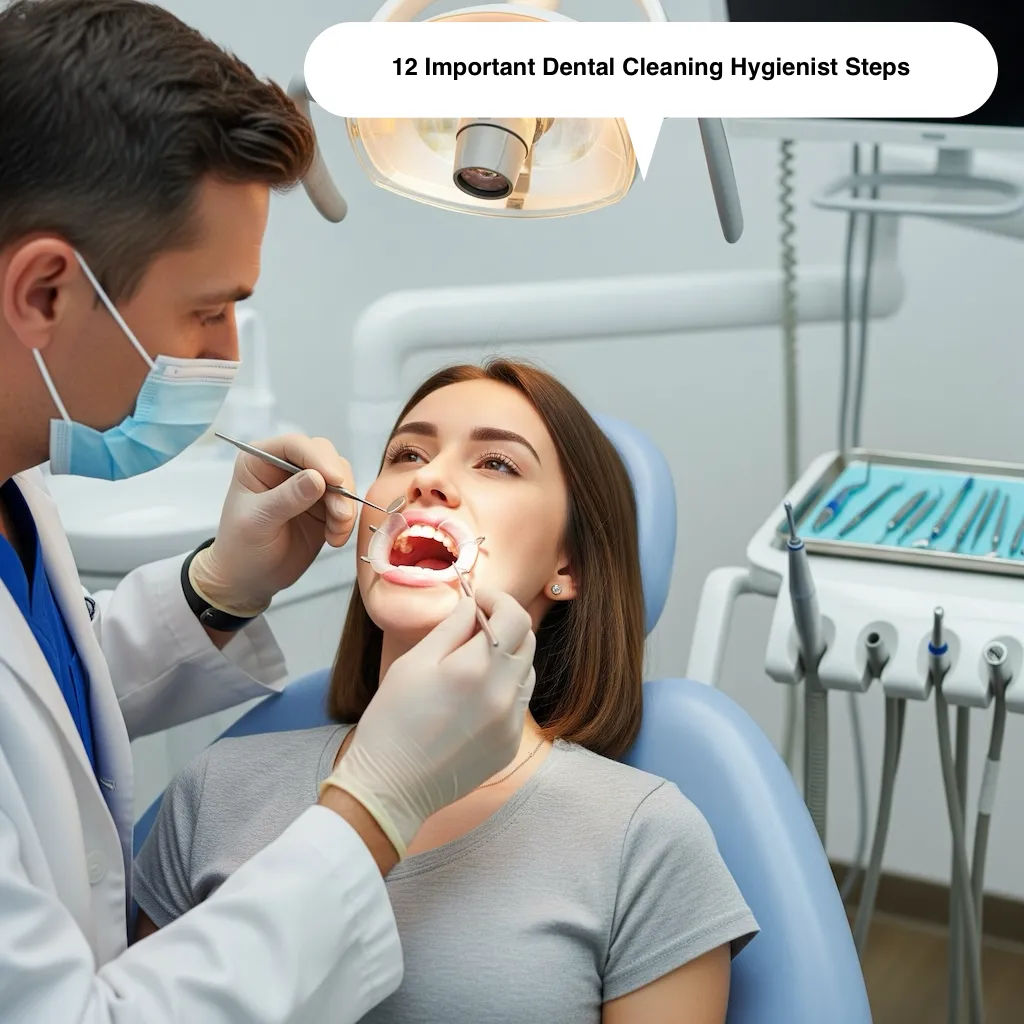
12 Important Dental Cleaning Hygienist Steps
12 Important Dental Cleaning Hygienist Steps
If you have ever sat back in a dental chair and wondered, “What exactly is the hygienist doing, and why does every part of this visit matter?”, you are not alone.
A lot of people think a dental cleaning is just “scraping and polishing.” That is a big oversimplification. A good dental cleaning appointment is actually a structured preventive visit with several separate parts. Some steps are about finding problems early. Some are about removing harmful buildup. Some are about reducing your future risk of cavities and gum disease. And some are about making sure you understand how to take care of your mouth between visits.
That is why the best way to think about cleaning is not as a quick cosmetic service. It is preventive dental care.
The American Dental Association explains that professional dental prophylaxis is only one part of oral health, while home care does the rest of the work between visits. Cleveland Clinic says a dental hygienist removes plaque and tartar, performs routine oral health screenings, may take dental X-rays, and often provides preventive treatments like fluoride. In other words, the hygienist is not just “cleaning teeth.” They are helping monitor, prevent, and interrupt disease before it becomes more serious. (ADA)
This is especially important because plaque and tartar are not just cosmetic annoyances. The ADA’s MouthHealthy explains that plaque is a sticky film of bacteria that forms on teeth and, if not properly cleaned away, can inflame the gums, contribute to gum disease, and eventually lead to bone and tooth loss. Cleveland Clinic similarly notes that hygienists remove plaque and tartar to lower the risk of cavities and gum disease. (MouthHealthy)
So if you want to understand what happens during a proper cleaning, here is the detailed version.
This article walks through the 12 key steps in a dental cleaning by a hygienist, explains why each one matters, and shows you how to tell the difference between a routine preventive cleaning and a visit that may lead to a deeper evaluation or more advanced periodontal treatment.
Why understanding the cleaning process matters
When patients understand the cleaning process, they usually make better decisions about oral health. They are more likely to keep preventive appointments, ask smarter questions, notice early warning signs, and follow home care instructions that actually reduce future problems. That matters because the ADA emphasizes that home oral care is a major contributor to oral health and helps lessen the need for more extensive dental intervention later. (ADA)
Understanding the steps also helps reduce anxiety. A lot of nervousness at the dentist comes from uncertainty. If you know that the hygienist is moving through a predictable sequence and that each step has a purpose, the visit feels less mysterious. The same is true if you know when something is routine and when it is being added due to a concern. Cleveland Clinic notes that routine screenings help identify problems early before they get worse. That means a cleaning appointment often does more for you than you realize, even when you feel fine. (Cleveland Clinic)
It is also worth saying this clearly: not every office performs every step in the same order, and not every patient needs every service at every visit. A child, an adult with excellent oral health, a person with heavy tartar buildup, and a patient with active gum disease may all have somewhat different appointments. But the core structure is very consistent.
Before the 12 steps: what a routine cleaning is, and what it is not
Before diving into the steps, it helps to know what a routine cleaning is supposed to do.
A routine dental cleaning, often called a prophylaxis, is designed to remove bacteria, plaque, and tartar buildup from the teeth and help keep the teeth and gums healthy. Cleveland Clinic describes a professional teeth cleaning this way and notes that the appointment may also include other preventive treatments, such as fluoride, depending on the patient’s needs. (Cleveland Clinic)
A routine cleaning is not the same as a deep cleaning. If gum disease has progressed and plaque, tartar, and bacteria are trapped below the gumline in periodontal pockets, a different procedure may be needed. The ADA’s MouthHealthy explains that scaling and root planing is a deep cleaning used to treat gum disease below the gumline, and the Cleveland Clinic explains that this treatment reaches beneath the gums and smooths root surfaces to help prevent more buildup from reattaching. (MouthHealthy)
That distinction matters because some readers searching for “dental cleaning steps” are actually wondering why their visit included extra measurements, extra tenderness, or a conversation about gum treatment instead of a simple polish-and-go appointment.
With that foundation in place, here are the 12 steps that matter most in a high-quality routine cleaning visit.
Step 1: Medical and dental history review
The first important step in dental cleaning by a hygienist is the medical and dental history review.
This part is easy to underestimate because it can feel like paperwork or a routine conversation. But it is one of the most important safety steps in the entire visit. The hygienist usually updates your medical history, reviews your medications, asks about any changes in your health, checks for pregnancy when relevant, and asks whether you have had recent surgeries, joint replacements, heart conditions, allergies, or oral symptoms. The goal is to make sure your cleaning is appropriate, safe, and tailored to your current condition.
The ADA notes that antibiotic prophylaxis before dental procedures should be reserved for patients at the highest risk of post-treatment complications, particularly those with certain heart conditions, and that recommendations have changed over time. The ADA also states that preventive, diagnostic, and restorative dental treatment is safe throughout pregnancy. These kinds of clinical details are exactly why your hygienist asks what may feel like repetitive health questions at the start of a visit. (ADA)
This review matters because oral health is connected to overall health. Some medications can cause dry mouth. Some conditions increase the risk of gum disease or bleeding. Some patients may need special precautions. A good hygienist uses this review to spot issues that can affect both the cleaning itself and the advice they give you afterward.
So, yes, this step is necessary. It is not filler. It is the foundation for a safe and personalized visit.
Step 2: Initial visual assessment and oral health screening
The second important step is the first close look inside your mouth.
At this point, the hygienist usually performs a preliminary visual assessment of the teeth, gums, tongue, cheeks, and overall oral tissues. Cleveland Clinic says dental hygienists perform routine oral health screenings, look for issues such as cavities, gum inflammation, and signs of oral cancer, and then report their findings to the dentist. (Cleveland Clinic)
This step matters because a routine cleaning is not just about removing buildup. It is also about checking whether the environment in your mouth has changed since the last visit. Are the gums red or puffy? Is there obvious plaque accumulation in one area? Are there ulcerations, white patches, red patches, broken teeth, or suspicious soft-tissue changes? Has one side of the mouth become harder to keep clean than the other? All of that begins to guide the rest of the appointment.
Even if you have no pain, this screening can still be valuable. Dental disease and gum disease often go unnoticed early on. You may not feel a small cavity starting between teeth. You may not notice gum inflammation until it becomes more advanced. A hygienist’s trained visual assessment can help catch patterns you would not notice on your own. Cleveland Clinic specifically points out that routine screenings help detect issues early, before they worsen. (Cleveland Clinic)
This is also one reason you should never think of a cleaning as “just a cleaning.” It is an early-detection appointment, too.
Step 3: X-rays when needed
The third important step is dental X-rays, when they are needed or due.
Not every cleaning visit includes X-rays, and that is important to understand. They are not usually taken just for the sake of taking them. They are used when the dentist or hygienist needs images that a visual exam cannot provide, or when your preventive schedule indicates they are due.
Cleveland Clinic explains that hygienists can take dental X-rays to help the dentist get a clearer view of the teeth roots, supporting bone, sinuses, nerves, and surrounding structures. That matters because many dental problems begin in places you cannot see just by looking in the mouth. (Cleveland Clinic)
This step is helpful for spotting:
- decay between teeth,
- bone loss around teeth,
- changes below fillings or crowns,
- root issues,
- abscesses,
- and structural problems below the gumline.
That is why X-rays can feel unnecessary when nothing hurts, but still be clinically useful. A cleaning visit is supposed to be preventive. It is better to catch a small issue early.
Patients sometimes worry that X-rays are automatically done every visit. That is not usually the case. Good practices take them based on need, timing, risk, and the dentist’s judgment. But when prescribed, they can add important information that changes the rest of the appointment.
Step 4: Oral cancer screening
The fourth important dental cleaning hygienist step is the oral cancer screening.
This is one of the most overlooked parts of a routine dental visit, partly because it is often quick and partly because patients may not even realize it is happening. During a screening, the hygienist or dentist looks for unusual sores, patches, lumps, swelling, or other abnormal areas in the mouth and may also feel areas around the jaw, neck, or soft tissues.
Cleveland Clinic says dental hygienists check for signs of oral cancer during routine oral health screenings. The National Cancer Institute notes that although there is no standard, population-wide screening test for oral cavity and nasopharyngeal cancers, dentists may check the oral cavity for signs of cancer during routine checkups. NCI also lists signs such as a sore that does not heal, a lump or thickening, or a red or white patch in the mouth as potential warning signs that warrant attention. (Cleveland Clinic)
This step matters because many oral abnormalities are painless at first. Patients often assume that if something does not hurt, it is not important. That is not always true. A quick screening is not a diagnosis, but it is an important opportunity to notice something early enough to investigate properly.
It is also a good reminder that a dental cleaning appointment is not just about teeth. It is also an oral soft-tissue health appointment.
Step 5: Gum and periodontal evaluation
The fifth important step is evaluating the health of your gums.
This may be subtle in some appointments and more formal in others. The hygienist may visually assess the gums, note inflammation or bleeding, and, in some cases, perform periodontal charting or discuss pocket depths if there are concerns about gum disease.
Why does this matter so much? Plaques and tartar do not just threaten the teeth. They threaten the supporting tissues, too. The ADA’s MouthHealthy explains that when plaque is not removed well, the bacteria can inflame the gums. If that process worsens, gums can pull away from teeth, forming pockets where plaque gets trapped and cannot be removed with ordinary brushing. Left untreated, that process can lead to bone and tooth loss. Cleveland Clinic similarly notes that scaling and root planing are needed when tartar and bacteria build up below the gums in gum disease. (MouthHealthy)
This is the step where a routine cleaning can start to diverge from a deeper periodontal conversation. If your gums are healthy and stable, the cleaning may stay firmly in preventive territory. If there is bleeding, inflammation, recession, or evidence of deeper buildup, the hygienist may discuss whether a different kind of treatment is more appropriate.
This is important for patients because many people think “my gums bleed a little” is normal. It is common, but it is not the same thing as healthy.
Step 6: Plaque and tartar removal
This is the step most people think of when they imagine a cleaning.
The sixth important dental cleaning hygienist step is removing plaque and tartar from the teeth. Cleveland Clinic says that during a routine cleaning, a dental hygienist uses special instruments to remove plaque and tartar from the surfaces of your teeth. It also explains that this lowers the risk of cavities and gum disease. (Cleveland Clinic)
This step matters because tartar is not something you can brush away at home once it hardens. Plaque is soft and can be disrupted daily with good brushing and cleaning between the teeth. But if it sits long enough, it can harden into tartar, and tartar generally requires professional removal.
The reason hygienists spend time scraping and scaling is not to make your teeth cosmetically nicer. It is used to physically remove deposits that harbor bacteria and contribute to gum inflammation and the risk of decay. The ADA’s MouthHealthy explains that plaque is always forming, and if it is not cleaned well, it can trigger gum inflammation and disease progression. (MouthHealthy)
This step can be quick for a patient with minimal buildup and excellent home care. It can take much longer for someone with heavy tartar buildup, crowded teeth, a dry mouth, or long gaps between visits. That is normal. The time does not mean the hygienist is “doing more for the money.” It usually means your mouth requires more work.
Step 7: Spot cleaning below the gumline and deciding whether deeper treatment is needed
The seventh step is where a lot of confusion starts for patients.
During a routine cleaning, the hygienist may clean slightly below the gumline to remove deposits and maintain healthy tissue. But if the buildup is deeper and the pockets are too deep, that may shift the discussion away from routine prophylaxis toward scaling and root planing, a deeper periodontal treatment.
The ADA’s MouthHealthy explains that if gum disease is caught early and has not damaged the structures below the gumline, a professional cleaning may be enough. But if the pockets between the gums and teeth are too deep, scaling and root planing may be needed. Cleveland Clinic describes deep cleaning as reaching beneath the gums to remove tartar and bacteria around the roots and to smooth the root surfaces. (MouthHealthy)
This is why one person’s cleaning feels straightforward, while another hears about “deep cleaning, periodontal pockets,” or “root planing.” The hygienist is not inventing extra treatment for fun. They are responding to the extent of the disease and how far beneath the gums it has progressed.
For readers, one of the most helpful things to know is that a routine cleaning is preventive maintenance. A deep cleaning is a treatment for a disease.
That is a completely different category of appointment.
Step 8: Teeth polishing
The eighth important dental cleaning hygienist step is polishing the teeth.
Cleveland Clinic says hygienists often polish teeth with a paste and a rubber cup as part of routine dental cleanings. This is the part many patients associate with the clean, slick feeling afterward. (Cleveland Clinic)
Polishing usually helps remove surface stains and smooth the tooth surfaces after scaling. That smoother surface can make teeth feel cleaner and may make it a little harder for fresh plaque to cling immediately. It also improves the cosmetic feel of the appointment, which is not trivial. When your mouth feels cleaner and looks brighter, you are often more motivated to keep up your home care.
But it is worth saying something readers do not always hear: polishing is not the main purpose of the cleaning. The disease-prevention value comes first from the screening, evaluation, and removal of plaque and tartar. Polishing is more of a finishing step than a core medical step.
That is why, in some situations, polishing may be limited or approached differently if the main concern is active periodontal treatment rather than a routine preventive visit.
Step 9: Interdental cleaning and flossing review
The ninth important step is cleaning between the teeth and reinforcing interdental care.
In many offices, the hygienist will floss between the teeth as part of the appointment or will otherwise check and clean areas where plaque and debris get trapped. Just as important, this part of the visit is often a live demonstration of where home care is falling short.
The ADA’s home care guidance says oral hygiene between dental visits is a major contributor to oral health and helps reduce the need for future dental interventions. Cleveland Clinic’s gum disease treatment guidance says flossing is essential for removing plaque, tartar, and bacteria between teeth. (ADA)
This matters because brushing alone is not enough. Toothbrush bristles do not fully clean the narrow contact points between teeth. Those areas are common sites for inflammation and decay. A hygienist who flosses or demonstrates interdental cleaning is not performing an optional flourish. They are showing you the area most people miss every day.
This step is especially important if:
- Your teeth are crowded,
- You have bridgework,
- You have orthodontic retainers,
- Or you tend to get bleeding between teeth.
If you routinely skip cleaning between your teeth, this step is one of the clearest reminders of why that habit matters.
Step 10: Fluoride treatment when appropriate
The tenth important dental cleaning hygienist step is fluoride treatment, when appropriate.
Not every patient receives fluoride at every visit, and not every office uses the same form. But professionally applied fluoride remains an important preventive tool, especially for patients at elevated risk of decay.
The CDC says fluoride helps both children and adults prevent cavities. The ADA’s caries risk management guidance recommends professional topical fluoride, such as 2.26% fluoride varnish or 1.23% fluoride gel, for people at risk of developing dental caries, depending on age and clinical need. (CDC)
This step matters because fluoride helps strengthen enamel and reduce the risk of tooth decay. It can be especially useful for:
- children,
- teens with orthodontic appliances,
- adults with dry mouth,
- people with frequent cavities,
- patients with exposed root surfaces,
- or anyone with elevated caries risk.
Some patients think fluoride is only for children. That is not accurate. The CDC specifically says fluoride helps both children and adults prevent cavities. (CDC)
So when fluoride is offered after a cleaning, it is not a random add-on. It is a risk-reduction tool. Whether it is necessary during your visit depends on your risk of cavities, age, and the practice’s clinical approach.
Step 11: Personalized oral hygiene instructions
The eleventh important step in dental cleaning hygiene is personalized oral hygiene instruction.
This is the part of the appointment that can produce the biggest long-term payoff, yet patients often rush through it. A good hygienist does not just tell you “brush and floss.” They explain what you are missing, where you are missing it, and how to fix it.
The ADA’s home oral care guidance emphasizes that recommendations should be personalized and tailored to the individual patient’s needs, especially for people at increased risk of caries or gingivitis. Cleveland Clinic also notes that dental hygienists help patients maintain oral health, which includes preventive guidance. (ADA)
This step may include advice about:
- better brushing angle,
- softer brushing pressure,
- using an electric toothbrush,
- switching to interdental brushes,
- using a water flosser,
- addressing dry mouth,
- choosing fluoride toothpaste,
- or focusing extra attention on one area of the mouth.
This is one of the biggest reasons dental cleanings matter. The hygienist sees patterns you cannot see. They know where plaque tends to accumulate in your mouth. They can tell whether you are brushing too hard, missing back molars, neglecting gumline cleaning, or failing to clean effectively between teeth.
In other words, they are not just telling you to “do better.” They are showing you exactly how to make your routine more effective.
Step 12: The dentist’s final exam, treatment discussion, and recall planning
The twelfth important dental cleaning hygienist step is the final exam and follow-up planning.
In many offices, after the hygienist finishes, the dentist comes in to review findings, examine the mouth, assess X-rays if any were taken, confirm whether there are cavities, cracks, gum concerns, or soft-tissue abnormalities, and discuss next steps. Cleveland Clinic says hygienists report their screening findings to the dentist. The National Cancer Institute also notes that dentists may check the oral cavity for signs of cancer during a routine checkup. (Cleveland Clinic)
This final step matters because the hygienist and dentist work as a team. The hygienist often identifies patterns and preventive concerns. The dentist diagnoses, confirms findings, and outlines treatment if any is needed.
This is also where two more important things often happen:
- your questions get answered,
- And your next recall interval gets set.
The ADA’s home care guidance reminds readers that most of their oral health work happens outside the dental office, making regular recall planning important. The ideal recall interval is not the same for every patient. Some people do well with visits every six months. Others with more plaque, gum issues, or dry mouth may need more frequent maintenance. (ADA)
So the final step is not just “the dentist peeks in and leaves.” It is the handoff point where prevention, diagnosis, and future planning come together.
A quick recap of the 12 important dental cleaning hygienist steps
If you want the full process in one clean list, here it is:
- Medical and dental history review
- Initial visual assessment and oral health screening
- X-rays when needed
- Oral cancer screening
- Gum and periodontal evaluation
- Plaque and tartar removal
- Spot cleaning below the gumline and evaluation for deeper treatment needs
- Teeth polishing
- Interdental cleaning and flossing review
- Fluoride treatment when appropriate
- Personalized oral hygiene instructions
- Dentist exam, treatment discussion, and recall planning
Some offices may combine or reorder these steps, but this framework is a reliable way to understand what a complete preventive visit is trying to accomplish.
Routine cleaning versus deep cleaning: what patients need to know
A lot of people search for dental cleaning steps after being told they need a “deep cleaning” and want to know whether that is normal.
The answer is that it depends on the condition of the gums.
The ADA’s MouthHealthy explains that a routine professional cleaning is often enough when gum disease is caught early and has not damaged structures below the gumline. But if pockets are too deep, scaling and root planing may be needed. Cleveland Clinic says scaling and root planing is a nonsurgical treatment for mild to moderate gum disease that reaches deeper beneath the gums and smooths the roots to reduce future reattachment of plaque and tartar. (MouthHealthy)
So here is the simplest distinction:
A routine cleaning is preventive maintenance.
A deep cleaning is a disease treatment.
That is why one should not automatically be substituted for the other.
If a patient has swollen or bleeding gums, deeper tartar below the gumline, and evidence of periodontal pockets, a routine cleaning may not be enough to solve the problem. In that case, the cleaning visit becomes the moment when the office identifies a need for a different level of care.
Why do gums bleed during a cleaning
This is one of the most common patient worries.
Bleeding during a cleaning is often a sign that the gums are inflamed, not a sign that the hygienist “hurt your gums for no reason.” The ADA explains that plaque bacteria can inflame the gums, and the Cleveland Clinic notes that swollen or bleeding gums can be a symptom of gum disease significant enough to require deeper cleaning. (MouthHealthy)
If your gums bleed during brushing, flossing, or cleaning, that is usually not a reason to avoid cleaning the area. It is often a reason to clean it more consistently and to find out whether gingivitis or more advanced gum disease is present.
This is one of the reasons regular cleanings matter. Healthy gums generally become easier to clean and less likely to bleed when plaque and tartar are controlled consistently.
How often should you get a professional cleaning?
The most common schedule is every six months, but not every month has the same needs.
The ADA’s home care guidance notes that even someone who gets two professional cleanings a year still spends far more total time on daily home care than in the dental chair. Cleveland Clinic’s gum disease guidance also notes that cleaning frequency can vary with disease severity, with some patients needing more than two cleanings per year. (ADA)
So the better answer is:
- Two visits a year are common.
- But some people need more frequent maintenance,
- and the right interval depends on your cavity risk, gum health, home care, and dental history.
A patient with excellent oral health may do very well on a standard schedule. A patient with chronic tartar buildup, recession, dry mouth, or periodontal history may need closer follow-up.
Questions to ask your hygienist during a cleaning
One of the best ways to make a dental cleaning more valuable is to ask better questions.
Consider asking:
- Where am I building up the most plaque or tartar?
- Are my gums healthy, or do you see signs of inflammation?
- Do you think I need a deeper periodontal evaluation?
- Am I brushing too hard or not effectively enough?
- Is fluoride worthwhile for me?
- Am I cleaning between my teeth well enough?
- What one change would most improve my home care?
- Do you see any early signs of grinding, wear, or dry mouth problems?
These are much better questions than simply asking whether your teeth “look okay.” They turn the appointment into a real coaching session.
The biggest mistake people make after a cleaning
The biggest mistake is leaving the office thinking the hygienist “fixed everything” for the next six months.
The ADA is very clear that home oral care is a major contributor to oral health and helps reduce the need for future dental intervention. In other words, cleaning is important, but it is not enough on its own. (ADA)
A professional cleaning resets the environment in your mouth. It removes buildup that you cannot remove yourself. It helps identify disease early. It may add a preventive treatment like fluoride. But what happens next is still mostly up to your daily habits.
That is why the best patients do not just leave with cleaner teeth. They leave with one or two specific home-care improvements they will actually use.
Final thoughts
A routine dental cleaning is much more than a quick polish.
It is a structured preventive visit with multiple goals:
- to update your health history,
- screen for visible problems,
- take images when needed,
- Assess your gums,
- remove harmful buildup,
- Polish and clean the teeth,
- strengthen enamel when appropriate,
- educate you on better home care,
- and make sure the dentist reviews the final picture.
That is why these 12 important dental cleaning hygienist steps matter so much. They are not random pieces of a routine. They are the core parts of a preventive system designed to catch trouble early, lower your risk of cavities and gum disease, and help you keep your mouth healthier between visits. Cleveland Clinic, the ADA, CDC, and NCI all support pieces of this framework, from plaque removal and screenings to fluoride use and oral health monitoring during routine dental care. (Cleveland Clinic)
So if you want the shortest, most honest takeaway, it is this:
A great dental cleaning is not just about making your teeth feel smooth.
It is about reducing disease risk, spotting problems early, and giving you a better chance of keeping your teeth and gums healthy for the long haul.
And if your hygienist is doing these 12 steps well, you are getting much more than “just a cleaning.”
CONCLUSION:
Maintaining optimal oral health in Citrus Park, FL, involves consistent adherence to these “12 Important Dental Cleaning Hygienist Steps.” Each stage of your dental cleaning plays a crucial role in preventing problems, diagnosing issues early, and maintaining the health and vibrancy of your smile. From the initial assessment to the final check and scheduling of future appointments, these steps work together to provide comprehensive preventive care.
A qualified and licensed insurance agent, such as Steve Turner of SteveTurnerInsuranceSpecialist.com, possesses the expertise to answer all your questions about dental insurance and how it supports your oral health journey in Citrus Park, FL. Steve Turner can help you compare different dental insurance plans, clarify coverage details for these essential cleaning steps, and find an affordable policy that truly meets your needs. His service comes at no extra cost to you, ensuring you receive expert guidance without any additional financial burden.
This list covers a broad range of general, restorative, and minor surgical procedures. Always verify specific coverage details with your dental insurance provider, as plans can have varying percentages of coverage (e.g., 100% for preventive, 80% for basic, 50% for major), annual maximums, deductibles, and waiting periods. [Dental Cleaning Hygienist Steps]
OUR CLIENT REVIEWS


CONTACT STEVE TURNER INSURANCE AGENT & BROKER
I’m here to take your calls and emails and answer your questions 7 Days a week from 7:00 a.m. to 8:00 p.m., excluding posted holidays.
Steve Turner is a licensed agent, broker, and a longstanding member of the National Association of Benefits and Insurance Professionals®. Steve holds the prestigious Registered Employee Benefits Consultant® designation. NABIP® is the preeminent organization for health insurance and employee benefits professionals and works diligently to ensure all Americans have access to high-quality, affordable Healthcare and related services.
Steve Turner is a licensed agent appointed by Florida Blue.
EMAIL ME: 24×7
OFFICE LOCATION
Website: steveturnerinsurancespecialist.com
Email: [email protected]
Phone and Text: +1-813-388-8373
Business Hours:
Monday: 7 am to 8 pm
Tuesday: 7 am to 8 pm
Wednesday: 7 am to 8 pm
Thursday: 7 am to 8 pm
Friday: 7 am to 8 pm
Saturday: 7 am to 8 pm
Sunday: 7 am to 8 pm
SOCIAL FOLLOW + SHARE
Dental INSURANCE POSTS



INSURANCE OFFERINGS
Dental Cleaning Hygienist Steps in Florida
HEALTH INSURANCE

MEDICARE ADVANTAGE

MEDICARE SUPPLEMENT

PRESCRIPTION DRUGS

LIFE INSURANCE

DISABILITY INSURANCE

DENTAL INSURANCE

GROUP HEALTH INSURANCE

ACCIDENT INSURANCE

LONG TERM CARE INSURANCE

MEDICAID INSURANCE

MEDICARE INSURANCE

MEDICARE PART A INSURANCE

MEDICARE PART B INSURANCE

MEDICARE PART C INSURANCE

MEDICARE PART D INSURANCE

MEDICARE PLAN G INSURANCE

MEDICARE PLAN N INSURANCE