


Can Medicare Take Life Insurance From a Beneficiary?
Many families worry about this after a loved one dies.
They ask:
Can Medicare take life insurance from a beneficiary?
The short answer is:
Usually, no. Medicare does not normally take life insurance money from a named beneficiary just because the person had Medicare. In most cases, life insurance proceeds paid to a named beneficiary go to that beneficiary, not to the deceased person’s estate. The Consumer Financial Protection Bureau, or CFPB, defines a beneficiary as the person, charity, trust, or estate named to receive insurance proceeds. The Internal Revenue Service, or IRS, says life insurance proceeds are typically a non-probate asset when there is a named beneficiary other than the estate, and it says if the estate is the named beneficiary, the proceeds are included in the probate estate. The IRS also says life insurance death benefits received by a beneficiary are generally not included in gross income. (consumerfinance.gov) (Consumer Financial Protection Bureau)
But there are two big reasons people get confused.
First, people mix up Medicare and Medicaid. They are not the same program. Medicare is federal health insurance, mostly for people age 65 and older or certain younger people with disabilities. Medicaid is a joint federal and state program for people with limited income and resources. Medicaid has an estate recovery system in many cases. Medicare usually does not work that way. Medicaid’s official site says states must recover certain Medicaid costs from the estate of a deceased Medicaid enrollee in some situations, but that is Medicaid, not Medicare. (medicaid.gov) (Medicaid)
Second, Medicare does have a special recovery system in some cases called Medicare Secondary Payer, or MSP, recovery. That usually applies when Medicare paid conditionally for care that another payer, like liability insurance, no-fault insurance, or workers’ compensation, should have paid for first. In those cases, Medicare may seek recovery. If the beneficiary dies before the matter is resolved, the Centers for Medicare & Medicaid Services, or CMS, says the claim is properly asserted against the estate. That is very different from Medicare simply taking life insurance from a beneficiary because the person had Medicare. (cms.gov) (Centers for Medicare & Medicaid Services)
So the best plain-English answer is this:
Medicare usually cannot take life insurance paid directly to a named beneficiary just because the person had Medicare. But estate issues can matter if the estate is the beneficiary, and separate recovery rules can matter in unusual situations, such as Medicare Secondary Payer claims. Medicaid estate recovery is a different system and is often the real source of this fear. (IRS)
This guide will explain all of that step by step.
The short answer in plain English
If a life insurance policy names:
- a spouse,
- a child,
- a trust,
- or another person
As the beneficiary, that money usually goes to the named beneficiary.
The IRS says that life insurance proceeds with a named beneficiary other than the estate are usually non-probate assets. The CFPB says a beneficiary is the person or thing named to receive the insurance proceeds. That means the money usually passes outside the probate estate rather than becoming part of the general estate assets. (irs.gov) (IRS)
That is why the answer to the keyword question is usually:
No, Medicare cannot normally take life insurance from a named beneficiary just because the dead person was on Medicare. (IRS)
But if the policy names the estate as beneficiary, the IRS says the proceeds are included in the probate estate. If money is in the estate, then estate claims and estate debts can become relevant under state law. (irs.gov) (IRS)
That difference is the heart of this whole topic.
Medicare and Medicaid are not the same thing
A lot of people ask the wrong program the wrong question.
They say “Medicare,” but the rule they are worried about is often a Medicaid rule.
Here is the easy difference:
Medicare is federal health insurance.
Medicaid is a program for people with limited income and resources, run jointly by the federal government and the states. (medicare.gov) (Medicare)
Why does that matter?
Medicaid has an official estate recovery system. Medicaid’s official site says states must recover from the estate of a deceased Medicaid enrollee for certain benefits, including nursing facility services, home and community-based services, and related hospital and prescription drug services. Medicaid also says states may not recover if the person is survived by:
- a spouse,
- a child under age 21,
- or a blind or disabled child of any age. (medicaid.gov) (Medicaid)
That is a real government recovery system.
By contrast, there is no broad, standard “Medicare estate recovery” program that takes a person’s estate or life insurance proceeds because Medicare paid their regular health care bills. The main Medicare recovery issue people usually run into is Medicare Secondary Payer recovery, a narrower rule that applies when another payer is responsible first. (cms.gov) (Centers for Medicare & Medicaid Services)
So before anything else, remember this:
If you are worried about long-term care costs, nursing home recovery, or estate recovery after death, Medicaid is often the program to check first, not Medicare. (Medicaid)
What a beneficiary is
The answer also depends on who the life insurance policy names to receive the money.
The CFPB defines a beneficiary as the person, charity, trust, or estate designated to receive the policy’s benefits or payments. (consumerfinance.gov) (Consumer Financial Protection Bureau)
That means a life insurance policy can name:
- your spouse,
- your child,
- your trust,
- or your estate.
Those are not the same thing.
If the policy names your spouse or child, the money usually goes straight to that named person.
If the policy names your estate, the money goes into the estate. The IRS says if the estate of the deceased is named as the beneficiary of a life insurance policy, the policy proceeds are included in the probate estate. (irs.gov) (IRS)
That is why people often hear two different answers and think someone is lying to them.
One answer is about named beneficiaries.
The other answer is about estate assets.
Both can be true at the same time.
Why is named-beneficiary life insurance usually outside the estate
This is one of the most helpful parts to understand.
When there is a named beneficiary other than the estate, the IRS generally treats life insurance proceeds as a non-probate asset. Non-probate means the asset usually passes outside the estate process. (irs.gov) (IRS)
That matters because most debts of a dead person are normally handled through the estate, not by automatically taking money from other people. The CFPB says that when someone dies with unpaid debt, the debt should generally be paid from the money or property they left behind, according to state law. This is called their estate. The CFPB also says a surviving spouse is generally not responsible for the other spouse’s debt unless it is shared debt or state law says otherwise. (consumerfinance.gov) (Consumer Financial Protection Bureau)
So if a life insurance policy pays directly to a named child, spouse, or other named beneficiary, that usually does not mean it became part of the estate just because the person died. And if it is not part of the estate, that usually changes who can reach it. (irs.gov) (IRS)
That is why the common short answer is usually right:
Medicare normally does not take life insurance proceeds from a named beneficiary. (IRS)
When life insurance can become part of the estate
Now for the big exception.
If the life insurance policy names the estate as beneficiary, the IRS says the proceeds are included in the probate estate. (irs.gov) (IRS)
That can matter because estate assets may have to be applied under state law to satisfy valid estate claims.
This does not mean Medicare has a broad normal right to all estate assets because the person had Medicare.
It means that if life insurance is routed into the estate, the money may lose the extra separation it often has when paid directly to a named beneficiary. Once money is in the estate, state estate rules and valid estate claims may matter much more. The CFPB’s debt guidance makes that same general point when it says debts that must be paid are generally paid from estate property. (consumerfinance.gov) (Consumer Financial Protection Bureau)
So a better version of the short answer is:
Medicare usually cannot take life insurance from a named beneficiary. But if the estate is named as beneficiary, the money becomes part of the estate, and estate issues may apply. (IRS)
The one Medicare recovery rule people should know: Medicare Secondary Payer
Now, let’s talk about the main Medicare exception people should know.
It is called Medicare Secondary Payer, or MSP.
This rule matters when Medicare paid a bill conditionally, but another insurer or payer was supposed to pay first. CMS and Medicare explain that Medicare can be a secondary payer in some situations, meaning another insurer should pay first. If Medicare pays first by mistake or as a temporary measure, Medicare can later recover those payments. CMS calls these conditional payments and explains Medicare’s recovery process on its official site. (medicare.gov) (Medicare)
This usually comes up in cases like:
- liability claims,
- no-fault insurance claims,
- workers’ compensation cases,
- and some settlements or judgments where another payer should have covered the medical costs first. (cms.gov) (Centers for Medicare & Medicaid Services)
CMS says that if a beneficiary dies before resolution of a Medicare secondary payer recovery claim tied to a liability insurance, no-fault insurance, or workers’ compensation settlement, Medicare’s claim is properly asserted against the estate. (cms.gov) (Centers for Medicare & Medicaid Services)
That is important, but it is much narrower than many people think.
This does not mean:
- Medicare takes all life insurance,
- Medicare takes a death benefit just because someone used Medicare.
- Or Medicare routinely takes inheritance from a beneficiary.
It means that when there is a specific MSP recovery claim, and the person dies before the issue is resolved, Medicare may assert the claim against the estate. (cms.gov) (Centers for Medicare & Medicaid Services)
That is a very different fact pattern.
So, can Medicare take life insurance from a beneficiary?
In the normal way, most families mean this question, the answer is:
Usually no.
If a life insurance policy pays directly to a named beneficiary who is not the estate, that money is usually treated as a non-probate asset, and Medicare does not have a normal rule that lets it simply take that money because the dead person had Medicare. The IRS says life insurance with a named beneficiary other than the estate is typically non-probate, and CMS’s Medicare recovery rules focus on issues like Medicare Secondary Payer recovery, not routine life insurance seizure. (irs.gov) (IRS)
That is the key answer.
But there are still a few situations where people need to slow down and look more carefully.
Situation 1: The estate is the beneficiary
If the policy names the estate, the IRS says the proceeds become part of the probate estate. Once money is in the estate, state law and valid estate claims may matter. (irs.gov) (IRS)
This does not, by itself, create a broad new Medicare rule.
But it removes the “paid directly to a named beneficiary” shield that usually keeps the proceeds outside the estate. (irs.gov) (IRS)
So if your real concern is protecting life insurance from estate claims, naming the estate as beneficiary is usually very different from naming a specific person or trust.
Situation 2: There is a Medicare Secondary Payer recovery claim
As explained above, CMS says Medicare can recover conditional payments in certain liability, no-fault, or workers’ compensation situations. If the beneficiary dies before resolution, the claim is asserted against the estate. (cms.gov) (Centers for Medicare & Medicaid Services)
Again, that is not the same as Medicare taking a life insurance death benefit from a named beneficiary just because the person had Medicare.
It is a specific recovery rule that makes another payer responsible first.
Situation 3: People really mean Medicaid, not Medicare
This is probably the biggest source of fear.
Medicaid’s official estate recovery page says that, in some cases, states must recover the cost of certain Medicaid benefits from the estate of a deceased Medicaid enrollee. That is a real rule. (medicaid.gov) (Medicaid)
If a person had Medicaid long-term care benefits, people sometimes shorten the story and say, “The government can take your estate.” That gets retold as “Medicare can take your life insurance,” which is usually wrong. (medicaid.gov) (Medicaid)
So if someone tells you Medicare will take a life insurance death benefit from your child or spouse, ask them this question:
Do you really mean Medicare, or Medicaid estate recovery?
That one question clears up a lot of bad advice.
Situation 4: The beneficiary is the estate, a trust, or another entity
The CFPB’s definition of beneficiary is broad. A beneficiary can be a person, charity, trust, or estate. (consumerfinance.gov) (Consumer Financial Protection Bureau)
That matters because “beneficiary” does not always mean “my son” or “my wife.”
If a trust is named, trust rules matter.
If the estate is named, estate rules matter.
If a person is named, the proceeds usually go directly to that person. (consumerfinance.gov) (Consumer Financial Protection Bureau)
So the answer changes based on the beneficiary designation itself.
A simple example
Let’s say John had Medicare and also had a life insurance policy.
Example A: John names his daughter as the beneficiary
The policy pays directly to the daughter. The IRS says that life insurance proceeds payable to a named beneficiary who is not the estate are typically non-probate assets. In the normal case, Medicare does not just step in and take that money because John had Medicare. (irs.gov) (IRS)
Example B: John names his estate as the beneficiary
Now the proceeds are included in the probate estate, because the IRS says life insurance payable to the estate is included in the probate estate. If estate claims exist, estate rules may matter. (irs.gov) (IRS)
Example C: John had a pending liability settlement with a Medicare conditional payment issue
CMS says that if the beneficiary dies before that MSP recovery issue is resolved, the Medicare claim is properly asserted against the estate. That is not because Medicare generally takes life insurance from beneficiaries. It is because of the special MSP recovery rule that makes another payer responsible first. (cms.gov) (Centers for Medicare & Medicaid Services)
These examples show why the details matter.
Does Medicare tax life insurance paid to a beneficiary?
This is a different question, but people ask it often.
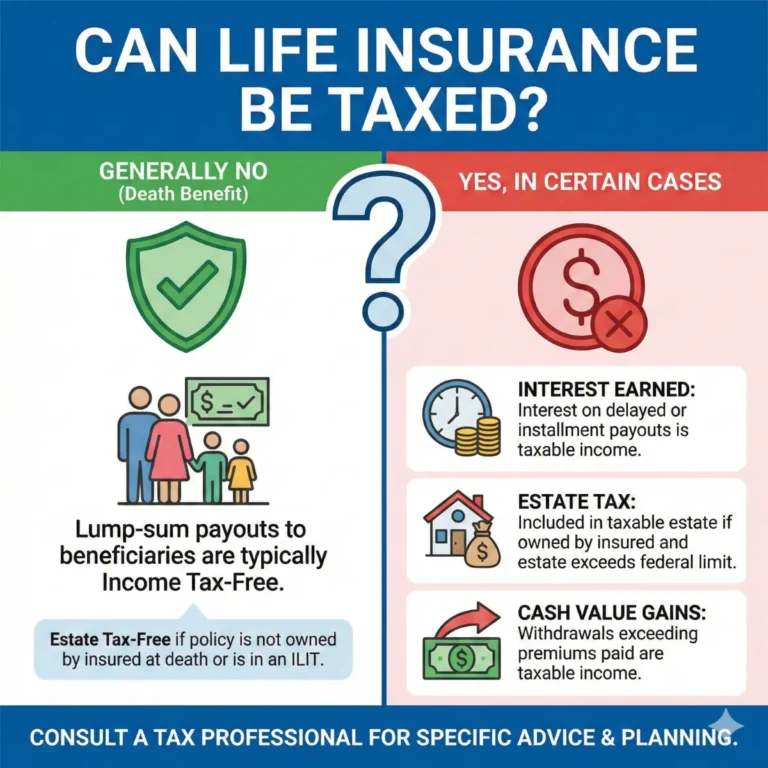
The IRS says that generally, life insurance proceeds you receive as a beneficiary because of the death of the insured person are not includable in gross income, and you do not have to report them as taxable income. The IRS also says that if you receive interest on those proceeds, the interest is taxable. (irs.gov) (IRS)
This does not directly answer the Medicare recovery question, but it helps address another common fear.
A lot of people mix up:
- taxes,
- probate,
- estate claims,
- Medicaid estate recovery,
- and Medicare.
They are all different issues.
Are family members responsible for Medicare-related debts after death?
Usually, family members are not automatically responsible for someone else’s debts just because that person died.
The CFPB says a surviving spouse is generally not responsible for the deceased spouse’s debt unless it is joint debt or state law provides otherwise. The CFPB also says that debts that must be paid are generally paid from the estate under state law. (consumerfinance.gov) (Consumer Financial Protection Bureau)
That means a named beneficiary usually does not become personally responsible just because they received life insurance. The usual focus is on:
- whether the debt is really an estate obligation,
- whether there is an estate recovery issue,
- whether the proceeds are probate or non-probate,
- and whether there is any specific legal basis for recovery. (consumerfinance.gov) (Consumer Financial Protection Bureau)
That is another reason the answer is usually no in the ordinary beneficiary situation.
How Medicare differs from Medicaid estate recovery
This point is so important that it deserves its own clear section.
Medicare
Medicare is federal health insurance. It does not have a broad normal estate recovery system like Medicaid. The main recovery rule people should know is Medicare Secondary Payer recovery in special cases where another insurer or payer was supposed to pay first. (cms.gov) (Centers for Medicare & Medicaid Services)
Medicaid
Medicaid is a different program. Medicaid’s official site says that, in some cases, states must recover certain Medicaid costs from the estate of a deceased enrollee. Medicaid also lists important protections for surviving spouses and certain children. (medicaid.gov) (Medicaid)
If you remember only one thing from this article, let it be this:
Medicare is not Medicaid.
Regular Medicare use does not usually mean the government can take life insurance from a named beneficiary.
Medicaid estate recovery is the government recovery system that many people are really thinking of. (Medicaid)
Common myths
Myth 1: Medicare always takes your estate after death
That is not a normal Medicare rule. Medicare does have MSP recovery rules in special cases, but Medicaid has the broader estate recovery system that people usually mean. (cms.gov) (Centers for Medicare & Medicaid Services)
Myth 2: If you have Medicare, your life insurance is not safe
Usually wrong. If the life insurance policy goes to a named beneficiary other than the estate, the IRS typically treats it as a non-probate asset. (irs.gov) (IRS)
Myth 3: A beneficiary always means a person
Not true. The CFPB says a beneficiary can also be a trust or an estate. (consumerfinance.gov) (Consumer Financial Protection Bureau)
Myth 4: If the estate owes money, the beneficiary must pay it
Not usually. The CFPB says a surviving spouse is generally not responsible for the other spouse’s debt unless the debt is shared or state law makes them responsible. Debt that must be paid is generally paid from the estate under state law. (consumerfinance.gov) (Consumer Financial Protection Bureau)
Myth 5: Life insurance is always untouchable
Not always. If the estate is the beneficiary, the IRS treats the proceeds as part of the probate estate. (irs.gov) (IRS)
What to check right now
If this question matters to you or your family, these are the smart next steps:
Check who is named as the beneficiary on the life insurance policy. The CFPB says the beneficiary is whoever is designated to receive the proceeds. (consumerfinance.gov) (Consumer Financial Protection Bureau)
Check whether the policy names:
Check whether the concern is really about Medicare or about Medicaid estate recovery. (medicaid.gov) (Medicaid)
Check whether there is any pending:
- liability claim,
- settlement,
- workers’ compensation case,
- or other MSP issues where Medicare may have a recovery claim. (cms.gov) (Centers for Medicare & Medicaid Services)
Those four checks will solve most of the confusion.
Frequently asked questions
Can Medicare take life insurance from a beneficiary?
Usually no. If life insurance proceeds are paid directly to a named beneficiary who is not the estate, the IRS typically treats it as a non-probate asset. Medicare does not normally have a broad rule to take it simply because the deceased had Medicare. (irs.gov) (IRS)
Can Medicare take life insurance if the estate is the beneficiary?
That becomes an estate issue. The IRS says if the estate is named as beneficiary, the life insurance proceeds are included in the probate estate. (irs.gov) (IRS)
Does Medicare have estate recovery?
Not in the broad normal way Medicaid does. The main Medicare recovery issue is Medicare Secondary Payer recovery when another payer should have paid first. Medicaid, not Medicare, has the official estate recovery system most people are thinking of. (cms.gov) (Centers for Medicare & Medicaid Services)
Can Medicaid take life insurance from a beneficiary?
Medicaid’s estate recovery rules apply to the estate of a deceased enrollee in certain cases. Whether life insurance proceeds are reachable often depends on whether they become part of the estate. If the estate is the beneficiary, the IRS treats the proceeds as part of the probate estate. (medicaid.gov) (Medicaid)
Are life insurance proceeds taxable to the beneficiary?
Usually no. The IRS says life insurance death benefits received as a beneficiary are generally not included in gross income. Interest paid on those proceeds is usually taxable. (irs.gov) (IRS)
Can Medicare recover from an estate?
In certain MSP situations, yes. CMS says if a beneficiary dies before resolution of a Medicare Secondary Payer recovery claim tied to liability insurance, no-fault insurance, or workers’ compensation, the claim is properly asserted against the estate. (cms.gov) (Centers for Medicare & Medicaid Services)
Final answer
So, can Medicare take life insurance from a beneficiary?
Usually, no. If a life insurance policy names a person, trust, or other beneficiary who is not the estate, the IRS generally treats the proceeds as non-probate assets. Medicare does not normally have a broad rule that lets it simply take that money just because the deceased had Medicare. (irs.gov) (IRS)
The main exceptions and confusion points are these:
- If the estate is named as beneficiary, the IRS says the proceeds become part of the probate estate. (irs.gov) (IRS)
- If there is a special Medicare Secondary Payer recovery issue, CMS says Medicare’s claim may be asserted against the estate. (cms.gov) (Centers for Medicare & Medicaid Services)
- If the real concern is Medicaid estate recovery, that is a different program with different rules, and it is often the true source of this question. (medicaid.gov) (Medicaid)
So the safest plain-English answer is:
Medicare usually does not take life insurance from a named beneficiary. But whether any government recovery issue can touch the money depends on who the beneficiary is, whether the money enters the estate, and whether the issue is actually Medicare or Medicaid. (IRS)
OUR CLIENT REVIEWS


CONTACT STEVE TURNER INSURANCE AGENT & BROKER
I’m here to take your calls and emails and answer your questions 7 Days a week from 7:00 a.m. to 8:00 p.m., excluding posted holidays.
Steve Turner is a licensed agent, broker, and a longstanding member of the National Association of Benefits and Insurance Professionals®. Steve holds the prestigious Registered Employee Benefits Consultant® designation. NABIP® is the preeminent organization for health insurance and employee benefits professionals and works diligently to ensure all Americans have access to high-quality, affordable Healthcare and related services.
Steve Turner is a licensed agent appointed by Florida Blue.
EMAIL ME: 24×7
OFFICE LOCATION
Website: steveturnerinsurancespecialist.com
Email: [email protected]
Phone and Text: +1-813-388-8373
Business Hours:
Monday: 7 am to 8 pm
Tuesday: 7 am to 8 pm
Wednesday: 7 am to 8 pm
Thursday: 7 am to 8 pm
Friday: 7 am to 8 pm
Saturday: 7 am to 8 pm
Sunday: 7 am to 8 pm
SOCIAL FOLLOW + SHARE
LIFE INSURANCE POSTS

INSURANCE OFFERINGS
Can Medicare Take Life Insurance From a Beneficiary?
HEALTH INSURANCE

MEDICARE ADVANTAGE

MEDICARE SUPPLEMENT

PRESCRIPTION DRUGS

LIFE INSURANCE

DISABILITY INSURANCE

DENTAL INSURANCE

GROUP HEALTH INSURANCE

ACCIDENT INSURANCE

LONG TERM CARE INSURANCE

MEDICAID INSURANCE

MEDICARE INSURANCE

MEDICARE PART A INSURANCE

MEDICARE PART B INSURANCE

MEDICARE PART C INSURANCE

MEDICARE PART D INSURANCE

MEDICARE PLAN G INSURANCE

MEDICARE PLAN N INSURANCE

SERVICE AREA
MEDICARE STATEMENT
The Medicare Annual Enrollment Period is October 15th to December 7th. Steve Turner is not connected with or endorsed by the United States Government or the Federal Medicare Program. Some plans may not be available in your area, and any information I provide is limited to those offered. Please contact Medicare.gov or 1-800-MEDICARE to get information on all of your options.
There’s no one-size-fits-all answer. Carefully evaluate your health status, anticipated medical needs, prescription drug usage, budget, preferred doctors and hospitals, and tolerance for network rules. During the Medicare Annual Enrollment Period (October 15th to December 7th), thoroughly research the specific plans available in your Florida county using the Medicare Plan Finder on Medicare.gov, compare their costs and benefits, and consider seeking free, personalized counseling from Florida’s SHINE (Serving Health Insurance Needs of Elders) program.