


Can I Get Life Insurance on My Parents? A Florida Broker’s 2027 Guide
Can I Get Life Insurance on My Parents? A Florida Broker’s 2027 Guide
By Steve Turner, Licensed Insurance Agent and Independent Broker, Florida License #W333468 · Legal sections checked against the 2025 Florida Statutes
Quick answer: Yes. In Florida, an adult child can own a life insurance policy on a parent. Your parent must know about it and sign the application, and you must have an insurable interest, which Florida law grants automatically to close family members. For most parents over 65, a small final expense (whole life) policy is the practical choice.
In my Tampa Bay office, the question “Can I get life insurance on my parents?” usually comes up after a hard moment: a hospital stay, a fall, or the first real talk about funeral plans. This guide covers what Florida requires, which policies fit which parents, what coverage costs, and the ownership decision that families most often get wrong.
[STEVE: add a 2–3 sentence anonymized story from your own practice here, such as a family whose policy covered a parent’s funeral, or one who waited too long and only qualified for guaranteed issue. First-hand experience is the strongest E-E-A-T signal on this page.]
The two Florida rules you must meet
Florida’s insurable interest law, Section 627.404, Florida Statutes, sets both requirements.
1. Insurable interest
You need a legitimate reason to insure your parent’s life. Florida recognizes two kinds that apply to adult children:
- Family relationship. A person closely related by blood or by law, with a substantial interest based on love and affection, has an insurable interest. A biological or adopted child generally qualifies on this basis alone.
- Financial interest. You also qualify if you would suffer a real financial loss at your parent’s death, for example, as a co-signer on their mortgage or the person who will pay for their funeral.
The interest only has to exist when the policy is issued. Carriers still ask about it on the application, so answer accurately.
2. Your parent’s written consent
A policy on another adult cannot take effect unless the insured person, with legal capacity to contract, applies for it or consents in writing. Your parent’s signature on the application counts as that consent. In practice, your parent also answers the health questions, often by phone with the carrier.
If a parent has advanced dementia and can no longer sign, a new individual policy is usually off the table unless someone with proper legal authority acts for them. Talk with a Florida elder law attorney before you apply in that situation.
Why Tampa Bay families insure their parents
The biggest reason is the funeral bill, which usually lands on adult children within days.
| Cost item (national median) | Amount |
|---|---|
| Funeral with viewing and burial | $8,300 |
| Same, with a burial vault | $9,995 |
| Funeral with viewing and cremation | $6,280 |
These figures come from the National Funeral Directors Association’s latest General Price List Study, summarized by Dignity Memorial. They exclude cemetery costs such as the plot, opening and closing the grave, and the headstone, so a full burial in Hillsborough or Pinellas County can pass $10,000. Ask two or three local funeral homes for their General Price List, which the FTC Funeral Rule requires them to provide.
Other common reasons I see:
- Final medical bills that the estate must settle before anything passes to heirs.
- Protecting an inheritance when long-term care has used up a parent’s savings.
- Covering shared debt, such as a mortgage or car loan a child co-signed.
Which policy type fits your parent?
Your parent’s age and health decide which of three policy types they can get.
| Final expense (simplified issue whole life) | Term life | Guaranteed issue whole life | |
|---|---|---|---|
| Best for | Parents 50–85 with average or managed health | Parents under about 70 in good health with a specific debt to cover | Parents declined elsewhere because of serious illness |
| Typical coverage | $5,000–$25,000 | $50,000 and up | $2,000–$25,000 |
| Underwriting | Health questions, no medical exam | Health questions, often an exam or records check | No health questions |
| How long it lasts | For life, with level premiums | A set term, often 10–20 years | For life, with level premiums |
| Main drawback | Higher cost per $1,000 than term | Ends before many parents die, so it may never pay | Usually a 2-year waiting period: a death from natural causes in that time typically returns premiums plus interest instead of the full benefit |
In my experience, most Tampa Bay families choose final expense coverage because it never expires and the premium never rises. Many people assume guaranteed issue is the only option for a parent with health conditions. Often it isn’t: plenty of carriers will approve a parent with controlled diabetes, high blood pressure, or a heart condition from several years ago, which is exactly why comparing carriers matters.
What a policy costs in 2027
For a healthy non-smoking parent, a $10,000 final expense policy is estimated at roughly $32–$57 a month at 60 and $101–$170 a month at 80.
| Parent’s age | Male non-smoker (monthly) | Female non-smoker (monthly) |
|---|---|---|
| 60 | $43–$57 | $32–$43 |
| 70 | $69–$85 | $52–$65 |
| 80 | $136–$170 | $101–$125 |
These ranges are estimates based on typical rates from carriers available in Florida, not guaranteed 2027 quotes. Your parent’s actual premium depends on their health answers, tobacco use, the carrier, and the benefit amount, so treat these as a starting point, not a quote. Rates rise with each birthday, which is the main reason not to wait.
Who should own the policy: you or your parent?
For most families I work with, the adult child should own, pay for, and be the beneficiary.
When you own it, you control the policy. Premium notices come to you, your parent can’t cancel it by accident, and it isn’t your parent’s asset.
When your parent owns it, Medicaid can come into play. Florida counts the cash surrender value of whole life policies a Medicaid applicant owns once the combined face value of all their policies exceeds $2,500, according to Florida elder law guidance citing the state’s Medicaid policy manual. Final expense policies are whole life, so they build a small cash value. If your parent may need nursing home Medicaid, that cash value could count toward the asset limit.
Term policies have no cash value, so they don’t raise this issue. Medicaid rules are detailed and change, so confirm your parent’s situation with a Florida elder law attorney before deciding who owns a policy. I’m a licensed insurance broker, not an attorney.
Florida protections that keep a parent’s policy from lapsing
Florida law gives families two safeguards against a policy lapsing over a missed payment.
- 30-day grace period. Every Florida life insurance policy must give at least 30 days to pay any premium after the first, and coverage stays in force during that time (Section 627.453).
- Secondary addressee. For a policy covering someone 64 or older that has been in force at least a year, the insurer must mail a lapse warning to the owner and to a designated secondary addressee at least 21 days before coverage ends (Section 627.4555). Insurers must offer this designation at application, and you can add it later in writing.
If your parent owns the policy, name yourself as the secondary addressee. It’s free and takes one form.
Frequently asked questions
Can I buy life insurance on my parent without them knowing?
No. Florida requires the insured adult to apply for or consent to the policy in writing. If an agent suggests otherwise, you shouldn’t work with them.
Can I get coverage for a parent in a nursing home or assisted living?
Often, yes. Many simplified issue carriers decline current nursing home residents, so guaranteed issue coverage is usually the fallback. Assisted living residents sometimes still qualify for simplified issue.
Is there a maximum age?
Most final expense carriers accept applicants up to age 80 or 85. A few guaranteed issue plans stop at 80. Each carrier sets its own limits.
Does my health affect the price?
No. Only the insured parent’s age and health are underwritten.
Is the death benefit taxable?
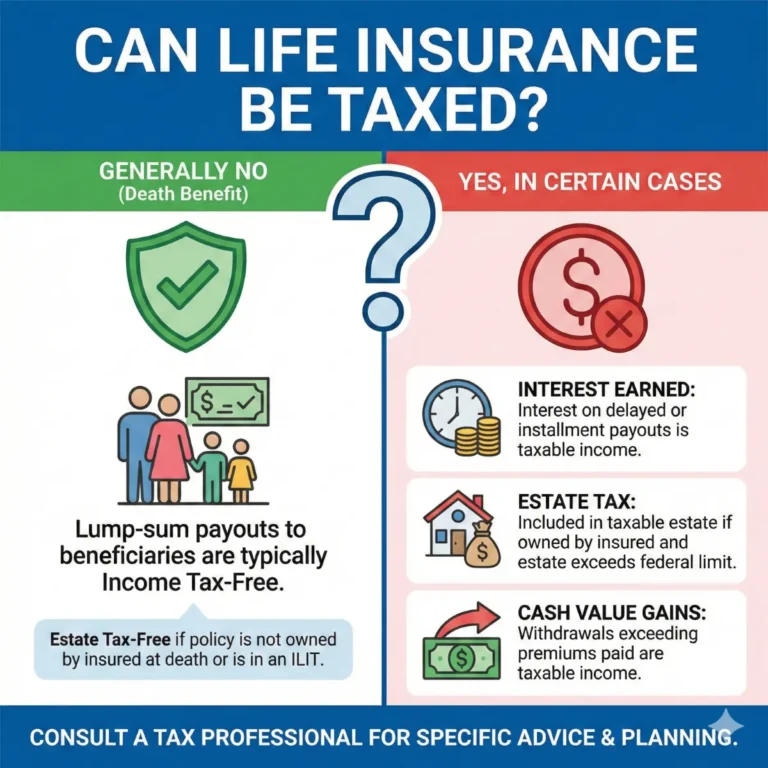
Life insurance death benefits are generally not subject to federal income tax, and Florida has no state income tax. Estate tax rules are separate, so ask a tax professional about large policies.
What if I move out of Florida?
The policy stays in force anywhere in the U.S. as long as you pay premiums.
Can siblings share the cost?
Yes. One sibling should be the owner, and you can name all of you as beneficiaries with set percentages. Put the payment arrangement in writing.
Next step: compare carriers before your parent’s next birthday
Premiums rise each year, and health can change quickly, so the best time to apply is while your parent still qualifies for simplified issue coverage. As an independent broker, I compare carriers serving Florida and show you the options side by side. My service costs you nothing: carriers pay agents a commission, and Florida-filed premiums are the same whether you buy through an agent or directly.
Get a free premium comparison for your parent →
About the author
Steve Turner is a licensed insurance agent and independent broker serving Hillsborough and Pinellas counties. He has helped Tampa Bay families with life, final expense, and health coverage for 10+ years and is appointed with many carriers. Florida license #W333468, verifiable through the Florida Department of Financial Services licensee search.
This article is for general information and is not legal, tax, or Medicaid planning advice. Policy terms vary by carrier.
Sources
- Section 627.404, Florida Statutes: Insurable interest
- Section 627.453, Florida Statutes: Grace period
- Section 627.4555, Florida Statutes: Secondary notice
- Dignity Memorial: Funeral costs (NFDA medians)
- Elder Needs Law: Medicaid and life insurance in Florida
OUR CLIENT REVIEWS


CONTACT STEVE TURNER, LICENSED INSURANCE AGENT & BROKER
Questions? Call, text, or book a time below; I answer calls and emails 7 Days a week from 7:00 a.m. to 8:00 p.m., excluding posted holidays.
EMAIL ME: 24×7
OFFICE LOCATION
Address: 14502 N Dale Mabry Hwy, Suite 200, Tampa, FL 33618
Website: steveturnerinsurancespecialist.com
Email: [email protected]
Phone and Text: +1-813-388-8373
Business Hours:
Monday: 7:00 a.m. / 8:00 p.m.
Tuesday: 7:00 a.m. / 8:00 p.m.
Wednesday: 7:00 a.m. / 8:00 p.m.
Thursday: 7:00 a.m. / 8:00 p.m.
Friday: 7:00 a.m. / 8:00 p.m.
Saturday: 7:00 a.m. / 8:00 p.m.
Sunday: 7:00 a.m. / 8:00 p.m.
LIFE INSURANCE POSTS





INSURANCE OFFERINGS
Life Insurance on Your Parents in Florida: 2027 Guide
HEALTH INSURANCE

MEDICARE ADVANTAGE

MEDICARE SUPPLEMENT

PRESCRIPTION DRUGS

LIFE INSURANCE

DISABILITY INSURANCE

DENTAL INSURANCE

GROUP HEALTH INSURANCE

ACCIDENT INSURANCE

LONG TERM CARE INSURANCE

MEDICAID INSURANCE

MEDICARE INSURANCE

MEDICARE PART A INSURANCE

MEDICARE PART B INSURANCE

MEDICARE PART C INSURANCE

MEDICARE PART D INSURANCE

MEDICARE PLAN G INSURANCE

MEDICARE PLAN N INSURANCE

SERVICE AREA
MEDICARE STATEMENT
We do not offer every plan available in your area. Currently, we represent 7 organizations that offer 70 products in your area. Please get in touch with Medicare.gov or 1-800-MEDICARE for information on all your options.
Steve Turner is a licensed insurance agent and is not connected with or endorsed by the United States Government or the Federal Medicare Program. The Medicare Annual Enrollment Period is October 15 to December 7.
There’s no one-size-fits-all answer. Carefully consider your health status, expected medical needs, prescription drugs, budget, preferred doctors and hospitals, and how comfortable you are with network rules. During the Annual Enrollment Period, you can use the Medicare Plan Finder at Medicare.gov to research plans available in your Florida county, compare costs and benefits, and get free, unbiased counseling from Florida’s SHINE (Serving Health Insurance Needs of Elders) program at floridashine.org or 1-800-963-5337. You can also call 1-800-MEDICARE (1-800-633-4227; TTY 1-877-486-2048), 24 hours a day, 7 days a week.
Steve Turner

Steve Turner, CLU®, REBC® Licensed Florida health insurance agent · License W333468
Steve Turner is a licensed agent and broker and a long-standing member of the National Association of Benefits and Insurance Professionals NABIP®, the preeminent organization for health insurance and employee benefits professionals, and works diligently to ensure all Americans have access to high-quality, affordable healthcare and related services. Steve also holds the prestigious Registered Employee Benefits Consultant® (REBC®) designation. Steve also holds the “Chartered Life Underwriter” designation (CLU®), a professional credential for individuals specializing in life insurance and estate planning. The American College of Financial Services confers it. For over 10 years, Steve has helped individuals, families, Medicare beneficiaries, and small businesses find the right coverage to meet their needs. Steve has earned 180+ Google reviews from happy clients.
Steve Turner is a licensed agent appointed by Florida Blue.