
25 Big Qualifications for Medicaid
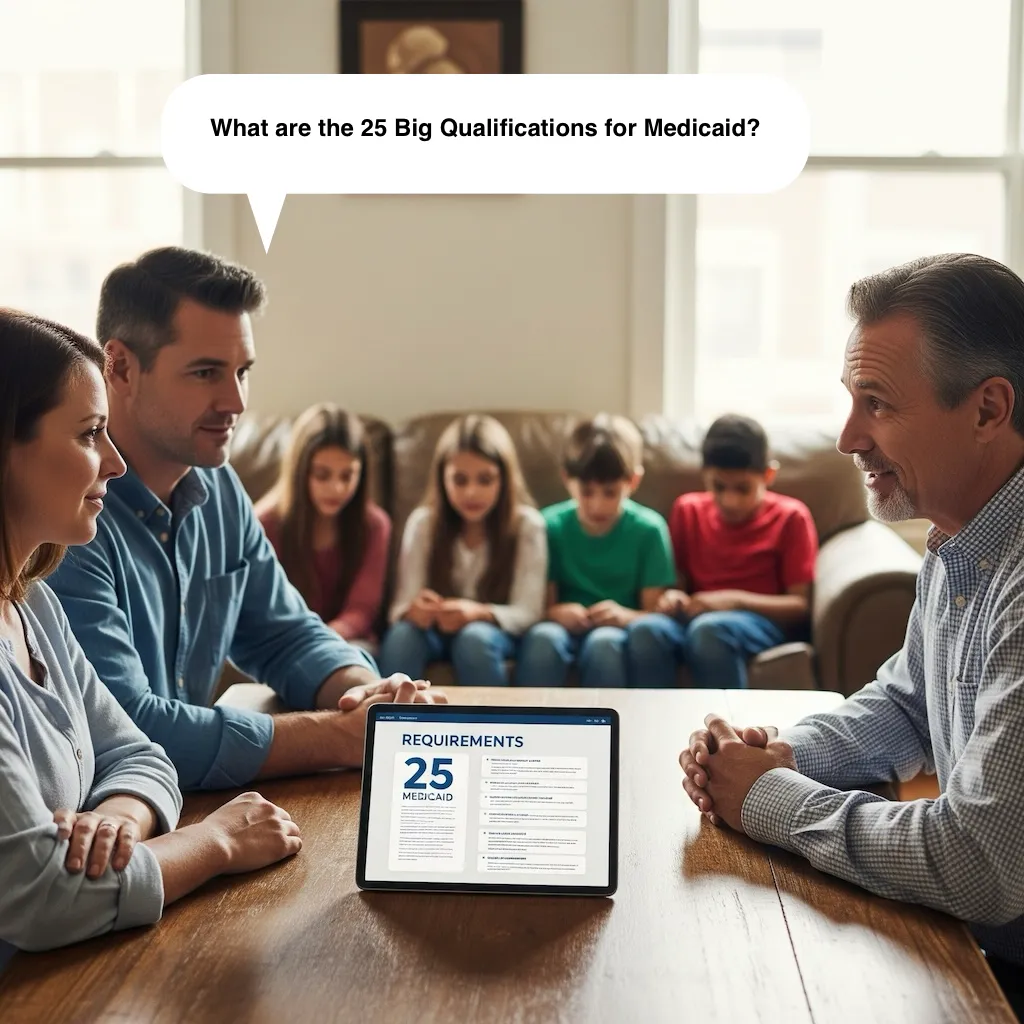
25 Big Qualifications for Medicaid
25 Big Qualifications for Medicaid: The Essential Guide for Tampa Bay Residents
Navigating the world of healthcare can feel like trying to navigate a boat through a dense fog in the middle of Tampa Bay. Between the jargon, the shifting income limits, and the complex application processes, many families in Tampa, Saint Petersburg, and Clearwater find themselves overwhelmed. As an Insurance Agent and Broker with many years of experience helping Tampa-Saint Petersburg-Clearwater Metro Area residents solve their biggest health care challenges, I’ve seen how life-changing the right coverage can be.
Medicaid is often misunderstood. It isn’t just “one program”; it is a collection of various pathways designed to provide a safety net for those who need it most. In Florida, the rules for 2026 have specific nuances that every resident from Hillsborough County to Pinellas County needs to understand.
Below, we dive deep into the 25 big qualifications for Medicaid, ensuring you have the data-backed information you need to make an informed decision for your family or your business.
Understanding the Florida Medicaid Landscape in 2026
Before we list the qualifications, it is vital to recognize that Florida remains one of the states that has not fully expanded Medicaid under the ACA for all low-income adults. This means that to qualify in the Tampa-St. Pete-Clearwater metro, you generally must fit into a specific “category” (such as being a senior, a parent, or having a disability) in addition to meeting financial requirements.
1. Florida Residency
You must be a permanent resident of the state of Florida. Whether you live in a high-rise in Downtown Tampa, a bungalow in Old Northeast St. Pete, or a beachfront condo in Clearwater, you must provide proof of residency (like a Florida ID or utility bill) to the Department of Children and Families (DCF).
2. U.S. Citizenship or Qualified Non-Citizen Status
Generally, you must be a U.S. citizen or a “qualified non-citizen” (such as a Lawful Permanent Resident who has held a Green Card for at least five years). However, there are exceptions for emergency medical conditions, which can cover labor and delivery for non-citizens in Tampa Bay area hospitals.
3. The “Categorical” Requirement
In Florida, you can’t just be “low income” to get full Medicaid; you must also be:
- A child (under age 21).
- A parent or caretaker relative.
- A pregnant woman.
- An individual aged 65 or older.
- An individual with a qualifying disability.
4. Income Limits for Parents and Caretakers
For parents in Tampa or Clearwater to qualify, the income limits are surprisingly low. For a family of three in 2026, the limit is often around 26% of the Federal Poverty Level (FPL). If you earn more than this but still struggle with costs, we often look toward the Health Insurance Marketplace for subsidized private plans.
5. Pregnancy Status
Pregnant women in the Tampa-Saint Petersburg-Clearwater area have a much higher income ceiling—typically up to 196% of the FPL. This ensures that expecting mothers can access prenatal care at facilities like Tampa General or St. Joseph’s Women’s Hospital.
6. Postpartum Coverage Extension
Once approved, a pregnant woman in Florida remains eligible for Medicaid throughout her pregnancy and for a 12-month postpartum period, regardless of changes in her income.
7. Age Qualifications for Children
Children under age 1 are covered at higher income levels (up to 200% FPL). Children ages 1–18 in Pinellas County usually qualify if the family income is below 138% FPL. If your income is slightly higher, your child may qualify for Florida KidCare.
8. Income Limits for Seniors (Aged 65+)
For “Regular” Medicaid (Aged and Disabled), the 2026 income limit for a single individual in Florida is approximately $1,149 per month (effective through March 2026). This is the threshold for those who need basic medical coverage but not necessarily nursing home care.
9. The $2,982 Long-Term Care Income Cap
If you are seeking Long-Term Care Medicaid in a St. Petersburg nursing home or through a home-care waiver, the gross monthly income limit is $2,982 as of January 1, 2026.
10. Use of a Qualified Income Trust (QIT)
What if your income is $3,100—just over the limit? In Florida, you can still qualify by using a Qualified Income Trust (also known as a Miller Trust). This legal tool allows you to “funnel” excess income into a trust to meet the eligibility requirements.
11. The $2,000 Individual Asset Limit
For most “Aged, Blind, and Disabled” programs, you cannot have more than $2,000 in countable assets. This includes checking accounts, savings, and stocks.
12. Countable vs. Non-Countable Assets
Not everything you own counts. Your home (up to a certain equity limit), one vehicle, and personal belongings (like your wedding ring or furniture) are typically excluded. This is crucial for Clearwater residents who want to keep their family home while receiving care.
13. Home Equity Limit ($752,000)
For single applicants in 2026, your primary residence is excluded from the asset test as long as your equity is under $752,000. If you live in a high-value area like South Tampa or Belleair, this limit is vital to monitor.
14. Community Spouse Resource Allowance (CSRA)
If one spouse needs a nursing home in Tampa but the other spouse stays at home, the “at-home” spouse can keep up to $162,660 in assets (2026 limit). This prevents the healthy spouse from becoming impoverished.
15. The Five-Year Lookback Period
Medicaid will review all financial transfers for the 60 months prior to your application. If you “gave away” money or property to your children in St. Petersburg to qualify, you may face a penalty period.
16. The 2026 Penalty Divisor ($10,645)
If you violated the lookback rule, Florida calculates your “penalty period” by dividing the gifted amount by $10,645. For example, a $53,225 gift results in a 5-month delay in coverage.
17. “Level of Care” Requirement
For Long-Term Care Medicaid, a financial qualification isn’t enough. You must also meet a clinical “Level of Care” requirement, meaning a doctor must certify that you require assistance with daily activities (like bathing, dressing, or eating).
18. Supplemental Security Income (SSI) Automatic Eligibility
If you receive SSI from the Social Security Administration, you are typically automatically eligible for Medicaid in Florida. You don’t even need to file a separate application with DCF.
19. The “Medically Needy” (Spend-Down) Program
If your income is too high for regular Medicaid, you might qualify for the Medically Needy program. This acts like a “deductible.” You must incur a certain amount of medical bills (the “share of cost”) each month before Medicaid starts paying.
20. Former Foster Care Youth
Individuals under age 26 who were in Florida foster care and receiving Medicaid when they turned 18 qualify regardless of their current income. This is a vital resource for young adults in the Tampa-St. Pete area starting their independent lives.
21. Breast and Cervical Cancer Program
Florida offers a specific Medicaid pathway for women screened through the Early Detection Program who are found to need treatment for breast or cervical cancer.
22. Institutional Care Program (ICP)
This is specifically for residents in skilled nursing facilities. The qualification includes the income and asset tests mentioned above but focuses on those who will be in a facility for at least 30 days.
23. HCBS Waivers (Statewide Managed Care)
The Long-Term Care Waiver allows seniors in Clearwater or Tampa to receive care in their own homes or assisted living facilities rather than a nursing home. Qualification requires being on a “waitlist” unless it’s an emergency.
24. Required Social Security Number
You must provide a Social Security Number or proof that you have applied for one.
25. Filing for Other Benefits
To qualify for Medicaid, you are often required to apply for all other benefits you might be entitled to, such as Medicare, pensions, or Unemployment Compensation.
Pros and Cons: Medicaid vs. Private Insurance in Tampa Bay
When I consult with businesses in Tampa or families in Saint Petersburg, the question often arises: “Is Medicaid better than a private plan?” Here is a breakdown of the trade-offs:
The Pros of Medicaid:
- Cost: For those who qualify, premiums are usually $0, and copays are non-existent or very low ($2–$5).
- Comprehensive Long-Term Care: Private insurance and Medicare rarely cover long-term nursing home stays; Medicaid is the primary payer for this in Florida.
- No Open Enrollment: You can apply for Medicaid at any time of year.
The Cons of Medicaid:
- Limited Provider Networks: Not every doctor in South Tampa or Clearwater accepts Medicaid. You may have fewer choices compared to a private PPO plan.
- Income Volatility: If your small business in St. Pete has a great month, you might suddenly lose eligibility, forcing a stressful transition to a new plan.
- Estate Recovery: After a Medicaid recipient passes away, the state may attempt to recover the costs of care from their estate (though there are many legal ways to protect assets if planned in advance).
Real-World Example: The “Gap” in Tampa Bay
Consider a local restaurant worker in Clearwater. They earn $22,000 a year. In Florida, they earn too much for “Parent” Medicaid but not enough to reach the 100% FPL threshold for Marketplace subsidies. This is known as the “Coverage Gap.”
Conversely, a senior in Sun City Center with $2,500 in monthly Social Security income qualifies for the Long-Term Care Waiver (with a QIT), allowing them to stay in their home with a part-time caregiver rather than moving to a facility.
How Steve Turner Can Help
The rules for Medicaid, especially the 25 big qualifications, are rigid and often unforgiving. One mistake on an application or a misunderstood asset limit can lead to a denial that costs your family thousands in out-of-pocket medical bills.
Steve Turner Insurance Specialist is here to act as your advocate. As an experienced agent and broker, Steve understands the unique needs of Tampa, Saint Petersburg, and Clearwater area residents. He can help you determine if you qualify for Medicaid, or if a subsidized private plan on the Marketplace is a better, more stable fit for your family or your business.
Remember, Steve Turner’s services are 100% free to you. Like all other agents and brokers, he is compensated by the insurance company that “you choose.” You get the benefit of a deep-dive analysis and expert verification of 2026 data without ever receiving a bill for his time.
Would you like me to help you calculate your specific income eligibility for the 2026 Florida Medicaid programs based on your household size in the Tampa Bay area?
OUR CLIENT REVIEWS
CONTACT STEVE TURNER INSURANCE AGENT & BROKER
I’m here to take your calls and emails and answer your questions 7 Days a week from 7:00 a.m. to 8:00 p.m., excluding posted holidays.
Steve Turner is a licensed agent, broker, and a longstanding member of the National Association of Benefits and Insurance Professionals®. Steve holds the prestigious designation of Registered Employee Benefits Consultant®. NABIP® is the preeminent organization for health insurance and employee benefits professionals and works diligently to ensure all Americans have access to high-quality, affordable Healthcare, and related services.
Steve Turner is a licensed agent appointed by Florida Blue.
EMAIL ME: 24×7
OFFICE LOCATION
Website: steveturnerinsurancespecialist.com
Email: [email protected]
Phone and Text: +1-813-388-8373
Business Hours:
Monday: 7 am to 8 pm
Tuesday: 7 am to 8 pm
Wednesday: 7 am to 8 pm
Thursday: 7 am to 8 pm
Friday: 7 am to 8 pm
Saturday: 7 am to 8 pm
Sunday: 7 am to 8 pm
SOCIAL FOLLOW + SHARE
MEDICare advAntage INSURANCE POSTS

INSURANCE OFFERINGS
25 Big Qualifications for Medicaid
HEALTH INSURANCE
MEDICARE ADVANTAGE

MEDICARE SUPPLEMENT

PRESCRIPTION DRUGS
LIFE INSURANCE

DISABILITY INSURANCE
DENTAL INSURANCE

GROUP HEALTH INSURANCE
ACCIDENT INSURANCE

LONG TERM CARE INSURANCE
MEDICAID INSURANCE
MEDICARE INSURANCE

MEDICARE PART A INSURANCE

MEDICARE PART B INSURANCE
MEDICARE PART C INSURANCE
MEDICARE PART D INSURANCE

MEDICARE PLAN G INSURANCE

MEDICARE PLAN N INSURANCE

SERVICE AREA
MEDICARE STATEMENT
The Medicare Annual Enrollment Period is October 15th to December 7th. Steve Turner is not connected with or endorsed by the United States Government or the Federal Medicare Program. Some plans may not be available in your area, and any information I provide is limited to those offered. Please contact Medicare.gov or 1-800-MEDICARE to get information on all of your options.
There’s no one-size-fits-all answer. Carefully evaluate your health status, anticipated medical needs, prescription drug usage, budget, preferred doctors and hospitals, and tolerance for network rules. During the Medicare Annual Enrollment Period (October 15th to December 7th), thoroughly research the specific plans available in your Florida county using the Medicare Plan Finder on Medicare.gov, compare their costs and benefits, and consider seeking free, personalized counseling from Florida’s SHINE (Serving Health Insurance Needs of Elders) program.