

Can I Get Medicare Before Age 65
Can I Get Medicare Before Age 65
Can I Get Medicare Before Age 65?
Introduction: Debunking the Age-65 Myth
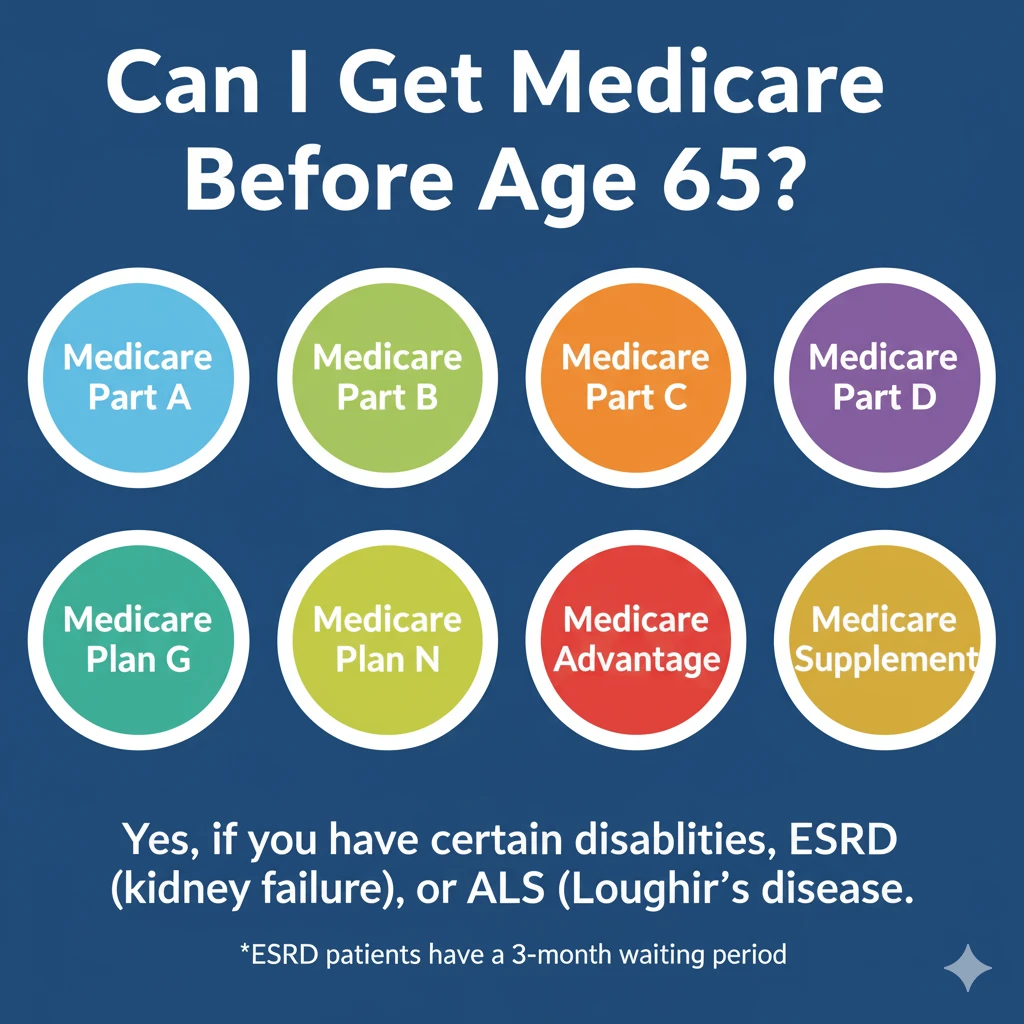
For decades, Medicare has been synonymous with retirement, a healthcare milestone reached on one’s 65th birthday. This association is so deeply ingrained in the American consciousness that a critical question often goes unasked: “Can I get Medicare before age 65?” The answer is a definitive yes, but only for individuals who meet specific, stringent criteria established by federal law. While age remains the primary pathway to eligibility for most, Congress has created crucial exceptions for certain younger individuals with severe disabilities and life-threatening medical conditions.
Understanding these exceptions is not merely an academic exercise; it is a vital necessity for those facing significant health challenges early in life. For these individuals, early access to Medicare is not a convenience but a lifeline, providing access to essential medical care that might otherwise be financially unattainable. This guide will serve as a comprehensive exploration of the pathways to Medicare eligibility for those under 65. We will dissect the three qualifying conditions—long-term disability, Amyotrophic Lateral Sclerosis (ALS), and End-Stage Renal Disease (ESRD)—detailing the unique rules, waiting periods, and enrollment processes for each. Furthermore, we will conduct a thorough analysis of the pros and cons of early Medicare enrollment, addressing not only the immense benefits but also the significant challenges and complexities that younger beneficiaries face. Finally, we will provide actionable steps for navigating the enrollment process, both directly through government channels and with the assistance of a licensed insurance professional.
The Three Pathways to Early Medicare Eligibility
Eligibility for Medicare before the age of 65 is not a matter of choice but is strictly limited to individuals who fall into one of three federally defined categories. Each pathway has its own distinct set of rules, waiting periods, and enrollment procedures.
1. Eligibility Through Disability: The 24-Month Waiting Period
The most common path to Medicare for individuals under 65 is through a long-term disability. This eligibility is directly tied to an individual’s qualification for Social Security Disability Insurance (SSDI) benefits.
Q: What disabilities qualify for early Medicare?
A: Medicare does not maintain a specific list of qualifying disabilities. Instead, eligibility is determined by the Social Security Administration’s (SSA) definition of disability, which is the inability to engage in “substantial gainful activity” due to a medically determinable physical or mental impairment that is expected to last for at least 12 months or result in death. If the SSA approves an individual for SSDI benefits, they are on the path to Medicare eligibility.
Q: Is there a waiting period for Medicare if I’m on SSDI?
A: Yes, and this is the most critical component of the disability pathway. Individuals who qualify for SSDI must endure a 24-month waiting period before their Medicare coverage begins. This waiting period starts from the month they become entitled to receive their first SSDI payment, not from the date their disability began.
Q: How does enrollment work after the waiting period?
A: Enrollment is automatic. After an individual has received SSDI benefits for 24 months, the SSA will automatically enroll them in both Medicare Part A (Hospital Insurance) and Part B (Medical Insurance). A “Welcome to Medicare” packet, including the red, white, and blue Medicare card, will be mailed out approximately three months before the 25th month of disability benefits, with coverage starting on the first day of that 25th month.
2. Eligibility Through Amyotrophic Lateral Sclerosis (ALS)
Recognizing the aggressive and rapid progression of Amyotrophic Lateral Sclerosis (ALS), also known as Lou Gehrig’s disease, Congress created a special exception to the standard disability rules.
Q: Is there a waiting period for Medicare if I have ALS?
A: No. The 24-month waiting period for Medicare is waived for individuals with ALS. Furthermore, legislation enacted in late 2020 also eliminated the standard five-month waiting period for SSDI benefits for people with ALS.
Q: How quickly does Medicare coverage begin for someone with ALS?
A: Coverage is nearly immediate. An individual diagnosed with ALS is automatically eligible for and enrolled in Medicare Parts A and B the very same month their Social Security disability benefits begin. This fast-tracked eligibility ensures that individuals with this devastating disease can access critical medical care and equipment without delay.
3. Eligibility Through End-Stage Renal Disease (ESRD)
The third pathway to early Medicare is for individuals of any age who have End-Stage Renal Disease (ESRD), which is permanent kidney failure requiring a regular course of dialysis or a kidney transplant.
Q: How do I qualify for Medicare with ESRD?
A: To qualify, an individual must need regular dialysis or have had a kidney transplant. Additionally, they (or their spouse or parent) must have worked the required amount of time under Social Security, the Railroad Retirement Board, or as a government employee. Unlike with other disabilities, enrollment for ESRD-based Medicare is not automatic; an application must be filed with the Social Security Administration.
Q: When does Medicare coverage start for ESRD?
A: The start date for ESRD-based Medicare is variable and depends on the treatment plan:
- In-Center Dialysis: For individuals receiving dialysis at a certified facility, Medicare coverage typically begins on the first day of the fourth month of their dialysis treatments.
- Home Dialysis Training: Coverage can start as early as the first month of dialysis if the individual participates in a home dialysis training program at a Medicare-certified facility and is expected to be able to self-administer dialysis at home. This provision incentivizes home-based care.
- Kidney Transplant: If an individual receives a kidney transplant, Medicare coverage can begin the month they are admitted to a Medicare-certified hospital for the transplant, provided the transplant occurs in that same month or within the following two months.
Q: How long does ESRD-based Medicare coverage last?
A: If Medicare eligibility is based solely on ESRD, the coverage is not necessarily permanent. It ends:
- 12 months after the month an individual stops dialysis treatments.
- 36 months after the month of a successful kidney transplant.
However, coverage can be reinstated if the individual starts dialysis again or receives another transplant within these timeframes.
The Pros and Cons of Early Medicare Eligibility
Gaining access to Medicare before age 65 is a double-edged sword. While it provides a crucial healthcare safety net, it also introduces a host of challenges related to cost, access, and complexity that are unique to this younger population.
The “Yes” Case: The Overwhelming Benefits of Early Coverage
For individuals with severe disabilities, the advantages of qualifying for Medicare are profound and life-altering.
- Pro 1: Access to Comprehensive Health Insurance: The most significant benefit is gaining access to a robust health insurance program. For many younger individuals with disabilities, private insurance can be prohibitively expensive or difficult to obtain, and Medicare provides essential coverage for hospital stays, doctor visits, and medical equipment. The benefits package is the same for those who qualify due to disability as it is for those who qualify by age.
- Pro 2: Financial Protection from Catastrophic Costs: A serious illness or disability can lead to overwhelming medical bills. Medicare provides a crucial financial backstop. While it doesn’t cover all costs, it significantly reduces the financial burden of major medical events. Furthermore, enrollment in Medicare opens the door to purchasing additional private insurance, such as a Medicare Advantage plan with a maximum out-of-pocket limit, which provides a hard cap on annual medical spending.
- Pro 3: Continuity of Coverage While Working: For those who are able to return to work, Medicare provides an extended period of coverage. After a nine-month Trial Work Period, a disabled individual can continue to receive premium-free Medicare Part A for at least 93 months (over 7.5 years), even if their SSDI cash benefits stop due to their earnings. This provides a stable insurance bridge, allowing individuals to re-enter the workforce without the immediate fear of losing their health coverage.
The “No” Case: The Unique Challenges Faced by Younger Beneficiaries
Despite the clear benefits, the path for Medicare beneficiaries under 65 is often fraught with more obstacles than for their older counterparts.
- Con 1: The 24-Month Waiting Period: For the majority of individuals qualifying through disability, the two-year wait for Medicare coverage is a significant hardship. This period can create a dangerous gap in insurance, leaving people vulnerable at a time when they are most in need of medical care.
- Con 2: Limited Access to Medigap Plans: Medicare Supplement (Medigap) policies, which help cover Original Medicare’s deductibles and coinsurance, are a cornerstone of financial protection for many beneficiaries. However, federal law does not guarantee access to these plans for people under 65. While some states mandate that insurers offer at least one Medigap plan to younger disabled beneficiaries, many do not. In states without such protections, insurers can deny applications or charge significantly higher premiums, leaving many under-65 beneficiaries unable to afford this critical supplemental coverage.
- Con 3: Higher Rates of Access and Affordability Issues: Research consistently shows that Medicare beneficiaries under 65 report more problems with their healthcare than those 65 and older. They are more likely to have lower incomes, be in poorer health, and report higher rates of problems paying medical bills. Younger beneficiaries also report more difficulty finding doctors, experiencing delays in care, and being denied coverage for services they believed were covered.
- Con 4: The Family Coverage Dilemma: Medicare is an individual insurance program; it does not cover spouses or dependent children. This creates a significant challenge for a disabled individual who was previously the primary source of family health insurance through an employer. When they transition to Medicare, their family members lose that coverage and must find alternative insurance through a spouse’s employer, the Affordable Care Act (ACA) Marketplace, or COBRA.
The Enrollment Process: From Application to Plan Selection
Navigating the enrollment process for Medicare, especially for those under 65, requires proactive engagement and a clear understanding of the available options.
Enrolling in Original Medicare (Parts A & B)
The Social Security Administration (SSA) is the agency responsible for processing Medicare applications.
- Automatic Enrollment: As noted, individuals who have been receiving SSDI benefits for 24 months, or who have ALS and are approved for SSDI, are automatically enrolled in Parts A and B.
- Manual Enrollment: Individuals with ESRD must apply for Medicare. This can be done online at the SSA website, by calling the SSA’s national toll-free number, or by visiting a local SSA office. The online application is generally the fastest and most convenient method.
Choosing Your Coverage Path
Once enrolled in Original Medicare, beneficiaries must decide how they want to structure their full coverage. This involves choosing between Original Medicare (often paired with supplemental plans) and Medicare Advantage.
- Original Medicare: This is the traditional fee-for-service program administered by the federal government. It offers the freedom to see any doctor or hospital in the U.S. that accepts Medicare. However, it has significant gaps, including deductibles, a 20% coinsurance for most services with no out-of-pocket maximum, and no coverage for most prescription drugs.
- Medicare Advantage (Part C): These are private insurance plans (like HMOs or PPOs) that bundle Part A, Part B, and usually Part D prescription drug coverage into a single plan. They often include extra benefits like dental and vision and have a mandatory annual out-of-pocket maximum, which provides crucial financial protection. The trade-off is that they typically have provider networks, which can limit choice.
The Role of a Licensed Insurance Agent in Florida
The sheer number of private plan options can be overwhelming. A licensed, independent insurance agent can provide invaluable assistance in navigating these choices. Their services are provided at no direct cost to the consumer, as they are compensated by the insurance carriers they represent.
For Florida residents, an agent like Steve Turner of Steve Turner Insurance Specialist offers expert guidance tailored to the local market.
- Location and Contact: The office is located at 14502 N Dale Mabry Hwy Suite 200, Tampa, FL 33618, and can be reached at +1 813-388-8373.
- Services Offered: Steve Turner Insurance Specialist provides personalized, no-cost consultations to help individuals with Medicare enrollment and plan selection. The agency is noted for its deep knowledge of Medicare Advantage and supplemental options, simplifying the complex decision-making process for clients. Reviews highlight a commitment to exceptional customer service, thorough explanations, and finding plans tailored to each client’s unique health and financial needs.
Conclusion: A Vital Lifeline with Unique Challenges
The ability to get Medicare before age 65 is a critical feature of the American social safety net, providing essential health coverage to individuals facing some of life’s most difficult medical challenges. For those with a qualifying long-term disability, ALS, or ESRD, Medicare is not an abstract concept but a tangible lifeline that makes sustained medical care possible.
However, this lifeline comes with its own set of complexities. The 24-month waiting period for most disability recipients remains a significant barrier to care, and the entire under-65 population faces systemic challenges, including limited access to Medigap plans and higher reported rates of affordability and access problems. These issues underscore the reality that while eligibility may come early, the path for younger beneficiaries is often more difficult than for those who enroll at 65.
Successfully navigating this journey requires proactivity, education, and a clear-eyed assessment of one’s options. Whether through direct enrollment with the Social Security Administration or with the guidance of a knowledgeable local agent, taking control of the process is paramount. By understanding the specific rules that apply to their situation and carefully weighing the pros and cons of each coverage path, individuals can make informed decisions that protect both their health and their financial security.
Finding Your Trusted Advisor in the Florida Medicare Market
We have taken a very detailed look at Medicare for 2026. We’ve seen how its clever design offers a modern solution for today’s retirees. We’ve also seen that while the plan’s benefits are stable and reliable, its monthly cost can vary significantly from one insurance company to another. Choosing the right company at the right price is the key to maximizing the value of Medicare in 2026.
This is where the guidance of an independent, licensed insurance agent becomes invaluable. A Medicare specialist acts as your personal shopper and advocate. They can instantly compare the rates for the same Medicare plan options from all the different carriers in your state. They can also provide insight into a company’s history of rate increases, which is a crucial factor in your long-term satisfaction.
It is essential to understand that this expert guidance is provided to you at absolutely no extra cost. The insurance industry is regulated so that the price of a plan is the same whether you buy it through an agent or directly from the company. When you enroll with an agent’s help, the insurance company pays them a commission. This system allows you to get free, unbiased, and professional advice to help you make the best possible choice.
To ensure you get the best value, it is usually best to use a licensed insurance agent, such as Steve Turner at SteveTurnerInsuranceSpecialist.com. Steve Turner is a licensed Agent/Broker contracted with most Medicare Insurance Carriers. An expert like Steve can help you navigate the 2026 Medicare market, find the most competitively priced Medicare plans for you, and ensure you have a Medicare plan that provides both financial security and true peace of mind.
OUR CLIENT REVIEWS
CONTACT STEVE TURNER INSURANCE AGENT & BROKER
I’m here to take your calls and emails and answer your questions 7 Days a week from 7:00 a.m. to 8:00 p.m., excluding posted holidays.
Steve Turner is a licensed agent, broker, and a longstanding member of the National Association of Benefits and Insurance Professionals®. Steve holds the prestigious designation of Registered Employee Benefits Consultant®. NABIP® is the preeminent organization for health insurance and employee benefits professionals and works diligently to ensure all Americans have access to high-quality, affordable Healthcare, and related services.
Steve Turner is a licensed agent appointed by Florida Blue.
EMAIL ME: 24×7
OFFICE LOCATION
Website: steveturnerinsurancespecialist.com
Email: [email protected]
Phone and Text: +1-813-388-8373
Business Hours:
Monday: 7 am to 8 pm
Tuesday: 7 am to 8 pm
Wednesday: 7 am to 8 pm
Thursday: 7 am to 8 pm
Friday: 7 am to 8 pm
Saturday: 7 am to 8 pm
Sunday: 7 am to 8 pm
SOCIAL FOLLOW + SHARE
MEDICare INSURANCE POSTS


INSURANCE OFFERINGS
Can I Get Medicare Before Age 65?
HEALTH INSURANCE

MEDICARE ADVANTAGE

MEDICARE SUPPLEMENT

PRESCRIPTION DRUGS

LIFE INSURANCE

DISABILITY INSURANCE

DENTAL INSURANCE

GROUP HEALTH INSURANCE

ACCIDENT INSURANCE

LONG TERM CARE INSURANCE

MEDICAID INSURANCE

MEDICARE INSURANCE

MEDICARE PART A INSURANCE

MEDICARE PART B INSURANCE

MEDICARE PART C INSURANCE

MEDICARE PART D INSURANCE

MEDICARE PLAN G INSURANCE

MEDICARE PLAN N INSURANCE

SERVICE AREA
MEDICARE STATEMENT
The Medicare Annual Enrollment Period is October 15th to December 7th. Steve Turner is not connected with or endorsed by the United States Government or the Federal Medicare Program. Some plans may not be available in your area, and any information I provide is limited to those offered. Please contact Medicare.gov or 1-800-MEDICARE to get information on all of your options.
There’s no one-size-fits-all answer. Carefully evaluate your health status, anticipated medical needs, prescription drug usage, budget, preferred doctors and hospitals, and tolerance for network rules. During the Medicare Annual Enrollment Period (October 15th to December 7th), thoroughly research the specific plans available in your Florida county using the Medicare Plan Finder on Medicare.gov, compare their costs and benefits, and consider seeking free, personalized counseling from Florida’s SHINE (Serving Health Insurance Needs of Elders) program.