


Are Life Insurance Premiums Be Tax Deductible?
As an Insurance Agent and Broker with many years of experience helping Tampa, Saint Petersburg, and Clearwater Area Residents solve their most complex health care and financial challenges, I’ve found that the intersection of insurance and taxes is where the greatest confusion—and opportunity—lies.
Whether you are a business owner in the Westshore District, a retiree in Safety Harbor, or a young professional in Downtown St. Pete, you likely look at your monthly expenses and wonder: “Can I write this off?” In 2026, as the cost of living in the Tampa-Saint Petersburg-Clearwater Metro Area continues to climb, maximizing your tax efficiency is more than just a “nice-to-have”—it is a critical component of a robust financial plan. The question “Are life insurance premiums tax-deductible?” is one I hear at least once a week.
The short answer for most residents is no. The IRS generally views life insurance as a personal expense. However, for certain business owners, charitable donors, and those utilizing modern hybrid policies, there are significant exceptions that can save you thousands in federal income taxes.
Are Life Insurance Premiums Be Tax Deductible?
In this 3000+ word deep-dive analysis, we will explore the 2026 tax landscape, the specific scenarios where a deduction is possible, and how Tampa-Saint Petersburg-Clearwater Metro Area Residents can compare different plans to ensure they are getting the most “bang for their buck.”
1. The General Rule: Why You Usually Can’t Deduct Premiums
For the vast majority of Tampa, Saint Petersburg, and Clearwater Area Residents, life insurance premiums are considered a “personal, living, or family expense” under Internal Revenue Code Section 262.
Just as you cannot deduct the cost of your car insurance for your personal vehicle or your grocery bill at the local Publix, you cannot deduct the premiums you pay for a standard term or whole life policy that protects your family.
The Trade-Off: Tax-Free Death Benefits
While the lack of a deduction feels like a “con,” the IRS provides a massive “pro” in return. Under IRC Section 101(a), the death benefit paid to your beneficiaries is almost always 100% income tax-free.
Expert Insight: If the government allowed you to deduct the premiums today, they would almost certainly want to tax the $500,000 or $1,000,000 payout tomorrow. For most residents in the Tampa Bay Metro, the tax-free nature of the payout is far more valuable than a small annual deduction.
2. Business Owners: The Largest Exception to the Rule
If you own a business in Tampa, Clearwater, or Saint Petersburg, the rules change significantly. Life insurance often becomes a “business expense,” and under the right circumstances, those premiums can be fully or partially deductible.
Group Term Life Insurance
Many companies in the Tampa-Saint Petersburg-Clearwater Metro Area offer group life insurance as a fringe benefit.
- The Deduction: The business can generally deduct the premiums paid for the first $50,000 of coverage per employee as a business expense.
- The Benefit: For the employee, the value of that first $50,000 in coverage is completely tax-free.
- The Catch: If the business provides more than $50,000 in coverage, the “cost” of that excess coverage (calculated by IRS tables) must be included in the employee’s taxable income, though the business can still deduct the premium paid.
Section 162 Executive Bonus Plans
This is a popular tool for high-growth firms in Downtown Tampa. Under a Section 162 plan, the employer pays the premiums on a life insurance policy owned by a key executive.
- How it Works: The business deducts the premium as a “bonus” (compensation).
- The Impact: The executive must report the bonus as taxable income, but they own a valuable, often cash-accumulating policy.
- Double Bonus Strategy: Many local businesses also “bonus” the executive the amount needed to pay the taxes on the premium, making it a “net-zero” out-of-pocket benefit for the employee.
Key Person Insurance: The Non-Deductible Trap
If your business in Saint Petersburg buys a key executive policy and the business is the beneficiary, the premiums are NOT tax-deductible. The IRS logic is simple: if the business is going to receive a tax-free payout upon the death of the key person, the cost to obtain that payout cannot be deductible.
3. Charitable Giving: Supporting the Tampa Bay Community
Are you a philanthropist supporting the St. Pete Free Clinic, Clearwater Marine Aquarium, or Metropolitan Ministries? Life insurance can be a powerful—and tax-deductible—tool for giving.
Naming a Charity as Owner and Beneficiary
If you take an existing policy or buy a new one and make a qualified 501(c)(3) charity, both the irrevocable owner and the beneficiary, your premiums may be deductible as a charitable contribution.
- Pro: You get an immediate income tax deduction.
- Con: You lose all control over the policy. You cannot change the beneficiary or borrow against the cash value.
The 2026 Charitable Limit
For residents of the Tampa-Saint Petersburg-Clearwater Metro Area, these deductions are subject to AGI (Adjusted Gross Income) limits—usually 50% or 60% for cash contributions. If the premium exceeds your limit, you can typically carry the deduction forward for up to five years.
4. Hybrid Policies and Long-Term Care (LTC) Deductions
In 2026, we are seeing a massive surge in Hybrid Life/LTC policies among Clearwater and St. Pete residents. These policies pay a death benefit if you die, but they also pay for home health care or assisted living if you become ill.
The Partial Deduction
Only the portion of the premium that is specifically allocated to the “Qualified Long-Term Care” benefit (under IRC Section 7702B) may be deductible. The portion that pays for the “Life Insurance” death benefit remains a personal expense.
2026 Age-Based Deduction Limits
The IRS allows you to include qualified LTC premiums in your “medical expenses” deduction, subject to specific age-based caps:
| Age at End of 2026 | Maximum Deduction Limit (per person) |
| 40 or younger | $500 |
| 41 to 50 | $930 |
| 51 to 60 | $1,860 |
| 61 to 70 | $4,960 |
| 71 or older | $6,200 |
Note: For individuals, these are only deductible if you itemize and your total medical expenses exceed 7.5% of your AGI. However, for the self-employed, these can often be deducted “above the line” without the 7.5% threshold.
5. Comparing Insurance Plans: Tax Efficiency Analysis
When comparing different insurance plans available to Tampa, Saint Petersburg, and Clearwater Area Residents, you have to look at the “Net Cost” after tax.
Term Life Insurance
- Tax Status: 100% non-deductible for individuals.
- Pros: Cheapest out-of-pocket; great for short-term needs like a mortgage in Largo.
- Cons: No “living benefits” or cash value.
Whole Life / Permanent Insurance
- Tax Status: Premiums are non-deductible, but the “inside build-up” of cash value is tax-deferred.
- Pros: Access to cash value through tax-free loans; permanent protection for residents in South Tampa.
- Cons: Higher premiums; “Opportunity Cost” of the non-deductible dollars.
Indexed Universal Life (IUL)
- Tax Status: Premiums are non-deductible.
- Pros: Most tax-efficient way to build supplemental retirement income. Loans taken against the policy are generally not reported to the IRS as income.
- Cons: Requires expert management to avoid policy lapse (which could trigger a massive tax bill).
6. The “Florida Factor”: Taxes and the Metro Area
As an Insurance Agent and Broker, I always remind my clients that while Florida has no state income tax, we are still subject to the full weight of Federal taxes.
Why Deductions Matter More in Tampa Bay
Because we don’t have a state-level “tax bite,” every federal deduction we can find is “pure profit.” For a business owner in Clearwater in the 32% federal bracket, a $10,000 deduction for an executive bonus plan is essentially a $3,200 check from the government back into their pocket.
Estate Taxes and the 2026 Sunset
In 2026, the federal estate tax exemptions are scheduled to “sunset” (decrease significantly). Many wealthy families in Saint Petersburg are using life insurance inside an Irrevocable Life Insurance Trust (ILIT).
- Pro: The payout is 100% free of both Income Tax and Estate Tax.
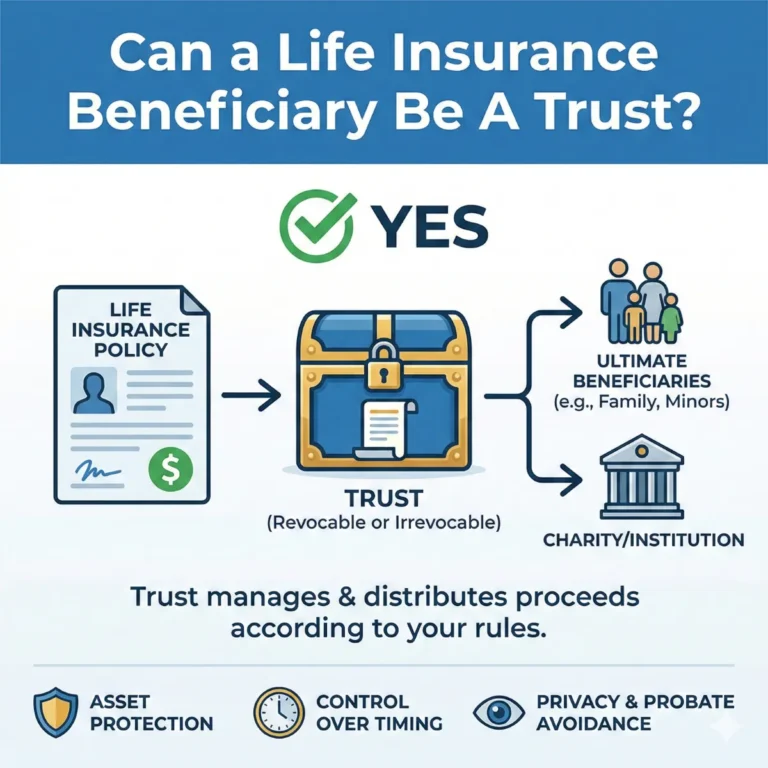
- Con: The trust must be the owner, meaning you lose personal control of the policy.
7. SEO Insights: “Life Insurance Tax Deduction Tampa.”
If you are searching for “best tax-advantaged life insurance in Clearwater” or “business life insurance tax rules Florida,” you are looking for ways to maximize your wealth.
In the Tampa-Saint Petersburg-Clearwater Metro Area, we are home to thousands of “S-Corp” and “LLC” business owners. It is vital to note that for S-Corp owners (2% or more shareholders), the tax rules are different. Premiums paid for your own life insurance are generally treated as compensation—deductible to the business but taxable to you—meaning there is no “net” tax deduction.
8. Common Misconceptions (The “Deep Analysis” Check)
As a broker who double-checks all data against reputable resources like the IRS Bulletins and Tax Facts, I need to clear up two dangerous myths I hear in the Tampa Bay Metro:
Myth 1: “My mortgage protection insurance (PMI) is deductible.”
No. Residents often confuse Mortgage Insurance (PMI), which protects the lender, with Mortgage Protection Life Insurance, which protects your family. Neither is currently deductible for federal income tax purposes in 2026.
Myth 2: “I can deduct life insurance premiums as a medical expense.”
Only the specific “Long-Term Care” rider portion of a qualified policy can be counted. If your agent in Clearwater tells you that your entire Whole Life premium is a medical deduction, they are providing incorrect information.
9. Summary of 2026 Tax Rules for Life Insurance
To ensure clarity at a glance for our Tampa-Saint Petersburg-Clearwater Metro Area Residents, here is the final breakdown:
| Scenario | Is it Tax-Deductible? | Payout Tax Status |
| Personal Policy | No | Tax-Free |
| Group Term ($50k) | Yes (for Employer) | Tax-Free |
| Executive Bonus (162) | Yes (for Employer) | Tax-Free |
| Charitable Gift | Yes (if irrevocable) | Tax-Free |
| LTC Hybrid Rider | Partially (Age-based) | Tax-Free |
| Key Person | No | Tax-Free |
Conclusion: Strategy Over Speculation
So, are life insurance premiums tax-deductible? In most cases, the government considers your family’s protection a personal responsibility. But as we’ve seen, the savvy resident or business owner in the Tampa, Saint Petersburg, and Clearwater Metro Area has multiple “side doors” to find tax relief.
Navigating the 2026 tax code while seeking the best health and life coverage is daunting. You shouldn’t have to guess whether your plan in Clearwater or Tampa is being handled with the highest level of tax efficiency.
Steve Turner Insurance Specialist is here to answer all of your questions. As an expert agent and broker who has spent many years helping Tampa-Saint Petersburg-Clearwater Metro Area Residents solve their biggest health care and financial challenges, Steve understands the local economic landscape. He performs the deep analysis required to double-check every plan against current IRS regulations, ensuring you never leave money on the table.
The best part? Steve’s services are 100% free to you. Like all independent agents and brokers, he is paid by the insurance company that you choose. This means you receive his years of expertise, his localized research, and his unbiased tax-efficiency analysis at no out-of-pocket cost to you.
Would you like me to provide a customized breakdown of the potential tax savings for a Section 162 Executive Bonus Plan for your business in the Tampa Bay area?
Finding Your Trusted Advisor in the Florida Health Insurance Market
We have taken a very detailed look at the Tampa-Saint Petersburg-Clearwater metro area, the Health Insurance Market for 2026. We’ve seen how its clever design offers a modern solution for today’s retirees. We’ve also seen that while the plan’s benefits are stable and reliable, its monthly cost can vary significantly from one insurance company to another. Choosing the right company at the right price is the key to maximizing the value of Health Insurance in 2026.
This is where the guidance of an independent, licensed insurance agent becomes invaluable. A Health Insurance specialist acts as your personal shopper and advocate. They can instantly compare the rates for the same Health Insurance plan options from all the different carriers in your state. They can also provide insight into a company’s history of rate increases, which is a crucial factor in your long-term satisfaction.
It is essential to understand that this expert guidance is provided to you at absolutely no extra cost. The insurance industry is regulated so that the price of a plan is the same whether you buy it through an agent or directly from the company. When you enroll with an agent’s help, the insurance company pays them a commission. This system provides free, unbiased, and professional advice to help you make the best possible choice.
To ensure you get the best value, it is usually best to use a licensed insurance agent, such as Steve Turner at SteveTurnerInsuranceSpecialist.com. Steve Turner is a licensed Agent/Broker contracted with most Insurance Carriers. An expert like Steve can help you navigate the 2026 Health Insurance market, find the most competitively priced Health Insurance plans for you, and ensure you have a Health Insurance plan that provides both financial security and true peace of mind.
OUR CLIENT REVIEWS
CONTACT STEVE TURNER INSURANCE AGENT & BROKER
I’m here to take your calls and emails and answer your questions 7 Days a week from 7:00 a.m. to 8:00 p.m., excluding posted holidays.
Steve Turner is a licensed agent, broker, and a longstanding member of the National Association of Benefits and Insurance Professionals®. Steve holds the prestigious designation of Registered Employee Benefits Consultant®. NABIP® is the preeminent organization for health insurance and employee benefits professionals and works diligently to ensure all Americans have access to high-quality, affordable Healthcare, and related services.
Steve Turner is a licensed agent appointed by Florida Blue.
EMAIL ME: 24×7
OFFICE LOCATION
Website: steveturnerinsurancespecialist.com
Email: [email protected]
Phone and Text: +1-813-388-8373
Business Hours:
Monday: 7 am to 8 pm
Tuesday: 7 am to 8 pm
Wednesday: 7 am to 8 pm
Thursday: 7 am to 8 pm
Friday: 7 am to 8 pm
Saturday: 7 am to 8 pm
Sunday: 7 am to 8 pm
SOCIAL FOLLOW + SHARE
LIFE INSURANCE POSTS
INSURANCE OFFERINGS
Are Life Insurance Premiums Be Tax Deductible?
HEALTH INSURANCE

MEDICARE ADVANTAGE

MEDICARE SUPPLEMENT

PRESCRIPTION DRUGS

LIFE INSURANCE

DISABILITY INSURANCE

DENTAL INSURANCE

GROUP HEALTH INSURANCE

ACCIDENT INSURANCE

LONG TERM CARE INSURANCE

MEDICAID INSURANCE

MEDICARE INSURANCE

MEDICARE PART A INSURANCE

MEDICARE PART B INSURANCE

MEDICARE PART C INSURANCE

MEDICARE PART D INSURANCE

MEDICARE PLAN G INSURANCE

MEDICARE PLAN N INSURANCE

SERVICE AREA
MEDICARE STATEMENT
The Medicare Annual Enrollment Period is October 15th to December 7th. Steve Turner is not connected with or endorsed by the United States Government or the Federal Medicare Program. Some plans may not be available in your area, and any information I provide is limited to those offered. Please contact Medicare.gov or 1-800-MEDICARE to get information on all of your options.
There’s no one-size-fits-all answer. Carefully evaluate your health status, anticipated medical needs, prescription drug usage, budget, preferred doctors and hospitals, and tolerance for network rules. During the Medicare Annual Enrollment Period (October 15th to December 7th), thoroughly research the specific plans available in your Florida county using the Medicare Plan Finder on Medicare.gov, compare their costs and benefits, and consider seeking free, personalized counseling from Florida’s SHINE (Serving Health Insurance Needs of Elders) program.