

How Can a Health Agent Help Lower My Premiums?

How Can a Health Agent Help Lower My Premiums? Ways to Reduce Health Insurance Costs
Health insurance costs a lot. If I buy my own plan, the bill shows up every month. And it keeps getting bigger. So it makes sense to ask: how can a health agent help lower my premiums?
Here is what I found. A health agent cannot change the price of a plan. But a good one can change which plan I pick, how much help I get, and which mistakes I avoid. That can lower my monthly bill by a lot.
In this guide, I walk through how it works in plain words. I also share the limits, because an agent is not magic.
The Short Answer
Yes, a health agent can help lower my premiums. Here is how:
- Finding subsidies. A subsidy is government money that pays part of my bill. An agent checks if I can get one.
- Comparing plans. An agent reviews many plans, so I don’t pay for things I don’t need.
- Catching mistakes. A wrong number on my form can cost me money. An agent helps me get it right.
- Costing me nothing extra. In most cases, I do not pay the agent. The insurance company does.
One quick note on words. A premium is what I pay each month to keep my plan. It is not the same as what I pay at the doctor. I come back to that later, because it matters.
What Is a Health Agent?
A health agent is a trained person who helps people pick and sign up for health insurance. Some people call them a “health insurance agent.” Some say “broker.” The two jobs are close.
- An agent may work for one insurance company.
- A broker may work with many companies.
Both must have a state license. To sell Marketplace plans, they also need a signed deal with the Marketplace.
The Marketplace is the official place to buy a plan on my own. In most states, it is HealthCare.gov. Some states run their own site.
Do I have to pay a health agent?
In most cases, no. HealthCare.gov says I do not pay anything extra when I sign up with an agent or broker. The insurance company pays the agent. That pay is called a commission.
The plan costs the same either way. Whether I buy it with an agent or by myself, the price doesn’t change.
Is there a catch?
There is one thing I keep in mind. Since the company pays the agent, some agents only show plans from companies they work with. I may not see every plan in my area.
That is why I ask every agent one question first: “Which companies do you work with?” I list more good questions further down.
What a Health Agent Cannot Change
I want to be fair here. An agent cannot call the company and get me a deal. Health insurance does not work like buying a car. There is no haggling.
For plans I buy on my own, the price can come from only five things:
- My age. Older people can pay up to three times as much as younger people.
- Where I live. Prices change by state and even by county.
- Tobacco use. Companies can charge people who use tobacco up to 50% more.
- Who is on the plan. Adding a spouse or kids raises the bill.
- The plan level. Bronze, silver, gold, and platinum plans all cost different amounts.
Some states set tighter limits.
My health does not count. A company cannot charge me more because I have been sick. It also cannot charge men and women different prices for the same plan.
So how does an agent help? By working on the parts I can control:
- Which plan I pick
- How I fill out my form
- Whether I get every dollar of help I can
That is where the real savings are.
9 Ways a Health Agent Can Help Lower My Premiums
Here are the nine ways an agent can help me pay less each month.
1. Finding subsidies I did not know about
This is the big one. A subsidy is also called a premium tax credit. It lowers my bill every month.
Most people who buy Marketplace plans get one. In 2026, about 87 out of every 100 people did. The amount depends on my income and my family size.
An agent runs the numbers with me. Many people guess they earn too much and never check. Some states also add their own help on top.
One rule matters a lot here. I only get the subsidy if the agent signs me up through the Marketplace.
2. Getting my income number right
The Marketplace asks what I think I will earn next year. That is hard to guess if I work for myself or my hours change.
- If I guess too high, I get less help each month than I should.
- If I guess too low, I may have to pay money back at tax time.
An agent knows what counts as income and what does not. That helps me land on a fair number.
3. Checking for Medicaid or CHIP
If my income is low enough, I may get Medicaid. My kids may get CHIP. These programs cost little or nothing.
An agent can spot this fast. And I can sign up for them at any time of year.
4. Comparing plans side by side
My area may have dozens of plans. After a while, they all look the same.
An agent can sort them in minutes. Often there is a plan with the same doctors and a lower price. I just wouldn’t have found it on my own.
5. Matching the plan level to my real needs
Plans come in levels:
- Bronze: lowest monthly bill, highest costs when I get care
- Silver: in the middle
- Gold and platinum: highest monthly bill, lowest costs when I get care
If I am healthy and rarely see a doctor, I may be paying for a gold plan I do not use. An agent asks how often I get care. Then we pick a level that fits. This step alone can cut my premium.
6. Catching extra savings on silver plans
Here is a tip many people miss. If my income is low to medium, a silver plan can come with extra savings. These lower what I pay when I get care.
But I only get them with a silver plan. An agent knows to check this before I grab a cheap bronze plan.
7. Stopping the auto-renew trap
If I do nothing, my plan may renew automatically. That sounds easy. But prices and subsidies change every year.
My old plan may no longer be the best deal. An agent can review my plan every fall, so I do not overpay out of habit.
8. Finding other paths to a lower cost
A good agent looks past the first plan on the list. For example:
- A job plan from my work or my spouse’s work may cost less.
- If a job plan costs too much for my family, they may still get help on the Marketplace.
- Some plans work with a health savings account, or HSA. Money I put in an HSA can lower the income used to calculate my subsidy.
- If I am under 30, a catastrophic plan may be a low-cost choice.
- If I quit tobacco, the extra charge can go away.
The agent lays out the choices. I decide.
9. Using special sign-up windows
Life changes can let me switch plans midyear. Here are some that count:
- Losing a job plan
- Getting married
- Having a baby
- Moving to a new area
I often have just 60 days to act. An agent knows the rules. That way, I do not get stuck in a costly plan until next year.
A Simple Example of How the Savings Add Up
Here is a made-up story to show how the steps fit together. The numbers are not real prices. They show the idea.
Say I am 40 years old and I work for myself. I think I will earn about $45,000 next year. Last fall, I let my gold plan renew without looking at it. Now my bill is $520 a month, and I have never checked if I can get a subsidy.
I called a licensed health agent, and we spent 30 minutes on the phone. Here is what we find:
- I can get a subsidy. My income is under the limit so that the government will pay part of my monthly bill.
- I do not need a gold plan. I see my doctor twice a year and take one low-cost drug. A silver plan covers both.
- My doctor is in a cheaper plan. Another company has a silver plan with my same doctor at a lower price.
With the subsidy and the new plan, my made-up bill drops from $520 to $290 a month. That is $230 less each month, or $2,760 less in a year.
My own numbers will be different, and some people will save less than this. But the steps are the same for everyone. First, I check for help. Next, I match the plan to how I really use care. Then I compare prices across companies.
Why a Health Agent Matters More for 2027
This is a hard year to shop alone. Here is what changed.
- Extra subsidies ended. From 2021 to 2025, the government gave bigger subsidies—those ended on December 31, 2025.
- The “subsidy cliff” is back. If my income is over a set limit, I get no subsidy. For 2027 plans, that limit is $63,840 for one person and $132,000 for a family of four in most states.
- Bills already jumped. One review found that the average bill after subsidies rose 58% in 2026.
- Prices are going up again. For 2027, plan prices are rising about 15% on average, before subsidies.
- Some companies are leaving. A few insurance companies will stop selling Marketplace plans at the end of 2026. People on those plans must pick new ones.
The dollar limits, the 58% jump, and the 15% rise come from healthinsurance.org’s review of 2027 prices.
What does this mean for me? Small details now cost big money. Being $1 over the limit could cost me thousands of dollars a year.
An agent can show me where I stand. If I am close to the line, I also talk to a tax expert. Putting money in an HSA or a work retirement plan may keep me under it.
There is good news too. If I still get a subsidy, it should grow as prices rise. That can soften the blow.
Key dates for 2027 plans
Open enrollment is the time each year when anyone can sign up or switch plans. In most states, it runs from November 1, 2026 to January 15, 2027.
- Sign up by December 15, 2026 for a plan that starts January 1, 2027.
- Sign up by January 15, 2027 for a plan that starts February 1, 2027.
A few states use other dates. Idaho, for example, closes on December 15. An agent in my state will know the right dates.
A Lower Premium Is Not Always a Lower Cost
The premium is only one piece of what I pay. I also pay when I get care. Three words matter here:
- Deductible: what I pay first, before the plan starts to pay
- Copay: a set fee for a visit or a drug
- Out-of-pocket max: the most I would pay for care in one year
A plan with a tiny premium can have a huge deductible. If I get sick, I could end up paying more in total.
Here is an example with made-up numbers.
| Plan A | Plan B | |
|---|---|---|
| Premium each month | $300 | $380 |
| Premium each year | $3,600 | $4,560 |
| Deductible | $7,000 | $2,000 |
Plan A saves me $960 a year in premiums. But if I need surgery, I pay up to $5,000 more before Plan A kicks in. In a bad year, Plan B wins.
A good agent asks about my doctors, my drugs, and my health. Then we look at my total cost for the year, not just the monthly bill.
If an agent only talks about the premium, I see that as a warning sign.
What I Bring to My First Call With an Agent
I get better help when I come ready. Here is my list:
- Last year’s tax return or recent pay stubs
- My best guess at next year’s income
- The names and ages of everyone who needs a plan
- My ZIP code
- A list of my doctors and hospitals
- A list of my drugs and doses
- My plan now and what I pay for it
- Details on any job plan offered to my spouse or me
With these in hand, the call goes faster. The agent can also give me real numbers, not guesses.
7 Questions I Ask a Health Insurance Agent
Before I trust an agent with my plan, I ask these:
- Do you have a license in my state?
- Can you sell Marketplace plans?
- Which companies do you work with? Which ones do you leave out?
- How do you get paid?
- Can I get a subsidy? About how much?
- Does this plan cover my doctors and drugs?
- What would I pay in a bad year, not just a good one?
A good agent answers these with ease. If I get a fuzzy answer, I move on to someone else.
6 Red Flags to Watch For
Most agents are honest. A few are not. I walk away if an agent:
- Wants me to pay a fee to sign up for a Marketplace plan
- Rushes me to decide today
- Will not tell me which companies they work with
- Signs me up or switches my plan without my clear OK
- Tells me to change my income number to get a bigger subsidy
- Pushes a plan that is not full health insurance and calls it “the same thing”
That last one matters. Short-term plans and discount cards can look cheap. But some do not cover health problems I already have. They may also leave out basics, like drugs or having a baby. The low price can cost me a lot later.
Health Agent vs. Doing It Myself
I do not have to use an agent. I have three main choices.
| Agent or broker | Navigator | On my own | |
|---|---|---|---|
| Extra cost to me | None | None | None |
| Tells me which plan fits me | Yes | No | No |
| Helps with problems later | Yes | Often | No |
| Shows every plan | Not always | Yes | Yes |
A navigator is a trained helper paid by the Marketplace, not by insurance companies. Navigators can explain my choices. But they cannot tell me which plan to pick. There are also fewer of them now, because their funding was cut.
So which one is best for me?
- An agent makes sense if my income changes a lot, I work for myself, or I feel lost.
- A navigator makes sense if I want help with no sales pitch.
- Going alone makes sense if my case is simple and I like to compare things myself.
I can also mix them. I can talk to an agent first. Then I can look up the same plans on HealthCare.gov or my state’s site to check the work.
Frequently Asked Questions
Is a health agent the same as a health insurance broker?
Almost. An agent often works for one company. A broker often works with many. Both can help me sign up. I ask which companies they work with before we start.
Will my premium be higher if I use an agent?
No. The plan price is the same with or without an agent. The insurance company pays the agent, not me.
How much money can a health agent save me?
It depends. Some people save nothing because they already have the best plan. Others save hundreds of dollars a month by finding a subsidy or a better plan. No one can promise a number before they look at my income, age, and ZIP code.
Can a health agent get me a discount?
No. Agents cannot cut prices or hand out special deals. They help me find the lowest price I can already get.
Can an agent help if I get insurance through my job?
Not much with the premium. My boss picks the plan and sets my share. But an agent can check if a Marketplace plan would cost less for my family.
Can a health agent help with Medicare?
Yes. Many agents help people compare Medicare Advantage plans, drug plans, and Medigap plans. Medicare has its own sign-up time each fall. It runs from October 15 to December 7.
When is the best time to call an agent?
Early in open enrollment is best. Agents get very busy near the deadlines. I also call when my life changes. A new job, a move, a baby, or a change in pay can all change what I should pay.
How do I find a health agent near me?
HealthCare.gov has a Find Local Help tool. I type in my ZIP code. Then I see agents, brokers, and other helpers near me. State Marketplace sites have similar tools.
Can I switch agents if I am not happy?
Yes. I am not locked in. I can work with a new agent or manage my plan myself at any time.
The Bottom Line
So, how can a health agent help lower my premiums? Not by changing prices. An agent helps by finding subsidies, getting my income number right, and matching me with the right plan.
In a year with higher prices and smaller subsidies, that help is worth more than ever.
My next step is simple. I gather my papers. I write down my questions. Then I call a licensed health agent before December 15. It costs me nothing extra to ask. And it could save me real money all year long.
This article shares general information. It is not legal, tax, or insurance advice. Rules and prices change by state, so I check with a licensed agent about my own case.
Why choose Steve Turner Insurance Specialist?
Because I’m an “Insurance Specialist.” An “insurance specialist” is a broad term that includes insurance agents and insurance brokers, but the key difference is who the agent represents versus who the broker represents.
An “insurance agent” works directly for an insurance company and sells its specific policies to clients.
An “insurance broker” acts as an independent intermediary, comparing policies from multiple companies to find the best fit for their client’s needs, essentially representing the client rather than the insurance company.
I am both a licensed Insurance Agent and a licensed Insurance Broker.
My number one goal in life is to help people and ensure, without a shadow of a doubt, that you and your family are secure and protected. I will always be by your side, helping you mitigate risk by providing the industry’s best and most affordable insurance solutions.
I will find insurance plans for the entire family to help cover whatever life throws at you. I can help you save on severe medical emergencies, find a health insurance plan with low- or no-cost doctor visits and affordable prescription medications, and protect your family in the event of an unexpected accident or illness.
Best of all, it doesn’t cost you anything extra to use an experienced Insurance Agent and Broker like me to help you find the Insurance Plans that fit your individual, family, or business needs.
The companies that sell the insurance plans “you choose“ pay me – you don’t pay me. Calling any big insurance company directly won’t get you a lower price, as they will forward your call to the next available insurance agent on their list. You won’t have had any opportunity to learn about the insurance agent you’re speaking with in advance, understand their qualifications or experience level, or make an informed choice about who you want to work with.
Tap the Contact Me text or icon and get in touch by phone or email, or schedule a “No Obligation” chat through my calendar. I look forward to speaking with you!
OUR CLIENT REVIEWS


CONTACT STEVE TURNER, LICENSED INSURANCE AGENT & BROKER
Questions? Call, text, or book a time below; I answer calls and emails 7 Days a week from 7:00 a.m. to 8:00 p.m., excluding posted holidays.
EMAIL STEVE
OFFICE LOCATION
Address: 14502 N Dale Mabry Hwy, Suite 200, Tampa, FL 33618
Website: steveturnerinsurancespecialist.com
Email: [email protected]
Phone and Text: +1-813-388-8373
Business Hours:
Monday: 7:00 a.m. / 8:00 p.m.
Tuesday: 7:00 a.m. / 8:00 p.m.
Wednesday: 7:00 a.m. / 8:00 p.m.
Thursday: 7:00 a.m. / 8:00 p.m.
Friday: 7:00 a.m. / 8:00 p.m.
Saturday: 7:00 a.m. / 8:00 p.m.
Sunday: 7:00 a.m. / 8:00 p.m.
Insurance Agent
-
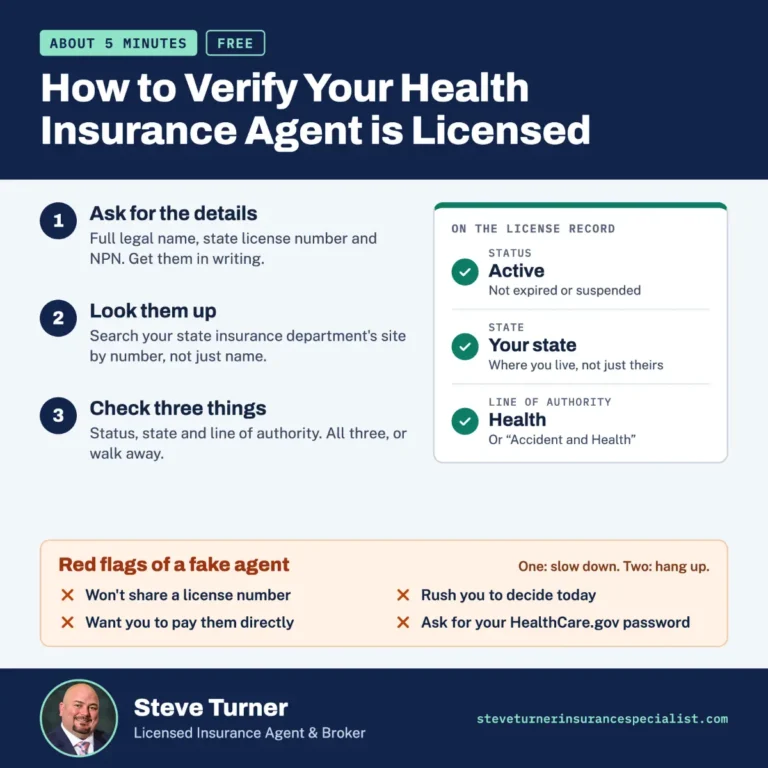
How to Verify Your Health Insurance Agent is Licensed
By Steve Turner
• 2026-10-10
Learn how to verify your health insurance agent is licensed in five minutes. Follow my simple steps, spot red flags, and know who to call. -
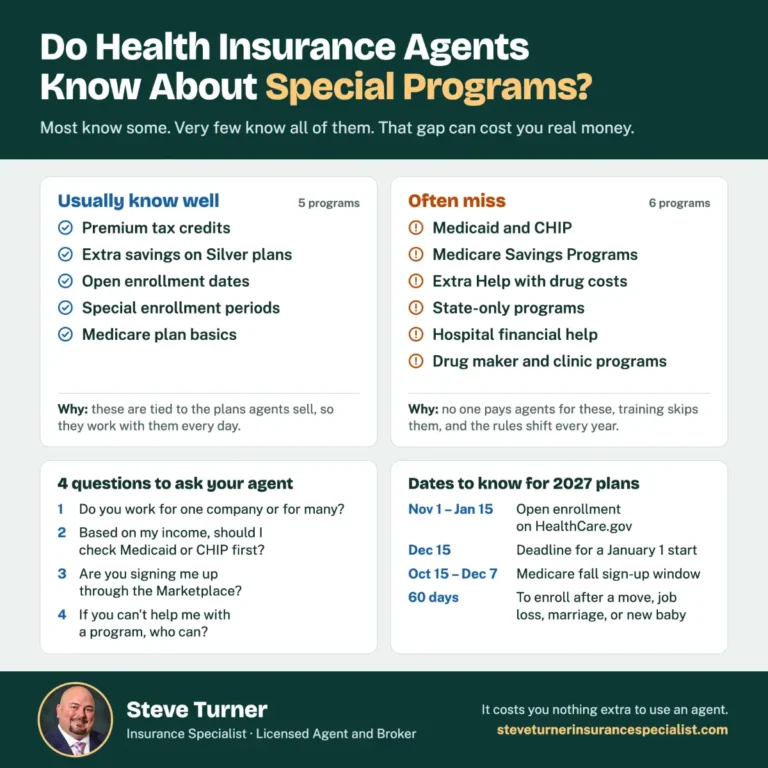
Do Health Insurance Agents Know About Special Programs?
By Steve Turner
• 2026-10-10
Do health insurance agents know about special programs? See which ones they know, which they miss, and 10 questions to ask before you pick a plan. -
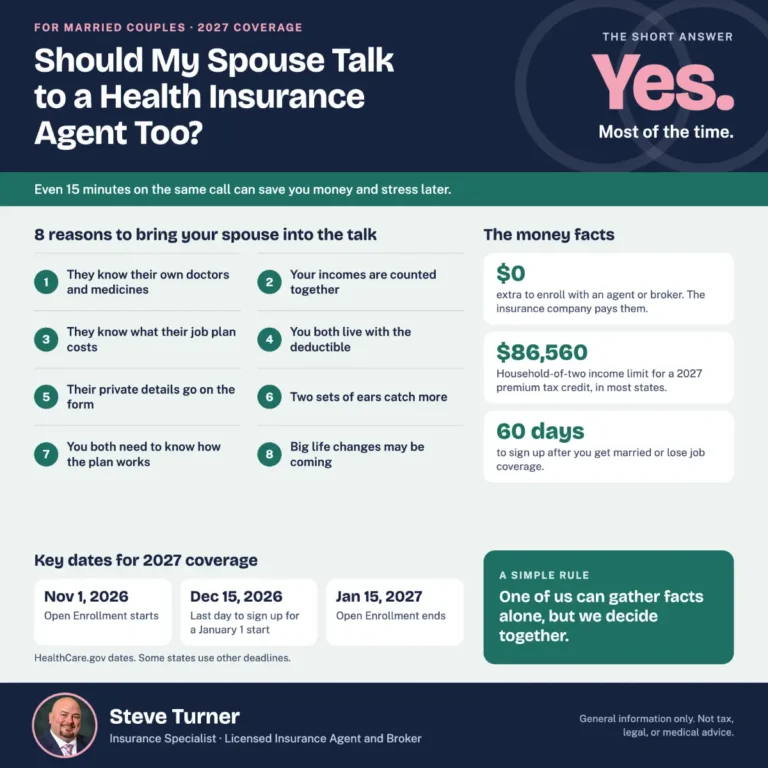
Should My Spouse Talk to a Health Insurance Agent Too?
By Steve Turner
• 2026-10-09
Should my spouse talk to a health insurance agent too? In most cases, yes. Here is why, when it is fine to go alone, and what to ask together. -
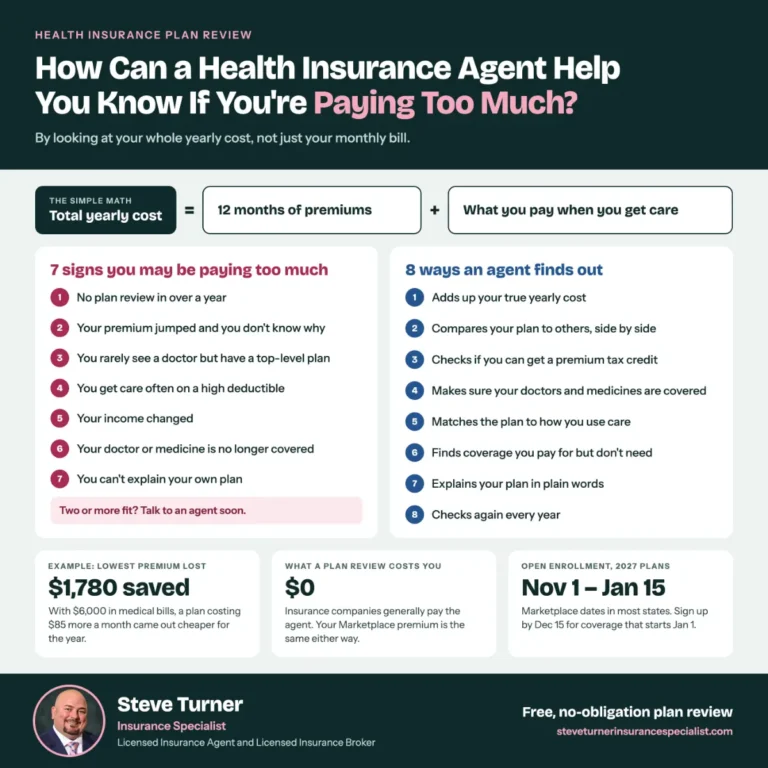
Paying Too Much for Health Insurance? How an Agent Helps
By Steve Turner
• 2026-10-09
Not sure if you’re paying too much for health insurance? Learn how an agent checks your plan, finds savings, and what to ask before you switch. -
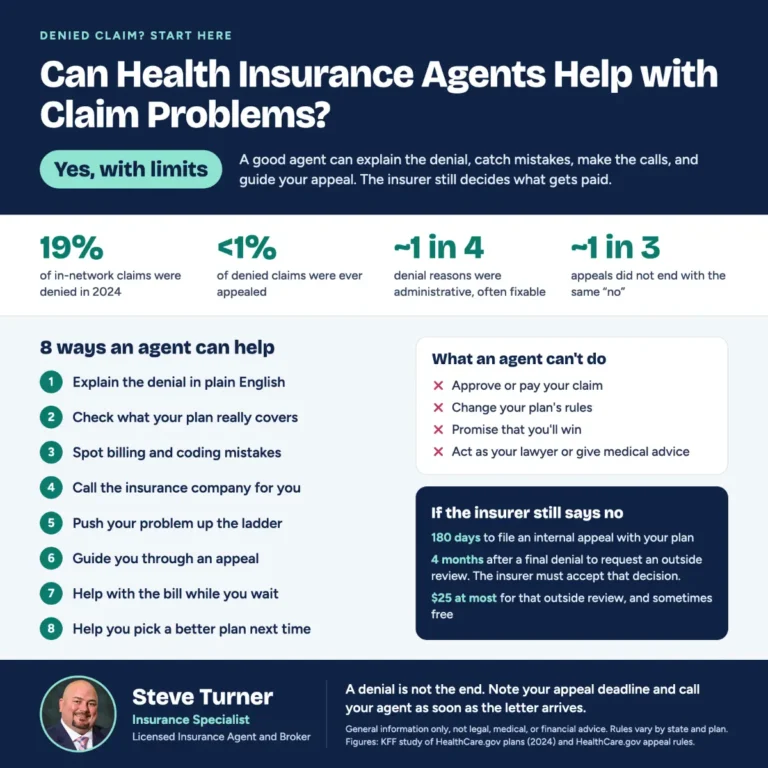
Can Health Insurance Agents Help with Claim Problems?
By Steve Turner
• 2026-10-09
Yes, a health insurance agent can help with claim problems. Learn 8 ways agents help, what they can’t do, and how to appeal a denied claim. -
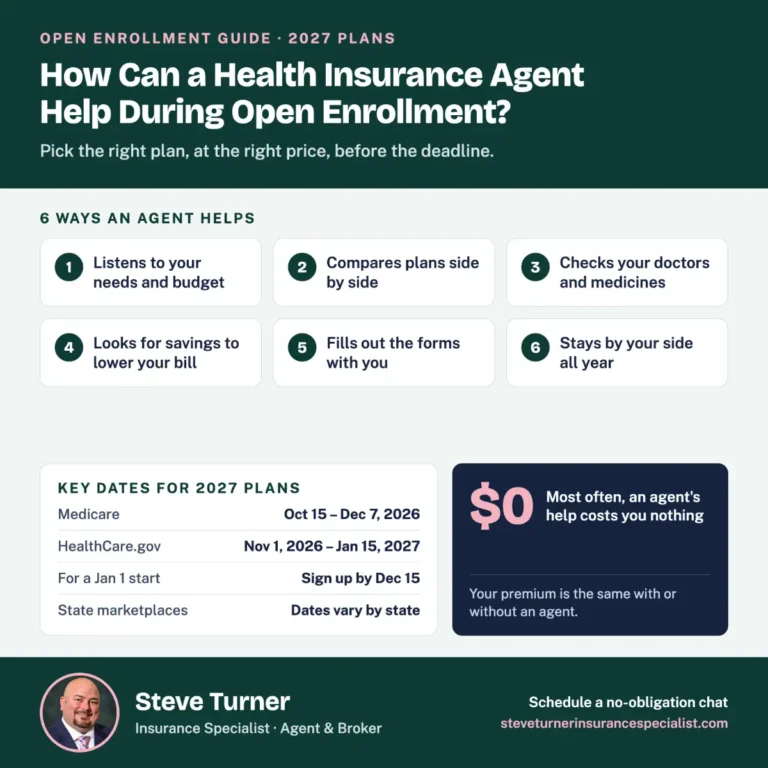
10 Ways a Health Insurance Agent Helps With Open Enrollment
By Steve Turner
• 2026-10-09
Not sure you need help picking a health plan? A licensed agent shares 10 ways an agent can help during open enrollment, what it costs, and what to ask. -
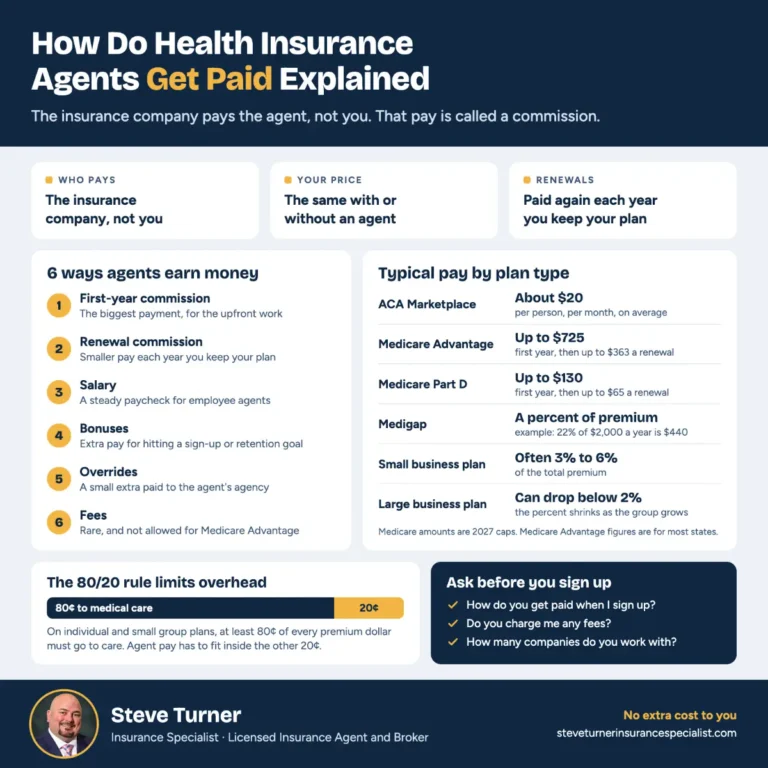
How Do Health Insurance Agents Get Paid Explained
By Steve Turner
• 2026-10-09
How do health insurance agents get paid? Learn who pays them, how ACA and Medicare commissions work, and why using an agent costs you nothing extra. -
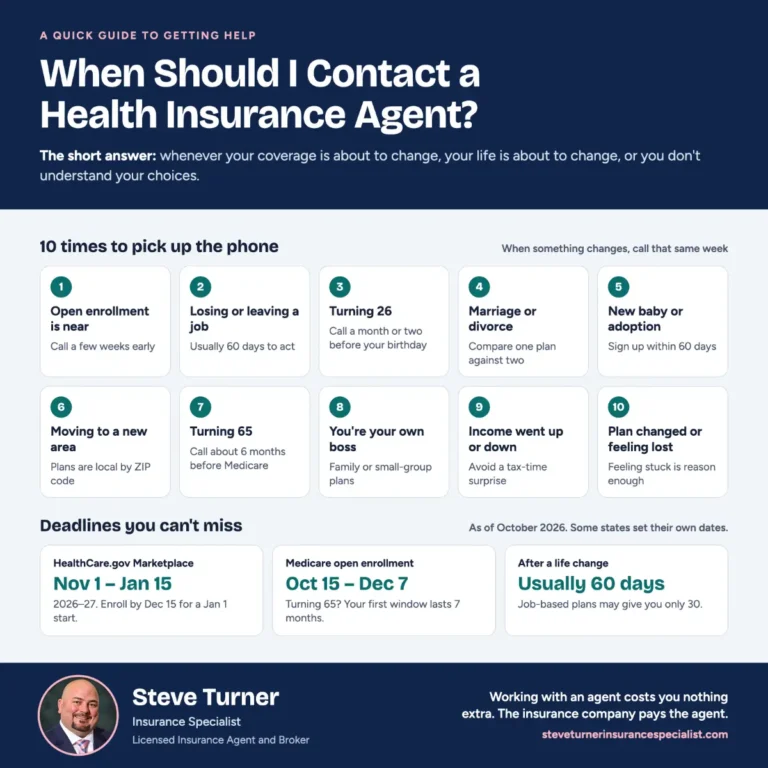
When Should I Contact a Health Insurance Agent?
By Steve Turner
• 2026-10-09
Not sure when to call a health insurance agent? Here are 10 times it pays to ask for help, key enrollment dates, and what to ask before you sign up. -
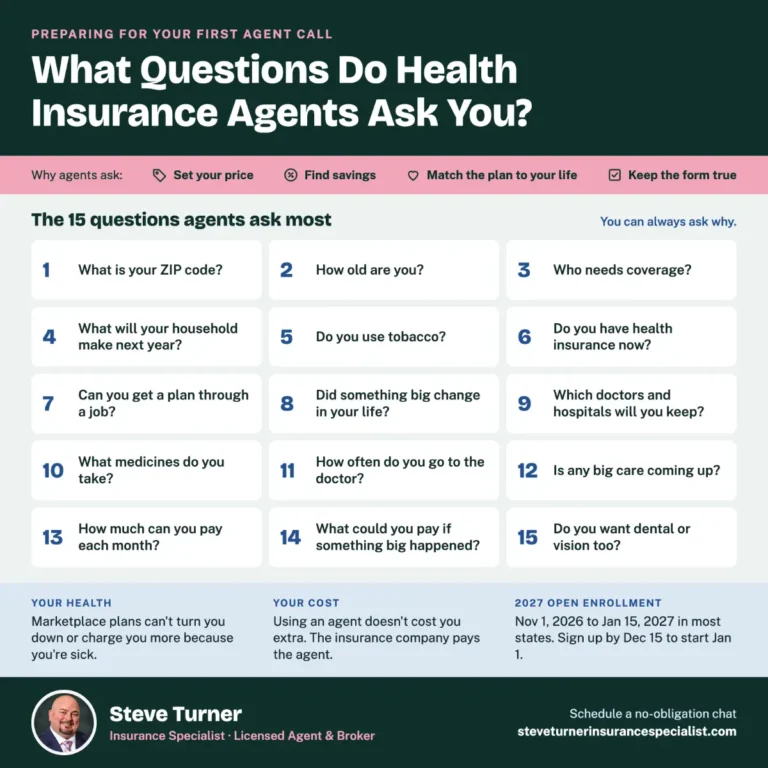
What Questions Do Health Insurance Agents Ask You?
By Steve Turner
• 2026-10-09
An agent explains the 15 questions health insurance agents ask, why they ask them, what they should never ask, and how to get ready for your call. -
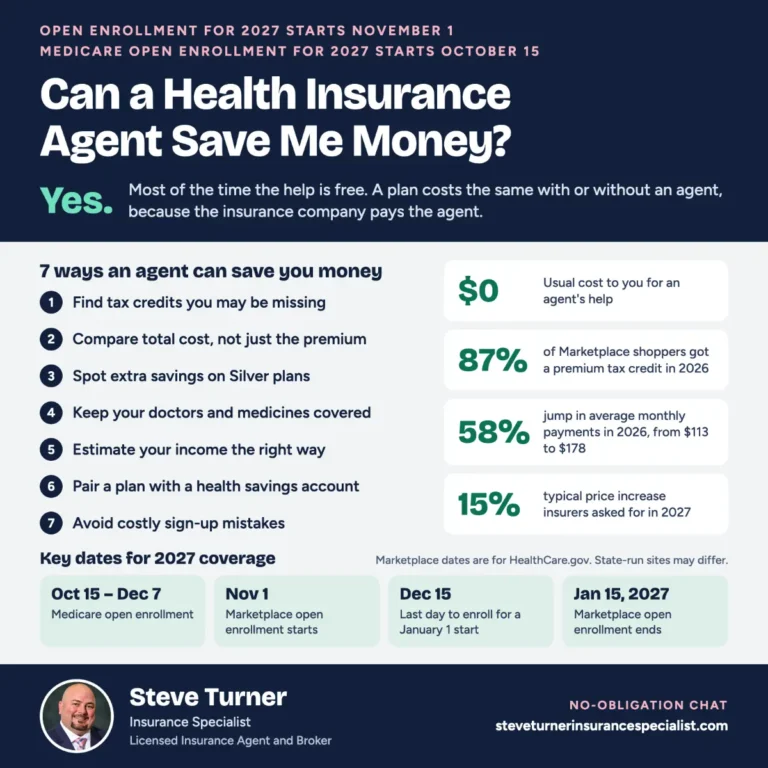
Can a Health Insurance Agent Save Me Money?
By Steve Turner
• 2026-10-09
Yes, and the help is usually free. See 7 ways a health insurance agent can save you money on 2027 plans: tax credits, total cost, Silver plan savings & more. -
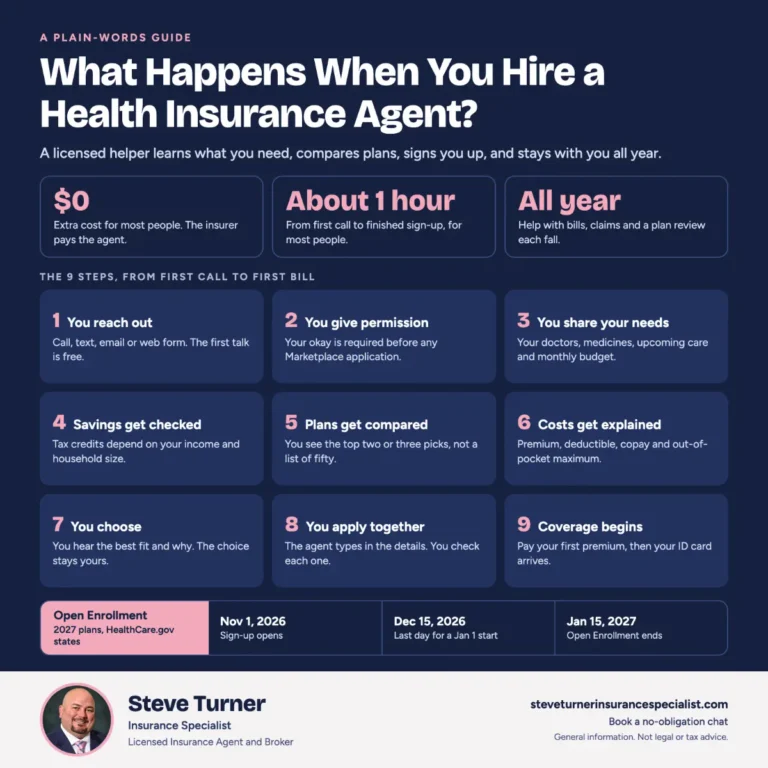
What Happens When You Hire a Health Insurance Agent?
By Steve Turner
• 2026-10-09
A licensed agent explains what happens when you hire a health insurance agent: the 9-step process, what it costs ($0 for most), what to bring, and red flags. -
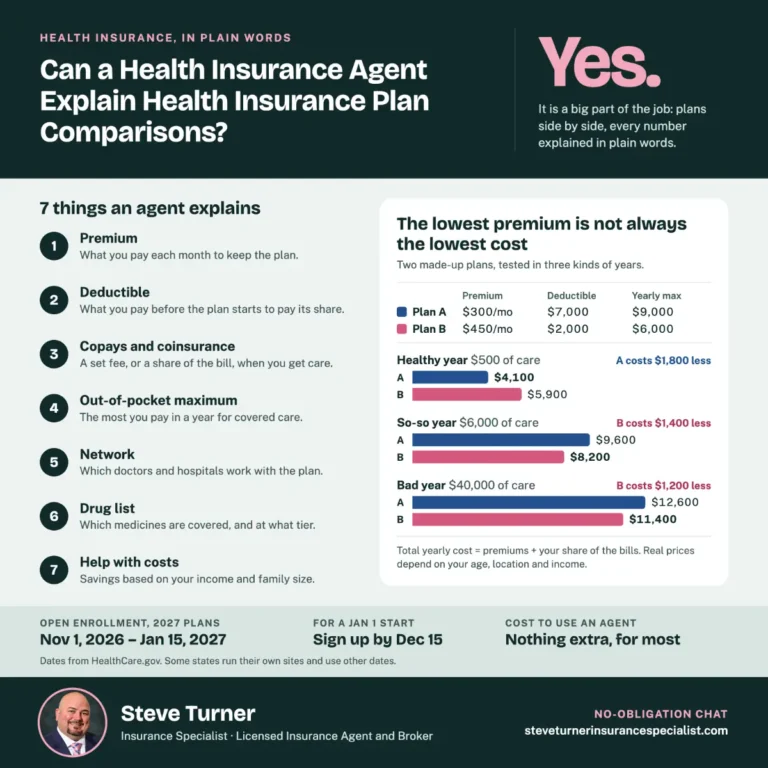
Can a Health Insurance Agent Compare Plans for You?
By Steve Turner
• 2026-10-09
Yes, a health insurance agent can compare plans for you, usually free. Learn the 7 things to check, see a side-by-side example, plus 10 questions to ask. -
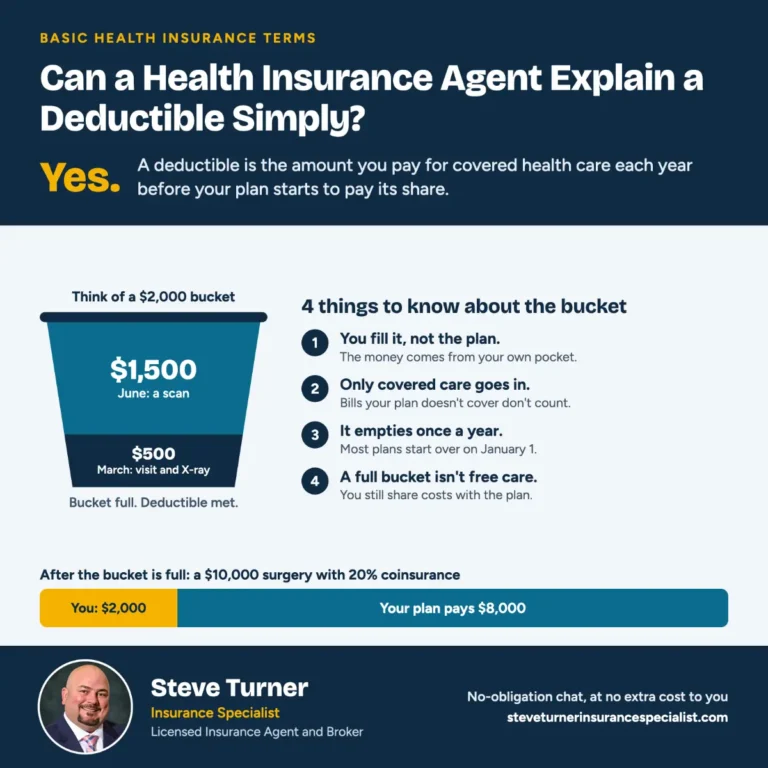
Can a Health Insurance Agent Explain a Deductible Simply?
By Steve Turner
• 2026-10-09
A deductible is what you pay for covered care before your plan pays. See how it works with simple examples, family rules, and high vs. low deductible tips. -
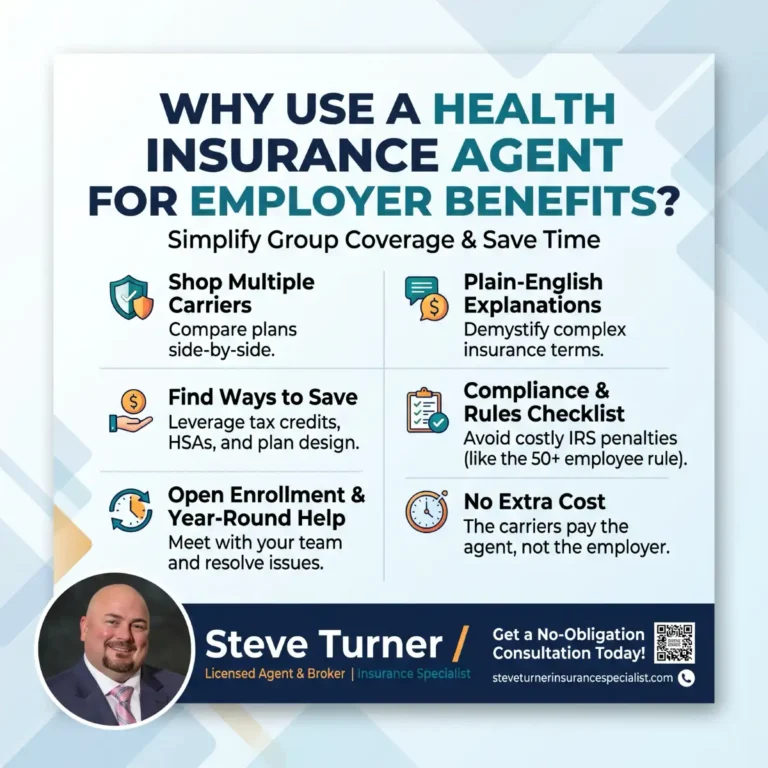
Why Use a Health Insurance Agent for Employer Benefits?
By Steve Turner
• 2026-10-09
Picking group health insurance alone often means overpaying. Learn how an independent agent shops many carriers and handles enrollment and renewals for you. -
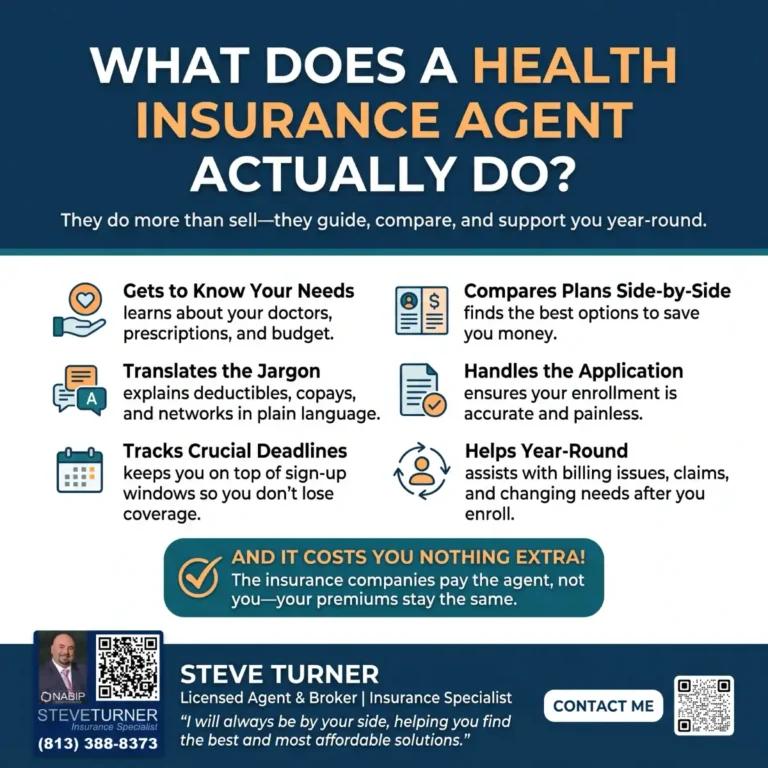
What Does a Health Insurance Agent Actually Do?
By Steve Turner
• 2026-10-08
What does a health insurance agent do? A licensed Tampa agent explains the 9 ways agents help, how they get paid, and why using one costs you nothing extra. -
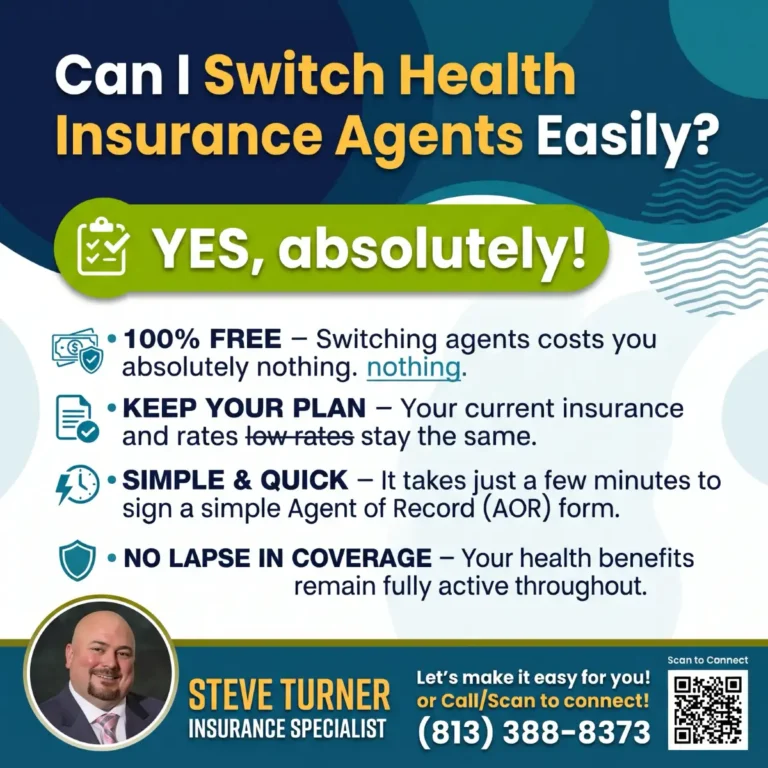
Can I Switch Health Insurance Agents Easily?
By Steve Turner
• 2026-10-08
Yes, you can switch health insurance agents easily. Keep your plan, price & doctors. Learn the 6 simple steps for Marketplace, Medicare & private plans. -
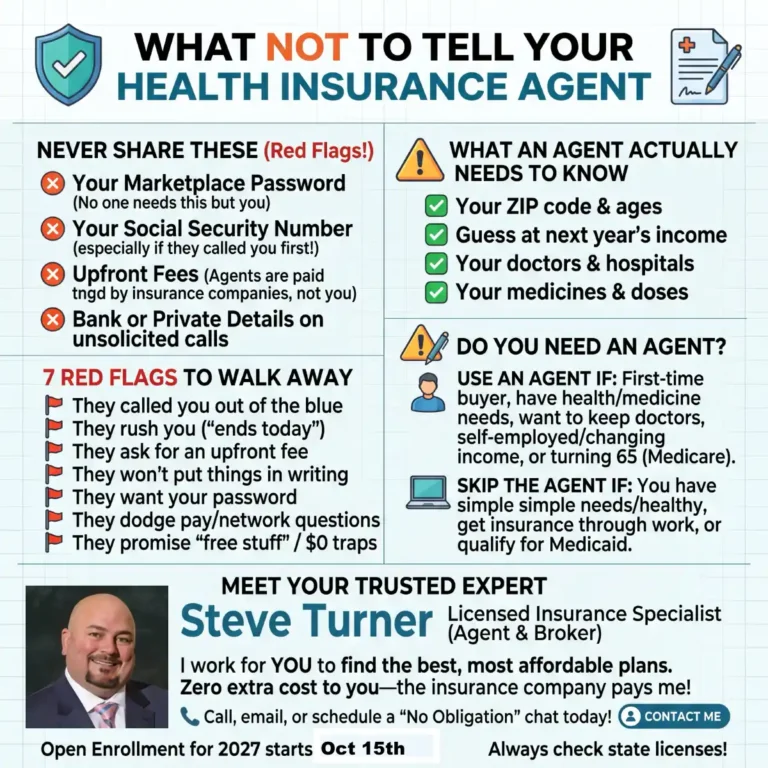
What Not to Tell Your Health Insurance Agent
By Steve Turner
• 2026-10-08
What not to tell your health insurance agent: 12 things to keep to yourself, 6 to always share, and red flags that signal a bad agent. Read before you call. -
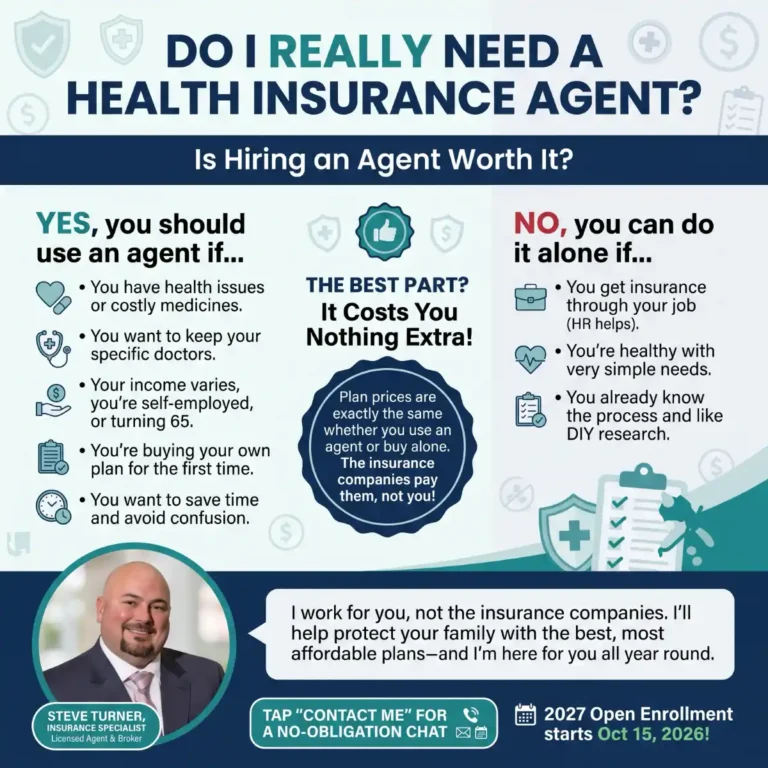
Do I Really Need a Health Insurance Agent?
By Steve Turner
• 2026-10-08
Is a health insurance agent worth it? An agent costs you nothing extra. See 7 signs you need one, 5 signs you don’t, and the red flags to watch for. -
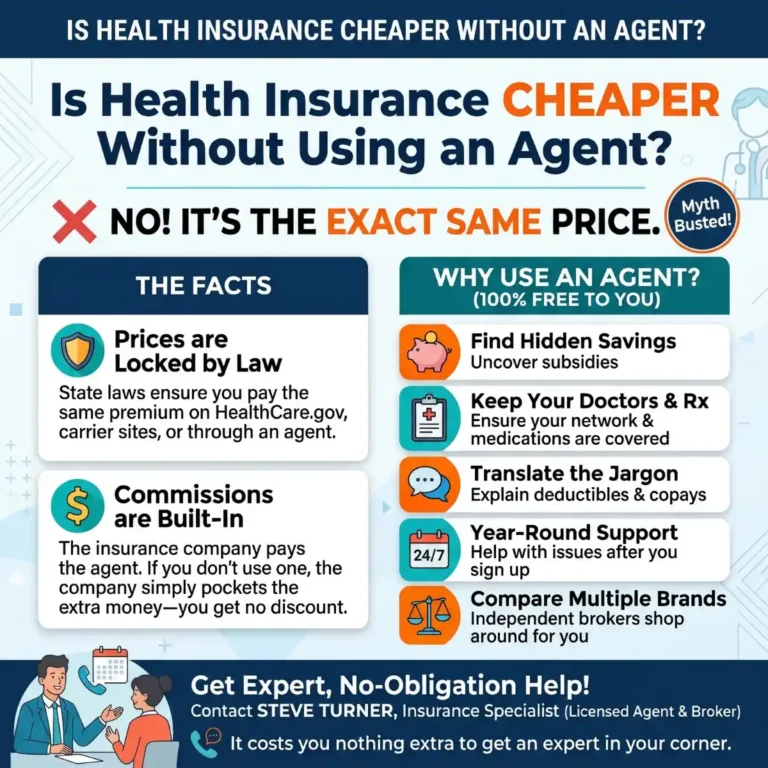
Is Health Insurance Cheaper Without an Agent? The Truth
By Steve Turner
• 2026-10-07
Think skipping the agent saves money? It doesn’t. See why health insurance costs the same either way, plus 7 reasons a free independent agent pays off. -
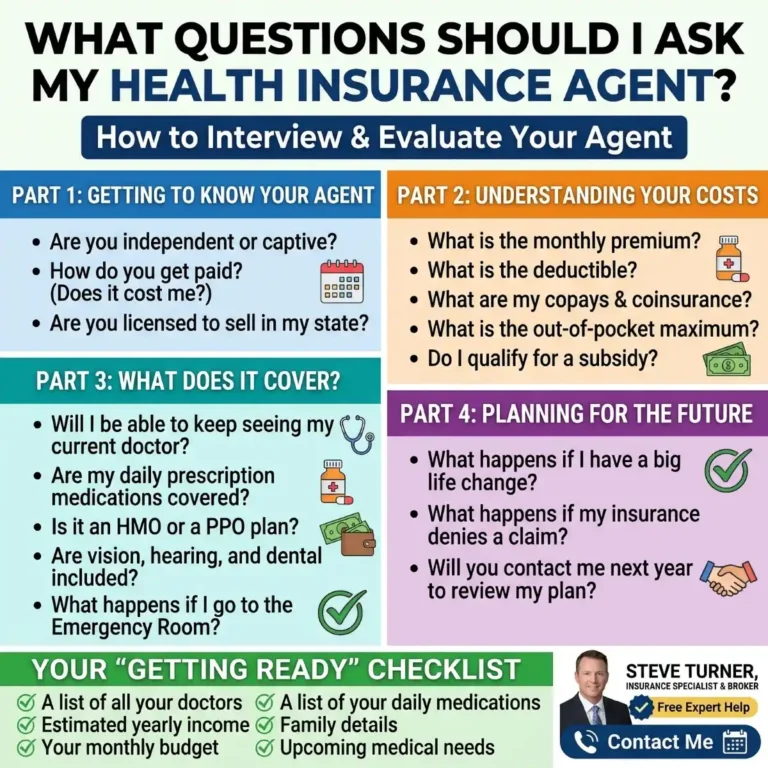
What Questions Should I Ask My Health Insurance Agent?
By Steve Turner
• 2026-10-07
16 questions to ask your health insurance agent, plus a prep checklist. Learn about deductibles, networks and subsidies, and why using an agent costs nothing. -
How to Find a Good Health Insurance Agent
By Steve Turner
• 2026-10-07
Learn how to find a good health insurance agent: 7 steps to vet licenses, read reviews, ask the right questions, and spot red flags before you sign up. -

How to Choose a Qualified Health Insurance Agent in Florida (2027 Guide)
By Steve Turner
• 2025-07-02
Check these 22 health insurance agent qualifications before you enroll in 2027: Florida 2-15 license, CMS Marketplace registration, AHIP, CE and ethics. -

Why Use A Local Insurance Agent? Free for Floridians!
By Steve Turner
• 2025-01-22
Discover the benefits of working with a local agent for personalized, affordable life and health plans. Get expert local advice. Tap to Learn Now! -

Do I Need a Health Insurance Agent in 2027? 10 Reasons
By Steve Turner
• 2025-01-21
Wondering if you need a health insurance agent for 2027? A licensed Florida broker explains the new subsidy rules, 10 ways agents help, and when DIY works. -

Health Insurance Quotes | Cheaper With An Agent in Florida?
By Steve Turner
• 2025-01-17
Are health insurance quotes cheaper with an agent? Discover how Steve Turner finds hidden savings and the best coverage at no extra cost. Tap to Learn Now! -

Stop Giving Criminals Your Personal Info (2027 Guide)
By Steve Turner
• 2021-06-16
That fun “first car” quiz may be handing thieves your security answers. Use the SCAM method, a credit freeze and an IRS IP PIN to protect your identity in 2027.
Medicare plan availability differs by state and county. Steve Turner is licensed in AL, CO, FL, GA, NC, SC, TN, and TX.
Steve Turner is a licensed insurance agent and is not connected with or endorsed by the United States Government or the Federal Medicare Program. The Medicare Annual Enrollment Period is October 15 to December 7.
MEDICARE DISCLAIMER
We do not offer every plan available in your area. Any information we provide is limited to those plans we do offer in your area. Please contact Medicare.gov or 1-800-MEDICARE to get information on all of your options.
Steve Turner

Steve Turner, CLU®, REBC® is licensed in AL, CO, FL, GA, NC, SC, TN, and TX · NPN 18030539 · Florida License W333468
Steve Turner is a licensed agent and broker and a long-standing member of the National Association of Benefits and Insurance Professionals NABIP®. Steve holds the Registered Employee Benefits Consultant® (REBC®) designation. Steve also holds the “Chartered Life Underwriter” designation (CLU®), a professional credential for individuals specializing in life insurance and estate planning, conferred by the American College of Financial Services. Since 2016 (over 10 years), Steve has helped individuals, families, Medicare beneficiaries, and small businesses find the right coverage to meet their needs. Steve has earned 180+ Google reviews from happy clients.
Steve Turner is a licensed agent appointed by Florida Blue in Florida.