

What is a Health Insurance Deductible for Floridians?

What is a Health Insurance Deductible for Floridians?
What is a Health Insurance Deductible for Floridians?
Navigating the complexities of health insurance can be challenging for residents. Terms like premiums, copayments, coinsurance, and deductibles can often create confusion; however, understanding these components is crucial for managing healthcare expenses and selecting the most suitable coverage. Among these terms, the health insurance deductible plays a significant role in determining how much an individual pays out of pocket before their insurance plan begins to cover a larger portion of costs.
People often turn to online resources to understand these concepts, reflecting a strong public need for clear information, especially about the cost-related aspects of health insurance.1. Concerns about healthcare costs, unexpected medical bills, and the affordability of coverage are widespread. This article aims to demystify the health insurance deductible for Floridians by explaining what it is, how it is determined within the state’s insurance landscape (particularly under the Affordable Care Act, or ACA), and providing estimated typical deductible amounts for 2025 to support informed decision-making.
What Exactly is a Health Insurance Deductible?
At its core, a health insurance deductible is the amount an individual must pay out of pocket for covered healthcare services within a plan year before their health insurance plan starts contributing to the cost. Think of it like a car insurance deductible: if an accident occurs, the policyholder pays the deductible amount first, and the insurance covers the rest of the repair costs. However, unlike car insurance, health insurance deductibles typically reset annually, usually on January 1st.
It’s essential to understand how the deductible fits within the broader structure of health insurance costs:
- Premium: This is the regular monthly payment to the insurance company to maintain coverage. You pay this fee regardless of whether you use healthcare services during the month.
- Health insurance deductible: After you pay the premium, the deductible is the next cost hurdle. It’s the amount the insured pays for covered services before the insurance plan begins to pay its share. For example, with a $2,000 deductible, the individual pays the first $2,000 of their covered medical bills for the year.
- Copayment (Copay): A fixed dollar amount (e.g., $25) paid for a specific covered service, such as a doctor’s visit or prescription medication. Depending on the plan’s structure, copays might apply before or after the deductible is met. Some services may only require a copay, while others may require paying the full allowed amount until the deductible is met.
- Coinsurance: After the annual deductible is met, the insured typically shares the cost of subsequent covered services with the insurance plan. This shared cost is the coinsurance, expressed as a percentage of the total cost. For instance, an 80/20 coinsurance means the insurance plan pays 80% of the allowed amount for a covered service, and the individual pays the remaining 20%.
- Out-of-Pocket Maximum (OOPM): This is a crucial safety net. It represents the maximum amount an individual will pay for covered in-network healthcare services in a plan year. All payments toward the deductible, copays, and coinsurance accumulate toward this maximum limit. Once you reach the OOPM, the insurance plan typically pays 100% of the allowed amount for all covered services for the rest of the plan year.
A critical feature of ACA-compliant plans is that they cover certain preventive care services (like specific screenings, immunizations, and annual check-ups) at 100%, meaning no cost to the insured, even before the annual deductible. This encourages people to seek essential preventive care without immediate cost barriers, which matters because cost concerns can lead people to delay or forgo necessary care.
Understanding how these cost components interact is vital. A plan with a low monthly premium may seem appealing at first. Still, it may have a high deductible, resulting in substantial out-of-pocket expenses if you need significant medical care. Conversely, a plan with a higher premium might offer a lower deductible and more predictable costs through lower copays or coinsurance.
How Florida Health Insurance Deductibles Are Set: Plan Choice and Income Matter Most
A common question arises regarding what aspects of a person’s “background” influence their health insurance deductible. Under the rules established by the Affordable Care Act (ACA) for compliant major medical plans, such as those sold on the Health Insurance Marketplace (HealthCare.gov, which Florida uses), insurers are prohibited from setting deductibles, charging higher premiums, or denying coverage based on an individual’s health status, medical history, or pre-existing conditions.
The factors that primarily determine the health insurance deductible amount for Florida residents purchasing ACA-compliant coverage are:
- Plan Choice (Metal Tiers): The ACA Marketplace categorizes plans into four “metal” tiers: Bronze, Silver, Gold, and Platinum. These tiers indicate how the insurance plan and the enrollee share overall healthcare costs, on average; they do not reflect the quality of care provided.
- Bronze Plans: Typically have the lowest monthly premiums but the highest deductibles and out-of-pocket costs. Enrollees pay more for care when they need it.
- Silver Plans: Moderate premiums and moderate deductibles/costs. These plans are unique because they are the only tier eligible for Cost Sharing Reductions (see below).
- Gold Plans: Higher monthly premiums but lower deductibles and costs when you access care.
- Platinum Plans: Generally have the highest monthly premiums but the lowest deductibles and out-of-pocket costs, offering the most predictable expenses when using healthcare services. The fundamental trade-off is clear: lower upfront monthly costs (premiums) usually mean higher costs when accessing care (deductibles, copays, coinsurance), and vice versa.
- Household Income (Cost Sharing Reductions – CSRs): This is critical for many Floridians seeking coverage through the Marketplace. Cost Sharing Reductions (CSRs) are a form of financial assistance, often called “extra savings,” available only to individuals and families who enroll in a Silver plan and have household incomes between 100% and 250% of the Federal Poverty Level (FPL). Eligibility for 2025 plans is based on the 2024 Federal Poverty Level (FPL) guidelines.
- How CSRs Work: CSRs automatically reduce the amount an eligible individual pays for their deductible, copayments, coinsurance, and, importantly, their out-of-pocket maximum. Insurers achieve this by creating special Silver plans for CSR-eligible enrollees. These CSR Silver plans have a higher actuarial value (AV) – the average percentage of total costs the plan covers for a standard population – than a standard Silver plan (which has an AV around 70%).
- CSR Levels: The level of cost-sharing help depends on income.
- Income 100% – 150% FPL: Qualifies for a Silver plan with ~94% AV (most generous reduction, comparable to a Platinum plan).
- Income >150% – 200% FPL: Qualifies for a Silver plan with ~87% AV (very generous reduction, better than Gold).
- Income >200% – 250% FPL: Qualifies for a Silver plan with ~73% AV (modest reduction, slightly better than standard Silver). CSRs substantially reduce deductibles. While standard Silver plans often have high deductibles, these reductions can significantly lower them, making healthcare more affordable for eligible Floridians. This means a CSR-eligible individual might find that a Silver plan offers far lower out-of-pocket costs than a Bronze plan, even if the Bronze plan has a slightly lower monthly premium.
Other Influencing Factors:
- Network Type: Plans are often structured as HMOs, PPOs, EPOs, or POS plans, which differ in provider network flexibility and referral requirements. While the metal tier is the primary driver of the health insurance deductible level, the network type can sometimes correlate with different cost structures.
- Separate Deductibles: Some plans have separate deductibles for different types of services. For example, a plan might have one deductible for medical care and a separate one for prescription drugs. Additionally, out-of-network coverage (which many Marketplace plans, especially HMOs and EPOs, do not offer) will almost always have a much higher deductible for out-of-network care than for in-network care.
- High-Deductible Health Plans (HDHPs): These are specific plan types defined by the IRS that meet minimum deductible requirements and maximum out-of-pocket limits. For 2025, an HDHP must have a minimum deductible of $1,650 for individual coverage or $3,300 for family coverage. HDHPs are the only plans that allow contributions to a tax-advantaged Health Savings Account (HSA).
The combination of metal tier choice, income-driven CSR eligibility, and potential separate deductibles highlights the complexity consumers face when comparing plans. It underscores the importance of looking beyond the premium or standard deductible figure when making an informed choice.
Typical 2025 Health Insurance Deductibles in Florida: What to Expect
Predicting exact health insurance deductible amounts for 2025 requires final plan filings, typically available closer to the Open Enrollment Period (usually starting November 1st). However, 2024 data provides a reliable estimate of the ranges and structures Floridians can expect for ACA Marketplace plans in 2025. Remember, eligibility for subsidies like CSRs for 2025 coverage is determined using the 2024 Federal Poverty Level (FPL) guidelines issued by the Department of Health and Human Services.
ACA Marketplace Plan Deductibles (Indicative for 2025):
A starting point is the national average deductibles for Marketplace plans by metal tier as of 2024, which provide a general baseline.
Table 1: Indicative 2025 Florida Marketplace Deductibles (Based on 2024 National Averages for Individual Coverage)
| Metal Tier | Average Combined Medical/Drug Deductible (Individual) |
| Bronze | $7,258 |
| Silver (Standard) | $5,241 |
| Gold | $1,430 |
| Platinum | $97 |
Source: KFF analysis of 2024 HealthCare.gov data. Note: Standard Silver average does not reflect CSRs.
These averages show the trade-off: higher deductibles for lower-premium Bronze and standard Silver plans, and significantly lower deductibles for higher-premium Gold and Platinum plans.
The Critical Role of CSRs in Silver Plans:
As emphasized earlier, the standard Silver deductible (average $5,241 nationally in 2024) does not tell the whole story for many Floridians. Cost-sharing reductions significantly lower this amount for individuals with household incomes between 100% and 250% of the Federal Poverty Level (FPL).
Table 2: Estimated 2025 Florida Silver Plan Deductibles with Cost Sharing Reductions (CSRs)
| Household Size | Household Income Range (2024 FPL for 2025 Eligibility) | CSR Level (Actuarial Value) | Estimated Average Silver Plan Deductible (Individual / Family) |
| 1 Person | $15,060 – $22,590 (100%-150% FPL) | 94% AV | ~$255 / ~$510 |
| 1 Person | $22,591 – $30,120 (>150%-200% FPL) | 87% AV | ~$809 / ~$1,618 |
| 1 Person | $30,121 – $37,650 (>200%-250% FPL) | 73% AV | ~$2,904 / ~$5,808 |
| 2 Persons | $20,440 – $30,660 (100%-150% FPL) | 94% AV | ~$255 / ~$510 |
| 2 Persons | $30,661 – $40,880 (>150%-200% FPL) | 87% AV | ~$809 / ~$1,618 |
| 2 Persons | $40,881 – $51,100 (>200%-250% FPL) | 73% AV | ~$2,904 / ~$5,808 |
| 4 Persons | $31,200 – $46,800 (100%-150% FPL) | 94% AV | ~$255 / ~$510 |
| 4 Persons | $46,801 – $62,400 (>150%-200% FPL) | 87% AV | ~$809 / ~$1,618 |
| 4 Persons | $62,401 – $78,000 (>200%-250% FPL) | 73% AV | ~$2,904 / ~$5,808 |
| Comparison | Above 250% FPL | Standard Silver (70% AV) | ~$5,241 / ~$10,482 (Based on 2024 National Average) |
Sources: FPL figures from HHS. CSR AV levels from CMS. Estimated deductible reductions based on KFF analysis. Family deductibles often double individual amounts.
This table illustrates the powerful effect of CSRs. An individual earning below 150% FPL could face a deductible around $255 on a Silver plan, compared to over $5,200 on a standard Silver plan or over $7,000 on an average Bronze plan.
Florida-Specific Context:
Marketplace deductibles can vary geographically. For example, Miami’s 2024/2025 marketplace analysis showed typical standard Silver plan deductibles around $5,900, while standard Bronze deductibles ranged from $7,500 to $9,450. These high figures for standard plans in a central Florida market further underscore the importance of CSR eligibility for affordable access to care.
These standard Marketplace deductibles are considerably higher than the average annual deductible for single coverage in employer-sponsored plans, which was around $1,800 in 2024, highlighting the affordability challenge for those without subsidies or employer coverage.
Understanding Family health insurance deductible:
When a single plan covers multiple people, health insurance deductibles work in two primary ways.
- Embedded health insurance deductible: This structure is typical in Marketplace plans and features individual and family deductibles.
- Each family member has their own health insurance deductible amount. Once a person meets their deductible, the plan starts paying its share (coinsurance) for covered services.
- There is also an overall family health insurance deductible (often twice the individual amount). Once all family members’ combined out-of-pocket spending (that counts toward the deductible) reaches this family limit, the plan starts paying its share for all covered family members, even those who haven’t met their health insurance deductible yet.
- Aggregate health insurance deductible: This structure features a single, larger health insurance deductible amount for the entire family.
- The insurance plan begins paying its share of costs only after all family members’ combined medical expenses (that count toward the deductible) meet this single family health insurance deductible threshold. No cost-sharing benefits (beyond pre-deductible preventive care) apply until you reach this total amount.
The choice between these structures involves trade-offs. Embedded health insurance deductibles often provide cost-sharing benefits sooner for family members who incur significant expenses, offering more predictable costs for individuals within the family unit. An aggregate health insurance deductible might come with slightly lower monthly premiums but require the family to pay more out of pocket before the plan starts covering costs for any member.
Comparison with Other Plan Types:
- Employer-Sponsored Plans: As noted, deductibles in employer plans tend to be lower on average than standard (non-CSR) Marketplace plans.
- Short-Term Health Plans: These plans provide temporary health coverage, typically designed to bridge gaps, such as between jobs or while waiting for other coverage to take effect.
For short-term, limited-duration individual and group insurance policies, certificates, or contracts sold or issued on or after September 1, 2024, the following requirements apply: - For policies, certificates, or contracts sold or issued before September 1, 2024, the following criteria apply:
- Are less than 12 months;
- Contain a disclaimer to help you understand the coverage you are getting; and
- May be renewed up to 36 months.
- Short-term plans are not ACA-compliant. They generally do not cover pre-existing conditions, may exclude coverage for essential health benefits like maternity care or mental health services, and often have annual or lifetime dollar limits on coverage. While their lower upfront premiums may seem attractive, limited coverage creates significant financial risk compared to comprehensive ACA plans. Long renewal periods in Florida may obscure their intended temporary nature, potentially leading consumers to rely on inadequate coverage long term.
Choosing Your Plan: Thinking Beyond the Deductible
Selecting a health insurance plan involves more than just comparing health insurance deductibles. It requires a holistic view of potential costs and personal healthcare needs. The health insurance deductible matters, but you must weigh it against the monthly premium, potential copayments, coinsurance, and the overall out-of-pocket maximum. A plan with the lowest premium might seem attractive. Still, an unexpected illness or injury could lead to substantial medical bills if it has a very high deductible and coinsurance.
Individuals and families should carefully consider their specific circumstances.
- Expected Healthcare Use: Individuals anticipating frequent doctor visits, requiring regular prescriptions, or planning surgeries may benefit from a higher premium but a lower deductible and out-of-pocket maximum (like a Gold, Platinum, or CSR-enhanced Silver plan). This makes costs more predictable when care is needed.
- Health Status: Generally, healthy individuals with minimal expected healthcare needs may opt for a lower-premium plan with a higher deductible (such as a Bronze or standard Silver plan, if not CSR-eligible), accepting the risk of higher costs if significant care becomes necessary.
- Budget: Assess your ability to consistently pay the monthly premium and cover the health insurance deductible and other out-of-pocket costs if unexpected medical needs arise.
Understanding why health insurance deductibles exist can also provide context. From an insurance perspective, health insurance deductibles serve several purposes.
- Cost Control/Risk Sharing: By requiring individuals to pay a portion of initial costs, health insurance deductibles encourage more conscious utilization of healthcare services.
- Mitigating Moral Hazard: They reduce the incentive to seek unnecessary care simply because it is covered, since individuals still bear some financial risk.
- Premium Affordability: By shifting some of the initial cost risk to the policyholder, insurers can offer plans with lower monthly premiums than would otherwise be possible.
Ultimately, choosing a health plan is a personalized risk assessment. No single health insurance deductible level fits everyone in Florida. The optimal choice balances the certainty of the monthly premium with the potential uncertainty of out-of-pocket costs, aligning with individual health expectations and financial capacity.
Conclusion: Key Takeaways for Florida Consumers
Understanding the health insurance deductible is fundamental to navigating coverage options and managing healthcare costs effectively in Florida. Key points for consumers to remember include:
- The health insurance deductible is the out-of-pocket amount for covered services before the insurance plan shares costs, and it resets annually.
- For ACA-compliant plans in Florida’s Marketplace, health insurance deductibles are primarily determined by the chosen plan’s metal tier (Bronze, Silver, Gold, Platinum) and, critically for many, by household income via Cost Sharing Reductions (CSRs), which are available only on Silver plans for those with incomes between 100% and 250% of the Federal Poverty Level (FPL). Health history does not affect deductibles for these plans.
- Health insurance deductibles in 2025 are expected to vary widely. Standard Bronze and Silver plans will likely continue to have high deductibles (potentially $5,000-$7,000 for individuals). However, CSR-eligible individuals enrolling in Silver plans can access significantly lower health insurance deductibles, making these plans highly cost-effective.
- Family plans use embedded (individual and family thresholds) or aggregate (single-family threshold) health insurance deductible structures, which determine when cost-sharing begins for family members.
Actionable Advice:
Making an informed decision requires diligence:
- Review Plan Details: Always carefully examine the official Summary of Benefits and Coverage (SBC) for any plan you are considering. This document outlines the deductible, copays, coinsurance, and out-of-pocket maximum.
- Use official resources: Florida uses the federal Health Insurance Marketplace platform. Visit HealthCare.gov to compare plans side by side, check provider networks, view prescription drug coverage, and get personalized cost estimates based on household income. The site automatically calculates eligibility for premium tax credits and cost-sharing reductions (CSRs).
- Seek Assistance: Navigating health insurance options can be complex. Certified Navigators or assisters, as well as licensed insurance brokers, can provide free help by explaining options and helping with enrollment.
By understanding how deductibles work, how they are influenced by plan choice and income, and what typical costs look like in Florida, consumers can approach the process of selecting health insurance with greater confidence, ultimately choosing coverage that best meets their health needs and financial situation.
OUR CLIENT REVIEWS


CONTACT STEVE TURNER, LICENSED INSURANCE AGENT & BROKER
Questions? Call, text, or book a time below; I answer calls and emails 7 Days a week from 7:00 a.m. to 8:00 p.m., excluding posted holidays.
EMAIL STEVE
OFFICE LOCATION
Address: 14502 N Dale Mabry Hwy, Suite 200, Tampa, FL 33618
Website: steveturnerinsurancespecialist.com
Email: [email protected]
Phone and Text: +1-813-388-8373
Business Hours:
Monday: 7:00 a.m. / 8:00 p.m.
Tuesday: 7:00 a.m. / 8:00 p.m.
Wednesday: 7:00 a.m. / 8:00 p.m.
Thursday: 7:00 a.m. / 8:00 p.m.
Friday: 7:00 a.m. / 8:00 p.m.
Saturday: 7:00 a.m. / 8:00 p.m.
Sunday: 7:00 a.m. / 8:00 p.m.
HEALTH INSURANCE POSTS
-
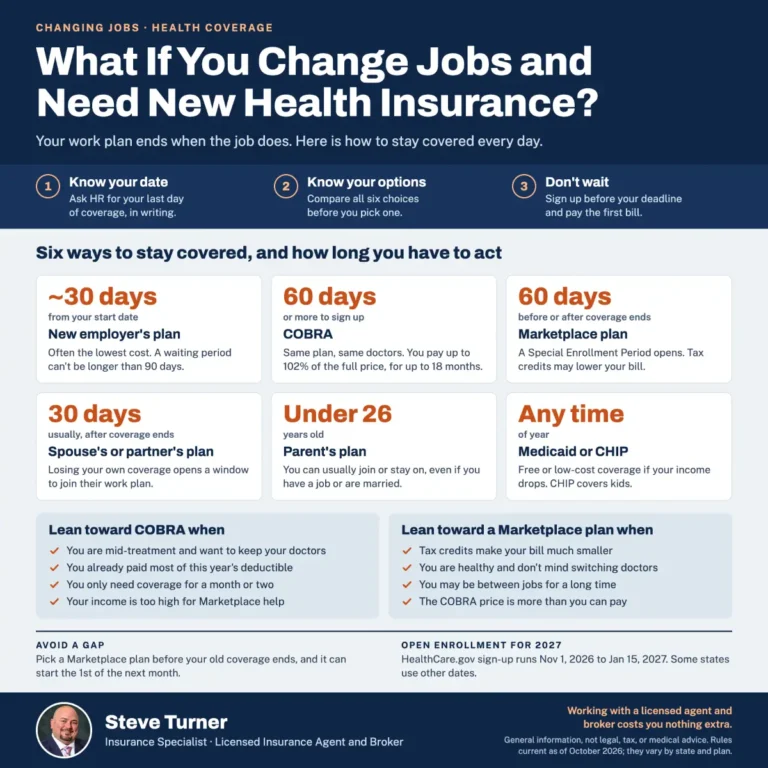
What If You Change Jobs and Need New Health Insurance?
By Steve Turner
• 2026-10-10
Changing jobs and need new health insurance? I explain COBRA, Marketplace plans, waiting periods, and the deadlines to hit so you never have a gap. -
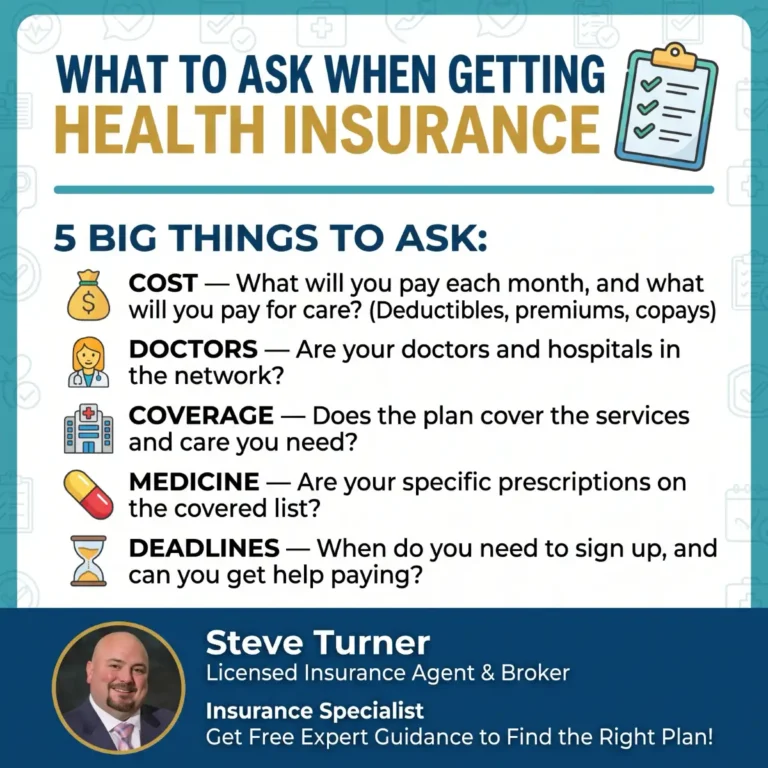
What to Ask When Getting Health Insurance
By Steve Turner
• 2026-10-08
30 questions to ask before buying health insurance, from deductibles to drug lists. Get free help from Tampa agent and broker Steve Turner. -

Does Insurance Cover Braces? | Floridians Learn Here!
By Steve Turner
• 2025-06-19
Does dental insurance pay for braces? Learn about orthodontic coverage, lifetime maximums, and plans for kids and adults. Tap to Learn Now! -

Save 10 Ways: Out-of-Pocket Maximum in Florida
By Steve Turner
• 2025-05-23
Stop overpaying! Learn 10 expert ways to reach your out-of-pocket maximum faster and lower your medical costs today with Steve Turner. Tap to Learn Now! -

Health Insurance Copay | Low Costs for Floridians!
By Steve Turner
• 2025-05-19
What is a health insurance copay? Learn how fixed costs for doctor visits and prescriptions affect your budget and plan choice. Tap to Learn Now! -

Health Insurance Premium: 2027 Florida Cost Guide
By Steve Turner
• 2025-05-14
Florida ACA premiums rose 10.4% for 2027 and enhanced subsidies are gone. A licensed agent explains what you’ll pay, who still gets help, and how to save. -

How Does Health Insurance Work in 2027?
By Steve Turner
• 2025-05-13
Learn how health insurance works in 2027: premiums, deductibles, the new $12,000 out-of-pocket cap, subsidies, and Florida options like Medicaid and KidCare. -

4 Common Health Insurance Plans
By Steve Turner
• 2025-01-29
Compare HMO, PPO, EPO, and POS health insurance plans. Find the best coverage, costs, and doctor networks for your needs. Tap to Learn Now! -

10 Ways the Affordable Care Act Can Help Me
By Steve Turner
• 2023-03-20
Maximize your healthcare with the Affordable Care Act. Explore 10 ways the ACA provides savings, free preventive care, and more. Tap to Learn Now! -

Top 25 Health Insurance Questions in Florida
By Steve Turner
• 2023-03-13
Choosing health insurance is complex. Get expert answers on premiums, deductibles, PPO vs. HMO, and how to lower your out-of-pocket costs. Tap to Learn Now! -

Major Medical Vs Supplemental Insurance in Florida
By Steve Turner
• 2021-08-18
Understand the key differences between Major Medical and Supplemental Insurance to bridge coverage gaps and save on costs. Tap to Learn Now!
INSURANCE OFFERINGS
What is a Health Insurance Deductible for Floridians?
HEALTH INSURANCE

MEDICARE ADVANTAGE

MEDICARE SUPPLEMENT

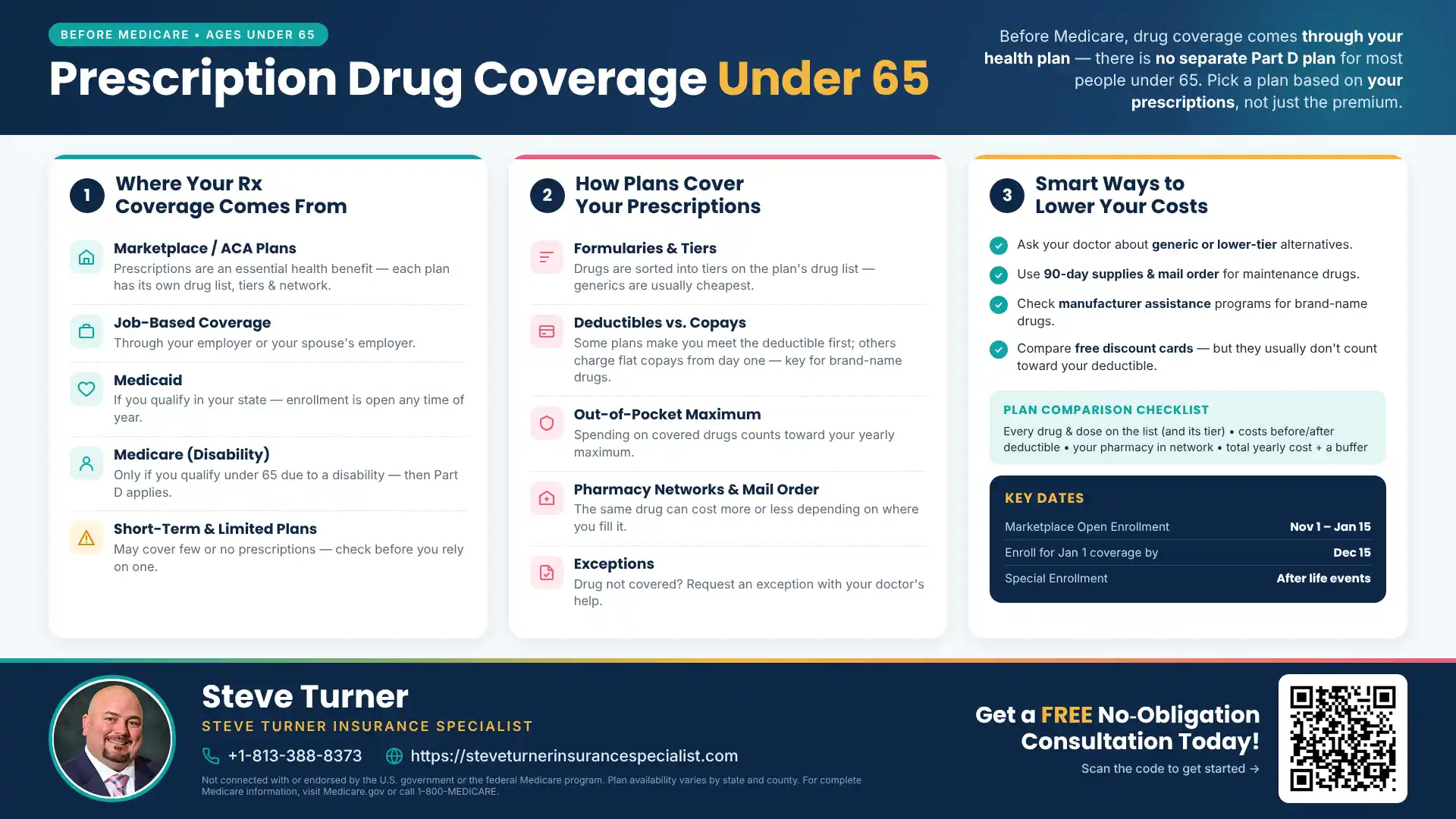
PRESCRIPTION DRUGS COVERAGE UNDER 65
LIFE INSURANCE

DISABILITY INSURANCE

DENTAL INSURANCE

GROUP HEALTH INSURANCE

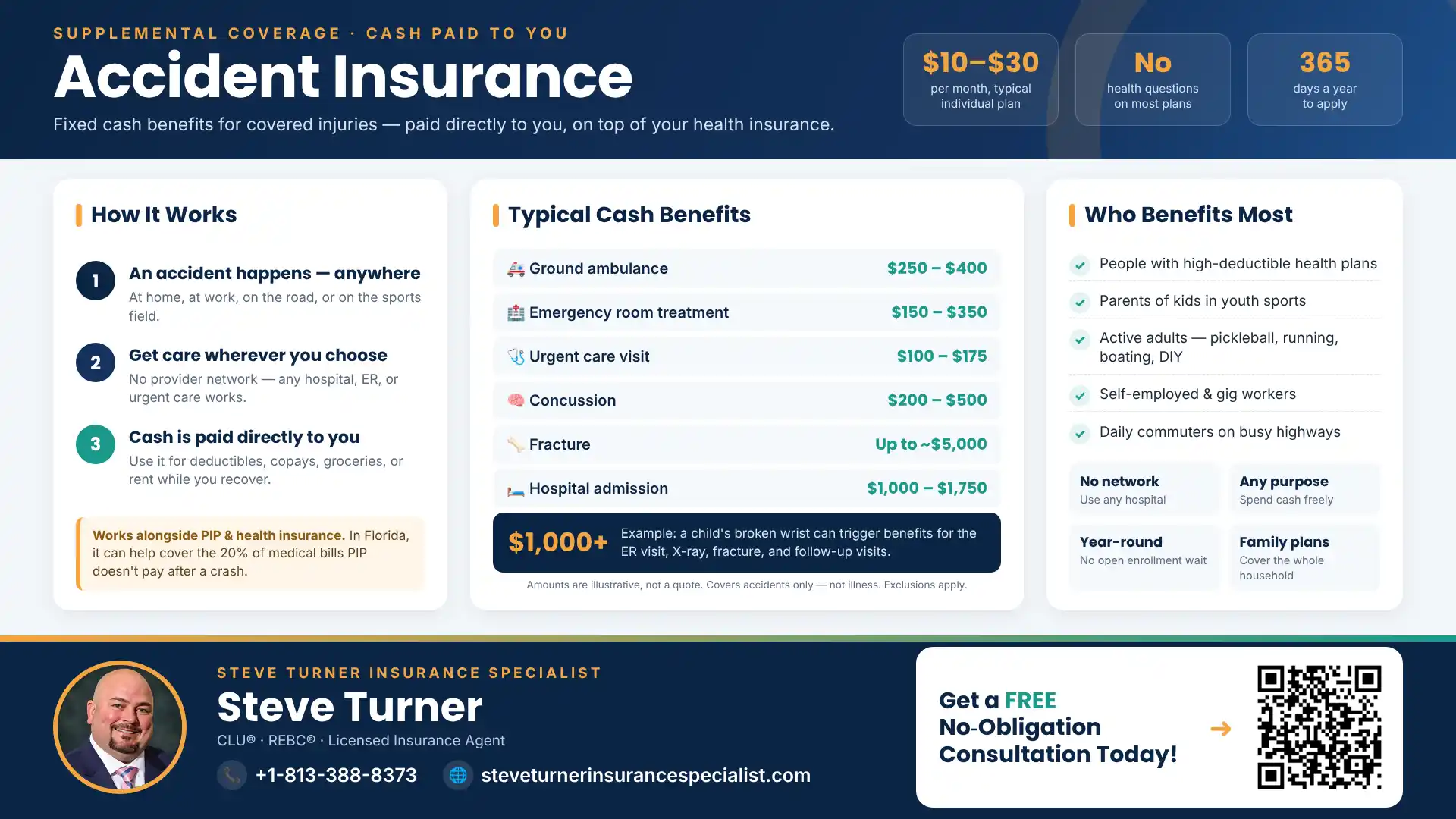
ACCIDENT INSURANCE
LONG TERM CARE INSURANCE

MEDICAID INSURANCE

MEDICARE INSURANCE

MEDICARE PART A INSURANCE

MEDICARE PART B INSURANCE

MEDICARE PART C INSURANCE

MEDICARE PART D INSURANCE

MEDICARE PLAN G INSURANCE

MEDICARE PLAN N INSURANCE

SERVICE AREA
Medicare plan availability differs by state and county. Steve Turner is licensed in AL, CO, FL, GA, NC, SC, TN, and TX.
Steve Turner is a licensed insurance agent and is not connected with or endorsed by the United States Government or the Federal Medicare Program. The Medicare Annual Enrollment Period is October 15 to December 7.
MEDICARE DISCLAIMER
We do not offer every plan available in your area. Any information we provide is limited to those plans we do offer in your area. Please contact Medicare.gov or 1-800-MEDICARE to get information on all of your options.
Steve Turner

Steve Turner, CLU®, REBC® is licensed in AL, CO, FL, GA, NC, SC, TN, and TX · NPN 18030539 · Florida License W333468
Steve Turner is a licensed agent and broker and a long-standing member of the National Association of Benefits and Insurance Professionals NABIP®. Steve holds the Registered Employee Benefits Consultant® (REBC®) designation. Steve also holds the “Chartered Life Underwriter” designation (CLU®), a professional credential for individuals specializing in life insurance and estate planning, conferred by the American College of Financial Services. Since 2016 (over 10 years), Steve has helped individuals, families, Medicare beneficiaries, and small businesses find the right coverage to meet their needs. Steve has earned 180+ Google reviews from happy clients.
Steve Turner is a licensed agent appointed by Florida Blue in Florida.