

What If You Change Jobs and Need New Health Insurance?

What If You Change Jobs and Need New Health Insurance?
Changing jobs is exciting. I get a fresh start, new people, and maybe better pay. But one question always makes my stomach drop: what happens to my health insurance?
If you get insurance through work, it is tied to that job. When the job ends, the insurance ends too. That can feel scary, especially if you take medicine every day or have kids who seem to catch every cold.
Here is the good news. You have more choices than you may think, and the rules are on your side. You have to know your options and watch a few dates.
In this guide, I will walk you through what I do when I change jobs and need new health insurance. I will explain each choice, what it costs, and the deadlines that matter most. The rules here are current as of October 2026.
The short answer
If you only have a minute, here is what I want you to know:
- Your old plan will end. It usually stops on your last day of work or on the last day of that month.
- You have options. The main ones are your new job’s plan, COBRA, a Marketplace plan, a family member’s plan, or Medicaid.
- You have deadlines. Most windows last 30 or 60 days. Miss one, and you may wait months for another chance.
- You can avoid a gap. With a little planning, you can stay covered every day.
Now let’s go step by step.
What happens to my health insurance when I leave a job?
First, find out the exact day my old insurance ends. This is the most important date in the whole process.
Every company does it a little differently. Here are the two most common ways:
- Coverage ends on my last day of work. If my last day is March 12, my insurance stops on March 12.
- Coverage ends on the last day of the month. If my last day is March 12, I stay covered through March 31.
So I never guess. I ask the human resources (HR) team, and I ask for the answer in writing.
Here are the questions I ask HR before I leave:
- What is the last day of my health insurance?
- Do my dental and vision plans end on the same day?
- When will I get my COBRA papers?
- What happens to the money in my FSA or HSA?
- Can I get a letter that shows the date my coverage ends?
That last one matters. I may need that letter later as proof that I lost my coverage.
My 6 options for health insurance when I change jobs
Once I know my end date, I review my options. Here are the six I check, in order.
1. My new employer’s plan
If my new job offers health insurance, this is often the easiest choice. The company usually pays part of the cost, which keeps my bill lower.
But there is a catch. Many jobs make new workers wait before coverage starts. This is called a waiting period. By law, it can’t be longer than 90 days. Some companies cover you on day one. Others make you wait 30, 60, or 90 days.
So I ask HR one simple question: “What day does my health insurance start?”
I also get only a short time to sign up as a new worker, often about 30 days. If I miss it, I may have to wait until the company’s next sign-up season.
2. COBRA
COBRA is a law that lets me keep my old job’s health plan after I leave. I keep the same plan, doctors, and insurance card.
The hard part is the price. With COBRA, I pay the whole bill myself. I explain more below, because COBRA is a big topic.
3. A Marketplace plan
The Health Insurance Marketplace is where people shop for their own health plans. You may know it as HealthCare.gov or “Obamacare.” Some states run their own site with a different name.
Losing job-based insurance lets me sign up right away. I don’t have to wait for the yearly sign-up season.
4. My spouse’s or partner’s plan
If my husband, wife, or partner has work insurance, I may be able to join that plan. Losing my own coverage opens a window to join. That window is usually only 30 days, so I move fast.
5. My parent’s plan
If I am under 26, I can usually join or stay on a parent’s health plan. It doesn’t matter if I live at home, have a job, or am married.
6. Medicaid or CHIP
Medicaid is free or low-cost health coverage for people with low incomes. CHIP covers kids. If my income drops between jobs, I may qualify. I can apply any time of year.
How does COBRA work?
COBRA confused me at first. Here are the questions I hear most.
Who can get COBRA?
COBRA covers most people who work at a company with 20 or more workers. If your company is smaller, don’t give up. Many states have their own “mini-COBRA” laws. Ask HR or your state insurance office.
How much does COBRA cost?
More than you are used to paying. With COBRA, I pay my part, the company’s part, and a small fee. The total can be up to 102% of the plan’s full price.
Here is an example. Say my plan costs $700 a month. My company paid $550, and I paid $150 from my paycheck. With COBRA, I could pay about $714 a month. Same plan. Much bigger bill.
How long do I have to sign up?
At least 60 days. The clock starts on the day I get my COBRA notice or the day my coverage ends, whichever comes later.
When do I have to pay?
After I sign up, I get 45 days to make my first payment. That payment covers every month back to the day my old coverage ended.
How long does COBRA last?
Usually up to 18 months after a job ends.
Does COBRA cover the past?
Yes, and this is my favorite thing about it. If I sign up in time and pay, COBRA reaches back to the day my old plan ended. It is like there was never a gap.
Some people use this as a backup. Say my new job’s insurance starts in 40 days. I can hold my COBRA papers and wait. If I stay healthy, I never sign up or pay. If I break my arm on day 20, I sign up, pay for the time I missed, and I am covered.
Be careful, though. I have to meet every deadline.
How does a Marketplace plan work when I leave a job?
A Marketplace plan is often the cheapest way to stay covered between jobs. Here is how it works.
I get a Special Enrollment Period
Most people can only buy a Marketplace plan during the yearly sign-up season, called Open Enrollment. But losing my job’s insurance gives me a Special Enrollment Period.
Here are the rules I follow:
- I have 60 days after my job’s coverage ends to pick a plan.
- I can also apply up to 60 days before my coverage ends, if I know the date.
- It counts whether I quit, got laid off, or got fired.
- I may need to show proof, like a letter from my old job.
I sign up early to avoid a gap
Marketplace plans start on the first day of a month.
If I pick my plan before my old coverage ends, the new plan can start on the first day of the next month. If I wait until after my old coverage ends, I may go weeks with no insurance.
So if my coverage ends March 31, I pick a plan in March. My new plan starts April 1. No gap.
I check if I can get help paying.
Many people get help called a premium tax credit. It lowers my monthly bill. The amount depends on my income for the year and my family size.
One big change you should know about is this: From 2021 to 2025, the help was bigger and reached more people. Those bigger tax credits ended on January 1, 2026. Now there is an income cutoff again. If I make more than four times the poverty level, I get no help at all. For 2026 plans, that cutoff is about $62,600 for one person.
So if my income is higher, I may pay full price. Then I compare the cost closely with COBRA. Keep in mind that the Marketplace counts my income for the whole year. That includes pay from the job I just left.
One more rule trips people up. If my new job offers me a plan that counts as affordable, I usually can’t get tax credits. That is true even if I say no to the job’s plan.
I learn the metal levels
Marketplace plans come in levels named after metals:
- Bronze: Lowest monthly bill. Highest costs when I get care.
- Silver: Middle of the road. If my income is lower, Silver plans can come with extra savings.
- Gold: Higher monthly bill. Lower costs when I get care.
- Platinum: Highest monthly bill. Lowest costs when I get care.
If I see doctors a lot, Silver or Gold may save me money.
COBRA vs. a Marketplace plan: how I choose
There is no one right answer, but here is how I decide.
I lean toward COBRA when:
- I am in the middle of treatment and want to keep my doctors.
- I already paid most of my deductible this year. (A deductible is what I pay for care before my insurance starts paying.) A new plan resets my deductible to zero.
- I only need coverage for a month or two.
- My income is too high to get help on the Marketplace.
I lean toward a Marketplace plan when:
- I qualify for tax credits that make the bill much smaller.
- I am healthy and don’t mind switching doctors.
- I may be between jobs for a long time.
- The COBRA price is more than I can pay.
One warning. Once my 60 days are up, dropping COBRA early does not give me a new window to buy a Marketplace plan. I would have to wait for Open Enrollment or for my COBRA to run out. So I try to choose well the first time.
What if my new job has a waiting period?
Sometimes my old plan ends, and my new plan doesn’t start for 30, 60, or 90 days. Here is how I fill the gap:
- Ask for an earlier start date. It never hurts to ask. Some companies will bend.
- Time my last day. If my old plan runs through the end of the month, leaving early gives me more covered days.
- Buy a Marketplace plan for the gap. I can cancel it when my job’s plan starts. There is no fee for ending it.
- Use COBRA for the gap. It costs more, but my care won’t change.
- Join a family member’s plan. This works if a spouse or parent can add me.
Once my new job’s plan starts, I cancel the gap plan right away. I don’t want to pay for two plans at once.
The deadlines I never want to miss
If you remember one part of this article, make it this one. Missing a date can leave you with no good choices.
| What I am signing up for | How long I have |
|---|---|
| New employer’s plan | Often about 30 days from my start date (ask HR) |
| Spouse’s or partner’s job plan | Usually 30 days after I lose my coverage |
| COBRA | At least 60 days to sign up |
| First COBRA payment | 45 days after I sign up |
| Marketplace plan | 60 days before or after I lose my coverage |
| Medicaid or CHIP | Any time |
I put these dates in my phone the day I give notice. I set a reminder a week before each one.
What if I change jobs during Open Enrollment?
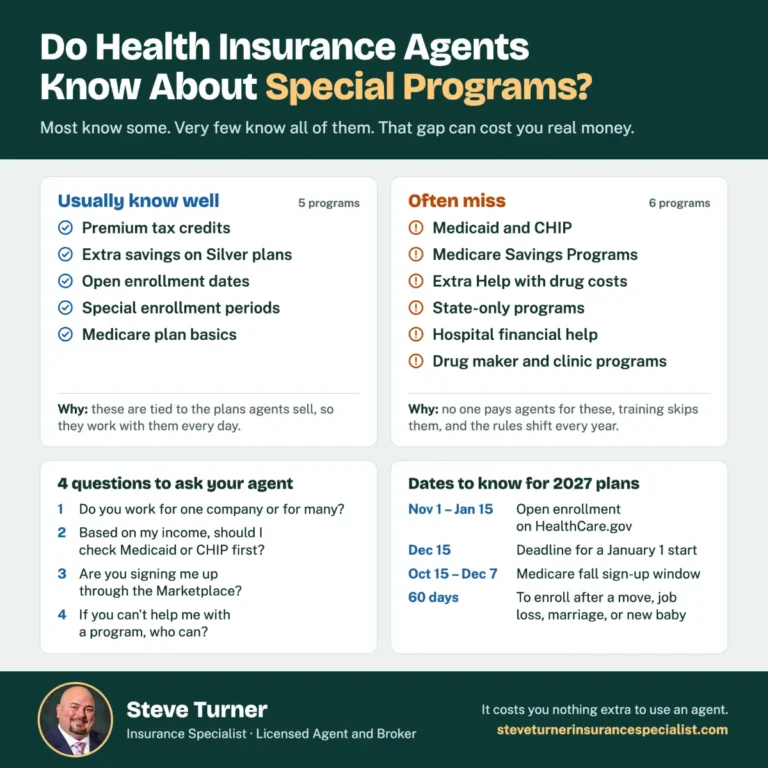
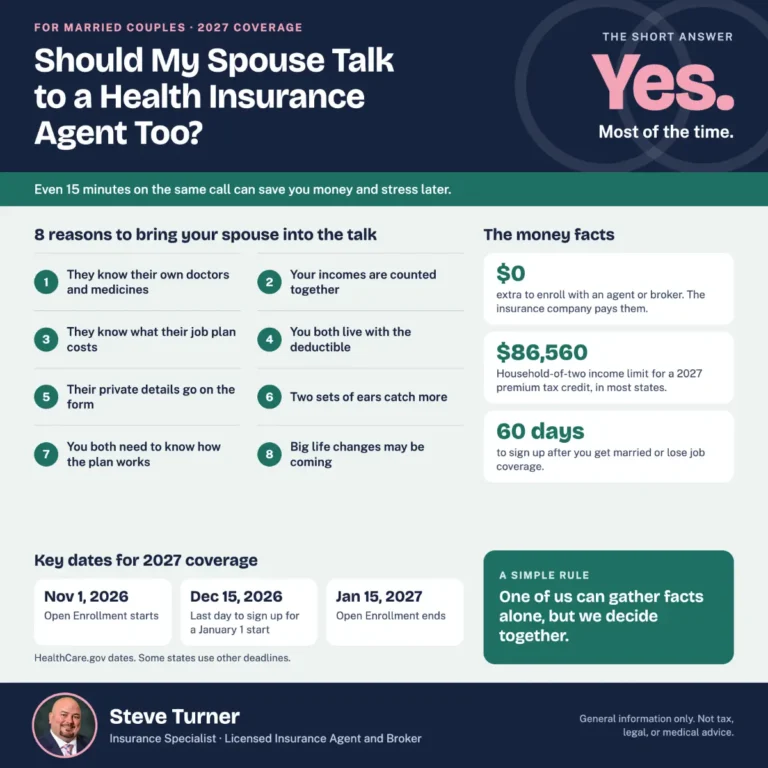
Open Enrollment is the time each year when anyone can sign up for a Marketplace plan. On HealthCare.gov, sign-up for 2027 plans runs from November 1, 2026, to January 15, 2027.
Here are the key dates:
- November 1: Sign-up opens.
- December 15: Last day to sign up for a plan that starts January 1.
- January 15: Last day to sign up. Plans picked after December 15 start February 1.
Some states run their own sites and use different dates. A few close earlier, and a few stay open until the end of January. So I always check my own state’s site.
If I change jobs near the end of the year, I may need to do two things. I use my Special Enrollment Period to get covered for the rest of this year. Then I use Open Enrollment to pick my plan for next year.
My step-by-step checklist for changing jobs
Here is the list I follow.
Before I give notice
- Ask my new job when health insurance starts.
- Ask what the new plan costs and which doctors it covers.
- Refill my medicines.
- Book any checkups I have been putting off.
During my last weeks
- Ask HR for the last day of my coverage, in writing.
- Spend the money left in my FSA.
- Look at prices on HealthCare.gov or my state’s site.
- Ask what COBRA costs.
After I leave
- Watch the mail for my COBRA papers.
- Sign up for my new plan before the deadline.
- Pay my first bill on time. A plan isn’t active until I pay.
- Tell my doctors and my drugstore about my new insurance.
What else changes when I switch health plans?
Here are four more things I watch.
My HSA
A Health Savings Account, or HSA, belongs to me. When I leave my job, the money comes with me. I can keep using it for doctor bills and medicine.
My FSA
A Flexible Spending Account, or FSA, is different. In most cases, I lose any money I haven’t used when I leave. So I spend it before my last day. New glasses and a dental visit are good ways to use it up.
My deductible
When I start a new plan midyear, my deductible usually resets to zero. If I already paid $2,000 toward my old deductible, that money most likely won’t count on my new plan.
My doctors
Every plan has a list of doctors and hospitals it works with. This list is called a network. Before I pick a plan, I make sure my doctors and my medicines are covered.
7 mistakes I try hard to avoid
- Guessing my end date. I always get it in writing.
- Thinking I have plenty of time. Sixty days go by fast when you are learning a new job.
- Skipping coverage because I am healthy. One trip to the emergency room can cost more than a year of insurance.
- Only looking at the monthly bill. I also check the deductible and what I pay for each visit.
- Forgetting my family. If my kids or spouse are on my plan, they lose coverage too.
- Not paying the first bill. Signing up is not enough. No payment means no coverage.
- Paying for two plans. I cancel my gap plan as soon as my new job’s plan begins.
Questions people ask me about changing jobs and health insurance
Does my health insurance end the day I quit?
Maybe. Some plans end on your last day of work. Others last until the end of that month. Ask HR to be sure.
Is it okay to go a few weeks with no insurance?
It is allowed, but it is risky. Accidents don’t wait for your new plan to start. There is no federal fine for being uninsured. But a few places charge their own fee at tax time. These include California, Massachusetts, New Jersey, Rhode Island, and Washington, D.C.
I have a health problem. Can a new plan turn me down?
No. Job plans and Marketplace plans can’t turn you down or charge you more because of a health problem you already have.
Can I keep my dental and vision coverage?
Usually, yes. If you had dental and vision plans at your old job, you can often keep them through COBRA. You can also add a dental plan when you buy a Marketplace health plan.
What if my new job doesn’t offer health insurance?
Then a Marketplace plan is likely your best choice. You may get tax credits to lower the bill, based on your income.
What if I miss my 60-day window?
You will likely have to wait for the next Open Enrollment. The other way in is a new life event, like getting married, having a baby, or moving. You can still apply for Medicaid or CHIP at any time.
Who can help me pick a plan for free?
HealthCare.gov has a “Find Local Help” tool that lists trained helpers near you. You can also call the Marketplace at 1-800-318-2596.
The bottom line
Changing jobs doesn’t have to mean losing your health insurance. I think of it as three simple steps. First, I find out the exact day my old plan ends. Next, I compare my choices. Then I sign up before my deadline and pay my first bill.
Know your date. Know your options. Don’t wait.
If you are changing jobs soon, start today. Send one email to HR and ask when your coverage ends. That one small step makes everything else easier.
This article shares general information. It is not legal, tax, or medical advice. Rules differ by state and by plan, so check with your HR team or your state’s Marketplace before you decide.
Why choose Steve Turner Insurance Specialist?
Because I’m an “Insurance Specialist.” An “insurance specialist” is a broad term that includes insurance agents and insurance brokers, but the key difference is who the agent represents versus who the broker represents.
An “insurance agent” works directly for an insurance company and sells its specific policies to clients.
An “insurance broker” acts as an independent intermediary, comparing policies from multiple companies to find the best fit for their client’s needs, essentially representing the client rather than the insurance company.
I am both a licensed Insurance Agent and a licensed Insurance Broker.
My number one goal in life is to help people and ensure, without a shadow of a doubt, that you and your family are secure and protected. I will always be by your side, helping you mitigate risk by providing the industry’s best and most affordable insurance solutions.
I will find insurance plans for the entire family to help cover whatever life throws at you. I can help you save on severe medical emergencies, find a health insurance plan with low- or no-cost doctor visits and affordable prescription medications, and protect your family in the event of an unexpected accident or illness.
Best of all, it doesn’t cost you anything extra to use an experienced Insurance Agent and Broker like me to help you find the Insurance Plans that fit your individual, family, or business needs.
The companies that sell the insurance plans “you choose“ pay me – you don’t pay me. Calling any big insurance company directly won’t get you a lower price, as they will forward your call to the next available insurance agent on their list. You won’t have had any opportunity to learn about the insurance agent you’re speaking with in advance, understand their qualifications or experience level, or make an informed choice about who you want to work with.
Tap the Contact Me text or icon and get in touch by phone or email, or schedule a “No Obligation” chat through my calendar. I look forward to speaking with you!
OUR CLIENT REVIEWS


CONTACT STEVE TURNER INSURANCE AGENT & BROKER
I’m here to take your calls and emails and answer your questions 7 Days a week from 7:00 a.m. to 8:00 p.m., excluding posted holidays.
Steve Turner is a licensed agent and broker and a longstanding member of the National Association of Benefits and Insurance Professionals®. Steve holds the prestigious Registered Employee Benefits Consultant® designation. NABIP® is the preeminent organization for health insurance and employee benefits professionals and works diligently to ensure all Americans have access to high-quality, affordable Healthcare and related services.
Steve Turner is a licensed agent appointed by Florida Blue.
EMAIL ME: 24×7
OFFICE LOCATION
Website: steveturnerinsurancespecialist.com
Email: [email protected]
Phone and Text: +1-813-388-8373
Business Hours:
Monday: 7 a.m. to 8 p.m.
Tuesday: 7 a.m. to 8 p.m.
Wednesday: 7 a.m. to 8 p.m.
Thursday: 7 a.m. to 8 p.m.
Friday: 7 a.m. to 8 p.m.
Saturday: 7 a.m. to 8 p.m.
Sunday: 7 a.m. to 8 p.m.
SOCIAL FOLLOW + SHARE
Insurance Agent
MEDICARE STATEMENT
The Medicare Annual Enrollment Period is October 15th to December 7th. Steve Turner is not connected with or endorsed by the United States Government or the Federal Medicare Program. Some plans may not be available in your area, and any information I provide is limited to those offered. Please contact Medicare.gov or 1-800-MEDICARE for information on all your options.
There’s no one-size-fits-all answer. Carefully evaluate your health status, anticipated medical needs, prescription drug usage, budget, preferred doctors and hospitals, and tolerance for network rules. During the Medicare Annual Enrollment Period (October 15th to December 7th), research the specific plans available in your Florida county using the Medicare Plan Finder on Medicare.gov, compare costs and benefits, and consider free, personalized counseling from Florida’s SHINE (Serving Health Insurance Needs of Elders) program.