

What is a Health Insurance Copay or Copayment?

What is a Health Insurance Copay or Copayment?
What is a Health Insurance Copay or Copayment?
Navigating the world of health insurance can often feel like learning a new language, filled with terms like premiums, deductibles, coinsurance, and copayments. A copay is one of the most common costs you’ll face when accessing healthcare services. In Florida, understanding your health insurance copay is crucial for managing your healthcare budget and making informed decisions about your coverage.
At its core, a health insurance copayment, or copay, is a fixed amount you, the insured individual, pay out of pocket for a covered healthcare service when you receive it. Think of it as your predetermined share of the cost for a specific visit or service. This fixed fee is paid directly to the healthcare provider, such as a doctor’s office, urgent care clinic, or pharmacy, before or after you receive care, depending on the provider’s billing practices. Your health insurance plan typically covers the service’s remaining cost, assuming you have met any applicable deductibles or other cost-sharing requirements. [Health Insurance Copay or Copayment]
It’s essential to distinguish a copay from other health insurance terms, such as deductibles and coinsurance. A deductible is the amount you must pay out of pocket for covered healthcare services before your insurance plan begins to pay. Coinsurance, conversely, is a percentage of the cost of a covered service you pay after you’ve met your deductible. A copay is usually a flat fee, regardless of the total cost of the service, and in many plans, you pay the copay even before meeting your deductible. However, some plans may require you to meet your deductible before copays apply, or they may have different copay structures for services received before or after you meet your deductible. [Health Insurance Copay or Copayment]
Copayments are common in many health insurance plans in Florida, including those offered through employers, purchased directly from insurers, or obtained through the Affordable Care Act (ACA) marketplace. The specific copay amount can vary significantly depending on several factors:
- Your specific health insurance plan: Each plan has its defined copay structure for different services. [Health Insurance Copay or Copayment]
- The type of service you receive: Copays vary by the type of care. For example, a visit to a primary care physician usually has a lower copay than a visit to a specialist or an emergency room. [Health Insurance Copay or Copayment]
- Whether the provider is in-network or out-of-network: Using providers in your insurance plan’s network typically results in lower copays (or coverage) than using out-of-network providers. Some plans may not cover out-of-network services or require you to pay a higher percentage of the cost (coinsurance) after a separate out-of-network deductible. [Health Insurance Copay or Copayment]
- The type of prescription drug: Copays for prescription medications often vary based on the drug’s tier in the plan’s formulary (a list of covered medications). Generic drugs usually have lower copays than preferred brand-name drugs, which in turn have lower copays than non-preferred brand-name or specialty drugs. [Health Insurance Copay or Copayment]
Copays serve several purposes for both the insurance company and the insured. For insurers, they help manage costs by sharing a portion of the expense with the policyholder and can also discourage unnecessary healthcare utilization. For individuals, copays provide a predictable cost for routine healthcare services, making it easier to budget for medical expenses. [Health Insurance Copay or Copayment]
How Does My Health Insurance Premium Impact the Copay Amount?
Generally, there is an inverse relationship between your health insurance premium and your copayments (deductibles and coinsurance). The premium is the fixed amount you pay regularly, usually monthly, to maintain your health insurance coverage. It’s the cost of simply having the insurance. [Health Insurance Copay or Copayment]
Here’s how the premium typically impacts copays:
- Higher Premiums, Lower Copays: Plans with higher monthly premiums often come with lower out-of-pocket costs when you need care, including lower copayments, deductibles, and coinsurance percentages. These plans offer more financial protection when you utilize healthcare services, but you pay more upfront each month for that peace of mind. [Health Insurance Copay or Copayment]
- Lower Premiums, Higher Copays: Conversely, plans with lower monthly premiums usually have higher out-of-pocket costs when you access care. This means higher copayments, higher deductibles, and potentially higher coinsurance. These plans are more affordable monthly, but you will pay more each time you use healthcare services until you reach your out-of-pocket maximum. [Health Insurance Copay or Copayment]
This relationship lets individuals and families in Florida choose a health insurance plan that best fits their budget and expected healthcare needs. If you expect to use healthcare services frequently, a plan with a higher premium and lower copays might be more cost-effective in the long run. If you are relatively healthy and expect only occasional or preventive care, a plan with a lower premium and higher copays might be a better fit, as you save on the monthly cost and pay the higher copay only when you need care. [Health Insurance Copay or Copayment]
It balances predictable monthly costs (premiums) and unpredictable costs (copays, deductibles, coinsurance) when you need care. When selecting a plan in Florida, look beyond the premium and consider total potential out-of-pocket costs, including copays, based on your expected healthcare usage. [Health Insurance Copay or Copayment]
What are Typical Health Insurance Copays for Single People, Couples, and a Family of Four Living in Florida in 2025?
Pinpointing exact, universal “typical” health insurance copays for specific family structures in Florida for 2025 is challenging because of the wide range of health insurance plans available. Copay amounts are highly plan-specific and vary by metal tier (Bronze, Silver, Gold, Platinum), which indicates the level of coverage. However, we can provide a general range and examples based on available data and 2025 Florida market trends. [Health Insurance Copay or Copayment]
While average premiums for different demographics and family sizes in Florida for 2025 are readily available, specific average copay amounts for each family structure (single, couple, family of four) across all plan types are not typically compiled and published in a standardized way. Copays are a feature of individual plans, and averages are usually presented by service type and plan tier, rather than by family composition. [Health Insurance Copay or Copayment]
However, we can infer potential copay ranges based on the types of plans individuals and families might enroll in, as well as typical copay structures in Florida for 2025. [Health Insurance Copay or Copayment]
Here are some typical ranges for standard services in Florida plans for 2025, keeping in mind these are estimates and can vary greatly:
- Primary Care Physician (PCP) Visit:
- Bronze plans: $30 – $70 or higher (sometimes subject to deductible first)
- Silver plans: $20 – $50
- Gold plans: $10 – $30
- Platinum plans: $0 – $20
- Specialist Visit:
- Bronze plans: $50 – $100 or higher (sometimes subject to deductible first)
- Silver plans: $40 – $80
- Gold plans: $20 – $60
- Platinum plans: $10 – $40
- Urgent Care Visit:
- Bronze plans: $50 – $100 or higher (sometimes subject to deductible first)
- Silver plans: $40 – $75
- Gold plans: $25 – $50
- Platinum plans: $15 – $30
- Emergency Room (ER) Visit:
- ER copays are typically higher to discourage non-emergency use and are often subject to the deductible.
- All plan tiers: $100-$500 or higher, often with coinsurance applying after the copayment and/or deductible.
- Mental Health/Behavioral Health Visit:
- Copays are often similar to those for primary care physician (PCP) or specialist visits, depending on the provider type.
- Bronze plans: $30 – $70 or higher
- Silver plans: $20 – $50
- Gold plans: $10 – $30
- Platinum plans: $0 – $20
- Generic Prescription Drugs:
- All plan tiers: $5 – $20
- Preferred Brand-Name Prescription Drugs:
- All plan tiers: $20 – $60
- Non-Preferred Brand-Name Prescription Drugs:
- All plan tiers: $50 – $100 or higher (sometimes subject to deductible or coinsurance)
- Specialty Prescription Drugs:
- These often have the highest copays or may be subject to coinsurance, sometimes a percentage of the very high cost.
- All plan tiers: $50-$300 or more, or 20%-50 % coinsurance.
How these copay ranges might apply to different family structures:
While the copay amounts per service are the same regardless of whether you are single, a couple, or a family of four on the same plan, the total amount spent on copays over a year will likely differ based on the number of individuals covered and their healthcare needs. [Health Insurance Copay or Copayment]
- Single Person: A single individual typically has the lowest overall healthcare utilization in a family, assuming average health. Their copay expenses will be based solely on doctor visits, prescriptions, and other covered services. If they are relatively healthy, they may primarily incur copays for preventive care (often with a $0 copay for in-network providers), a few primary care visits, and perhaps a few prescriptions. [Health Insurance Copay or Copayment]
- Couple: A couple will likely have higher total copay expenses than a single individual, as two people may use healthcare services. Total copays depend on both individuals’ health and healthcare needs. If one or both have chronic conditions or require regular medical attention, their combined copay costs will be higher. [Health Insurance Copay or Copayment]
- Family of Four: A family of four (e.g., two adults and two children) typically has the highest potential total copay expenses among these groups, simply because more people are covered. Children often need regular visits to a pediatrician and vaccinations and may experience unexpected illnesses or injuries, requiring urgent care or doctor visits. The adults in the family will also have their own healthcare needs. The total copays for a family of four will be the sum of the copays each family member pays for their respective healthcare services throughout the year. [Health Insurance Copay or Copayment]
Illustrative Examples (for 2025 in Florida, based on Silver plans, typical copay ranges):
These are hypothetical examples of how copays might accumulate, not precise cost predictions. [Health Insurance Copay or Copayment]
- Single Person (relatively healthy):
- 2 x PCP visits @ $30/visit = $60
- 1 x Specialist visit @ $50/visit = $50
- 4 x Generic prescriptions @ $10/prescription = $40
- Estimated Annual Copays: $150
- Couple (one adult with a chronic condition requiring regular visits):
- Adult 1: 4 x PCP visits @ $30/visit = $120
- Adult 1: 6 x Specialist visits @ $50/visit = $300
- Adult 1: 12 x Generic prescriptions @ $10/prescription = $120
- Adult 2 (relatively healthy): 1 x PCP visit @ $30/visit = $30
- Adult 2: 2 x Generic prescriptions @ $10/prescription = $20
- Estimated Annual Copays: $590
- Family of Four (two adults, two young children):
- Adult 1: 2 x PCP visits @ $30/visit = $60
- Adult 1: 2 x Generic prescriptions @ $10/prescription = $20
- Adult 2: 1 x PCP visit @ $30/visit = $30
- Adult 2: 1 x Specialist visit @ $50/visit = $50
- Child 1: 3 x Pediatrician visits @ $30/visit = $90
- Child 1: 1 x Urgent Care visit @ $50/visit = $50
- Child 2: 2 x Pediatrician visits @ $30/visit = $60
- Child 2: 3 x Generic prescriptions @ $10/prescription = $30
- Estimated Annual Copays: $390
These examples show that while the plan adjusts the per-service copay, total annual copay spending depends on the number of people covered and how often they need care. [Health Insurance Copay or Copayment]
Individuals and families in Florida should carefully review the Summary of Benefits and Coverage (SBC) for any health insurance plan they are considering for 2025. The SBC clearly breaks down costs, including copay amounts for various services, deductibles, and coinsurance, allowing direct comparison between plans. [Health Insurance Copay or Copayment]
In conclusion, a health insurance copay in Florida is a fixed payment made at the time of service that represents a portion of the healthcare cost. Your monthly premium is generally inversely related to your copay amounts – higher premiums often mean lower copays, and vice versa. While typical copay amounts per service are plan-dependent and don’t change based on family size, total annual copay expenses will naturally be higher for couples and families than for single individuals because more people use healthcare services. Understanding these costs is vital for making informed decisions about health insurance coverage in Florida for 2025 and beyond.
OUR CLIENT REVIEWS


CONTACT STEVE TURNER, LICENSED INSURANCE AGENT & BROKER
Questions? Call, text, or book a time below; I answer calls and emails 7 Days a week from 7:00 a.m. to 8:00 p.m., excluding posted holidays.
EMAIL STEVE
OFFICE LOCATION
Address: 14502 N Dale Mabry Hwy, Suite 200, Tampa, FL 33618
Website: steveturnerinsurancespecialist.com
Email: [email protected]
Phone and Text: +1-813-388-8373
Business Hours:
Monday: 7:00 a.m. / 8:00 p.m.
Tuesday: 7:00 a.m. / 8:00 p.m.
Wednesday: 7:00 a.m. / 8:00 p.m.
Thursday: 7:00 a.m. / 8:00 p.m.
Friday: 7:00 a.m. / 8:00 p.m.
Saturday: 7:00 a.m. / 8:00 p.m.
Sunday: 7:00 a.m. / 8:00 p.m.
HEALTH INSURANCE POSTS
-
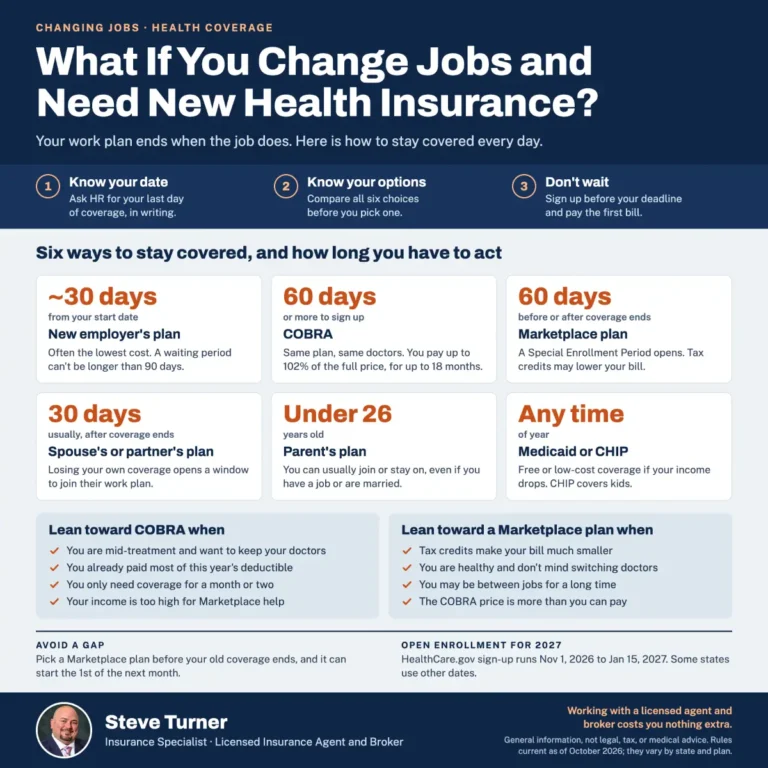
What If You Change Jobs and Need New Health Insurance?
By Steve Turner
• 2026-10-10
Changing jobs and need new health insurance? I explain COBRA, Marketplace plans, waiting periods, and the deadlines to hit so you never have a gap. -
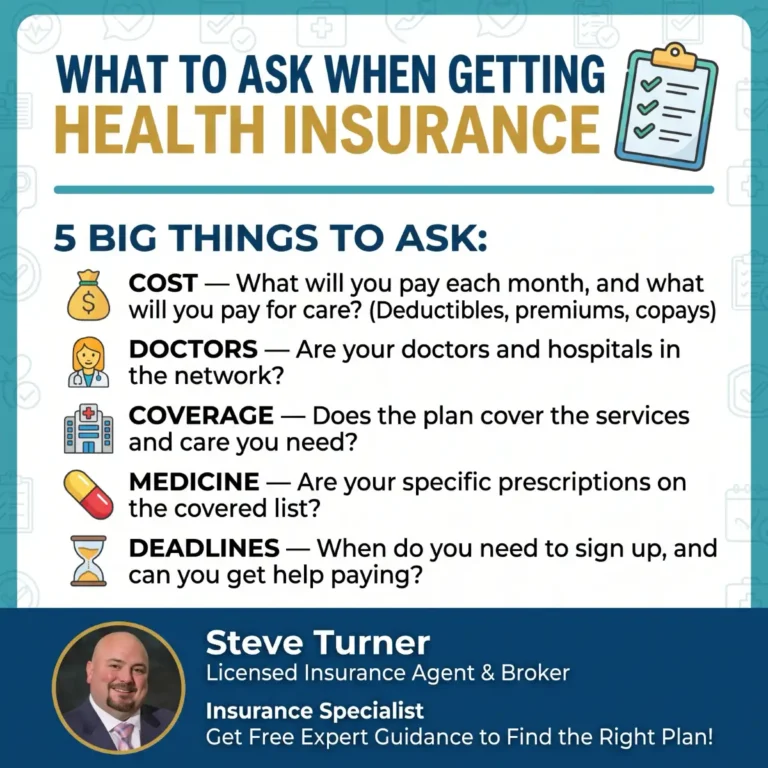
What to Ask When Getting Health Insurance
By Steve Turner
• 2026-10-08
30 questions to ask before buying health insurance, from deductibles to drug lists. Get free help from Tampa agent and broker Steve Turner. -

Does Insurance Cover Braces? | Floridians Learn Here!
By Steve Turner
• 2025-06-19
Does dental insurance pay for braces? Learn about orthodontic coverage, lifetime maximums, and plans for kids and adults. Tap to Learn Now! -

Save 10 Ways: Out-of-Pocket Maximum in Florida
By Steve Turner
• 2025-05-23
Stop overpaying! Learn 10 expert ways to reach your out-of-pocket maximum faster and lower your medical costs today with Steve Turner. Tap to Learn Now! -

What is a Health Insurance Deductible for Floridians?
By Steve Turner
• 2025-05-16
Understand how health insurance deductibles impact your out-of-pocket costs and monthly premiums. Master your medical plan today. Tap to Learn Now! -

Health Insurance Premium: 2027 Florida Cost Guide
By Steve Turner
• 2025-05-14
Florida ACA premiums rose 10.4% for 2027 and enhanced subsidies are gone. A licensed agent explains what you’ll pay, who still gets help, and how to save. -

How Does Health Insurance Work in 2027?
By Steve Turner
• 2025-05-13
Learn how health insurance works in 2027: premiums, deductibles, the new $12,000 out-of-pocket cap, subsidies, and Florida options like Medicaid and KidCare. -

4 Common Health Insurance Plans
By Steve Turner
• 2025-01-29
Compare HMO, PPO, EPO, and POS health insurance plans. Find the best coverage, costs, and doctor networks for your needs. Tap to Learn Now! -

10 Ways the Affordable Care Act Can Help Me
By Steve Turner
• 2023-03-20
Maximize your healthcare with the Affordable Care Act. Explore 10 ways the ACA provides savings, free preventive care, and more. Tap to Learn Now! -

Top 25 Health Insurance Questions in Florida
By Steve Turner
• 2023-03-13
Choosing health insurance is complex. Get expert answers on premiums, deductibles, PPO vs. HMO, and how to lower your out-of-pocket costs. Tap to Learn Now! -

Major Medical Vs Supplemental Insurance in Florida
By Steve Turner
• 2021-08-18
Understand the key differences between Major Medical and Supplemental Insurance to bridge coverage gaps and save on costs. Tap to Learn Now!
INSURANCE OFFERINGS
Health Insurance Copay | Low Costs for Floridians!
HEALTH INSURANCE

MEDICARE ADVANTAGE

MEDICARE SUPPLEMENT

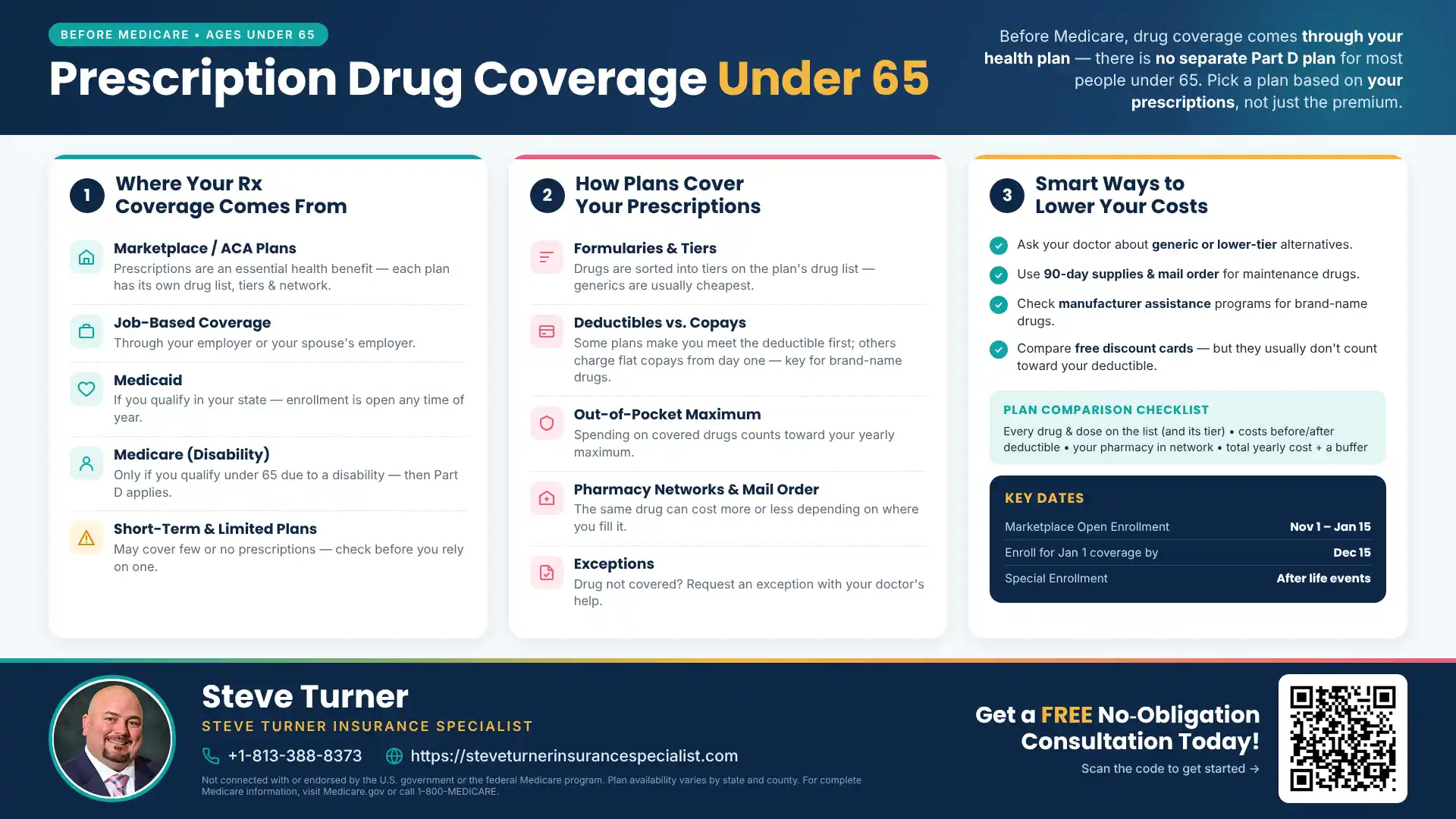
PRESCRIPTION DRUGS COVERAGE UNDER 65
LIFE INSURANCE

DISABILITY INSURANCE

DENTAL INSURANCE

GROUP HEALTH INSURANCE

ACCIDENT INSURANCE

LONG TERM CARE INSURANCE

MEDICAID INSURANCE

MEDICARE INSURANCE

MEDICARE PART A INSURANCE

MEDICARE PART B INSURANCE

MEDICARE PART C INSURANCE

MEDICARE PART D INSURANCE

MEDICARE PLAN G INSURANCE

MEDICARE PLAN N INSURANCE

SERVICE AREA
Medicare plan availability differs by state and county. Steve Turner is licensed in AL, CO, FL, GA, NC, SC, TN, and TX.
Steve Turner is a licensed insurance agent and is not connected with or endorsed by the United States Government or the Federal Medicare Program. The Medicare Annual Enrollment Period is October 15 to December 7.
MEDICARE DISCLAIMER
We do not offer every plan available in your area. Any information we provide is limited to those plans we do offer in your area. Please contact Medicare.gov or 1-800-MEDICARE to get information on all of your options.
Steve Turner

Steve Turner, CLU®, REBC® is licensed in AL, CO, FL, GA, NC, SC, TN, and TX · NPN 18030539 · Florida License W333468
Steve Turner is a licensed agent and broker and a long-standing member of the National Association of Benefits and Insurance Professionals NABIP®. Steve holds the Registered Employee Benefits Consultant® (REBC®) designation. Steve also holds the “Chartered Life Underwriter” designation (CLU®), a professional credential for individuals specializing in life insurance and estate planning, conferred by the American College of Financial Services. Since 2016 (over 10 years), Steve has helped individuals, families, Medicare beneficiaries, and small businesses find the right coverage to meet their needs. Steve has earned 180+ Google reviews from happy clients.
Steve Turner is a licensed agent appointed by Florida Blue in Florida.