


Florida Health Insurance Marketplace: 2027 Open Enrollment, Subsidies and Costs
Reviewed by Steve Turner, CLU, REBC · Florida License W333468 · NPN 18030539 · November 2026
Date Published: 2023-03-20
Updated: 2026-11-25
Florida’s marketplace open enrollment for 2027 runs from November 1, 2026, to January 15, 2027: sign up by December 15 for coverage that starts January 1, or by January 15 for coverage that starts February 1. Florida uses HealthCare.gov, and the premium tax credit now goes only to households earning 100% to 400% of the federal poverty level. If you want help comparing Florida health insurance plans, a licensed agent can enroll you at no cost.
Key takeaways
- Open enrollment: November 1, 2026 to January 15, 2027. December 15 is the deadline for a January 1 start.
- The enhanced tax credits expired at the end of 2025. For 2027, credits go to incomes from 100% to 400% of the poverty level ($15,960 to $63,840 for one person).
- Inside that range, you pay 2.15% to 10.22% of your income for the benchmark silver plan. Above 400%, the credit drops to zero.
- If your income ends up higher than you estimated, you now repay the full excess credit at tax time. The old repayment caps are gone.
- Silver plans with cost-sharing reductions can lower deductibles a lot for incomes up to 250% of the poverty level.
- After January 15, you need a qualifying life event, such as losing coverage, to enroll.
When is open enrollment for 2027 in Florida?
Florida runs its marketplace through HealthCare.gov, so it follows the federal calendar. A 2025 federal rule would have ended open enrollment on December 15, but a court blocked that change, so the January 15 deadline stands for 2027 coverage.
| If you enroll | Coverage starts |
|---|---|
| November 1 to December 15, 2026 | January 1, 2027 |
| December 16, 2026 to January 15, 2027 | February 1, 2027 |
| After January 15, 2027 | Only with a special enrollment period |
If you have a marketplace plan now and do nothing, HealthCare.gov will usually renew you into the same or a similar plan. That’s risky for 2027: your premium, your tax credit, and even your plan’s doctor network can change. Log in, update your income, and compare before December 15.
Who gets a premium tax credit in 2027?
The premium tax credit is what most people mean by an Obamacare subsidy. Your insurer receives it each month to lower your premium, then settles it on your tax return.
For 2027, you can qualify if your household income is between 100% and 400% of the federal poverty level, you don’t have affordable employer coverage, Medicare, or Medicaid, and you file jointly if married. The enhanced credits that covered people above 400% expired on December 31, 2025. Congress could still change the rules, but under current law, this is how 2027 works.
| Household size | 100% of poverty level | 250% (cost-sharing reduction limit) | 400% (tax credit limit) |
|---|---|---|---|
| 1 | $15,960 | $39,900 | $63,840 |
| 4 | $33,000 | $82,500 | $132,000 |
Your credit equals the price of the benchmark plan (the second-lowest-cost silver plan where you live) minus your expected share. That share runs from 2.15% of income at the low end to 10.22% at 300% to 400% of the poverty level. Because the credit is tied to the benchmark, you can apply it to any metal tier: a cheaper bronze plan may cost little or nothing after the credit, while a gold plan costs more.
To see how age, ZIP code, and tobacco use set your price, and what a health insurance premium costs in 2027, see below.
The 400% cliff: why a few dollars of income matter
Florida’s average benchmark premium for a 40-year-old is $738 a month in 2027, up from $683 in 2026. Here’s what happens at the 400% line for one 40-year-old paying that average price:
| Yearly income | Your share of the benchmark | Monthly tax credit | Yearly cost for the benchmark plan |
|---|---|---|---|
| $63,840 (400%) | 10.22% of income, about $544 a month | about $194 | about $6,524 |
| $64,000 (just over 400%) | Full price | $0 | about $8,856 |
Earning $160 more costs this person about $2,330 a year. The cliff is far steeper for people in their 50s and early 60s, because their premiums are much higher while the 10.22% share stays the same.
Two things help near the line:
- Lower your income for the tax credit. It’s based on modified adjusted gross income, so pre-tax 401(k) contributions and HSA contributions with a qualifying plan can bring you back under 400%.
- Estimate carefully, and report changes. Starting with 2026 tax returns, there’s no cap on paying back excess credit. If you guess low and earn more, you repay the full difference. Update HealthCare.gov within 30 days when your income or household changes.
Metal tiers and cost-sharing reductions
Every marketplace plan covers the same essential health benefits, including preventive care at no cost, and no plan can turn you down or charge more because of a pre-existing condition. What changes by tier is how you split costs.
| Tier | Plan pays on average | Fits people who |
|---|---|---|
| Bronze | about 60% | Want the lowest premium and can handle a high deductible |
| Silver | about 70% | Qualify for cost-sharing reductions, or want a middle ground |
| Gold | about 80% | Expect regular care and prefer predictable costs |
| Platinum | about 90% | Want the lowest costs at the doctor and accept the highest premium (not offered everywhere) |
Cost-sharing reductions are the second, less known subsidy. If your income is 100% to 250% of the poverty level and you choose a silver plan, your deductible, copays, and out-of-pocket limit drop automatically:
| Income (% of poverty level) | Silver plan pays on average |
|---|---|
| 100% to 150% | about 94% |
| 150% to 200% | about 87% |
| 200% to 250% | about 73% |
At 94%, a silver plan beats most gold plans, often for less. If you choose bronze or gold, you lose these savings. In 2027, every plan’s in-network out-of-pocket maximum is capped at $12,000 for one person or $24,000 for a family; the out-of-pocket maximum guide explains what counts toward it.
Enrolling after January 15
Outside open enrollment, you need a special enrollment period, usually 60 days from a qualifying life event:
- Losing job-based coverage, Medicaid, or other qualifying coverage
- Getting married, having a baby, or adopting
- Moving to a new ZIP code or county with different plans
- A change in income that makes you newly eligible for a tax credit in some cases
The monthly enrollment window for people under 150% of the poverty level has ended, so low-income households now enroll during open enrollment like everyone else. Losing a job is the most common trigger; see what to do if you change jobs and need new health insurance.
Florida Medicaid and the coverage gap
Florida hasn’t expanded Medicaid. Most adults without children don’t qualify for Florida Medicaid at any income, and parents qualify only at very low incomes. If your income is below 100% of the poverty level, you usually can’t get a marketplace tax credit either. That’s the coverage gap. If you’re near 100%, estimate your income carefully: a realistic estimate just above the line can make you eligible for a credit plus the largest cost-sharing reductions. Children often qualify for Medicaid or Florida KidCare even when parents don’t.
Florida marketplace plans in Tampa: check the network first
Many marketplace plans in the Tampa Bay area are HMOs or EPOs, which pay nothing out of network except emergencies. Two plans with similar premiums can include very different hospitals and specialists.
Before you pick, check each plan’s directory for:
- The hospital system you’d use: Tampa General, BayCare, AdventHealth, or HCA Florida
- Moffitt Cancer Center, if cancer care is a concern
- Your current doctors and any specialists you see
- Your prescriptions on the plan’s drug list, and at which tier
Then call the doctor’s office to confirm they take that specific marketplace plan, not just the insurance company.
How I help
- I check your 2027 income estimate against the poverty-line thresholds, including the 400% cliff, so your tax credit is accurate, and you aren’t surprised at tax time.
- I compare plans side by side on premium after the credit, deductible, and out-of-pocket maximum, not just the monthly price.
- I check your doctors, hospital, and prescriptions against each plan’s network and drug list.
- I enroll you before December 15 or January 15 and help with document requests and income changes during the year.
My help costs you nothing. Insurance companies pay agents, and your premium is the same whether you enroll on your own or with me.
Frequently asked questions
When is open enrollment for health insurance in Florida for 2027?
November 1, 2026 to January 15, 2027. Enroll by December 15 for coverage starting January 1, or by January 15 for coverage starting February 1.
Can I still get a subsidy if I earn more than 400% of the poverty level?
Not under current law. The enhanced credits that covered incomes above 400% expired at the end of 2025, so for 2027 coverage, there’s no premium tax credit above $63,840 for one person or $132,000 for a family of four.
What is a cost-sharing reduction?
It’s a discount that lowers your deductible, copays, and out-of-pocket maximum. You get it only on a silver plan, and only if your income is between 100% and 250% of the poverty level.
Will I have to pay back my tax credit?
Possibly. If your actual income is higher than the estimate you gave HealthCare.gov, you repay the excess when you file. Starting with 2026 tax returns, there’s no cap on that repayment, so report income changes during the year.
Is Obamacare the same as the Florida marketplace?
Yes. Obamacare is the common name for the Affordable Care Act. The marketplace (HealthCare.gov in Florida) is where you buy ACA plans and get the tax credit.
Can I keep my employer plan and buy a marketplace plan with a tax credit?
Usually not. If your employer offers coverage that costs you less than 10.22% of household income for employee-only coverage in 2027 and meets minimum value, you can’t get a tax credit for yourself.
What happens to my marketplace plan when I turn 65?
Enroll in Medicare when you’re first eligible, and end your marketplace plan. Once you have Medicare Part A, you can’t get a marketplace tax credit, and waiting to sign up for Medicare can cause late penalties.
Talk with Steve
Want to know what your 2027 plan will cost after the tax credit? Call Steve at (813) 388-8373 or send a message. I’ll run your numbers and compare plans before the December 15 and January 15 deadlines.
Related: Health insurance premiums in 2027 · Out-of-pocket maximum · Changing jobs and health insurance · Top health insurance questions · Health insurance in Tampa
OUR CLIENT REVIEWS


CONTACT STEVE TURNER, LICENSED INSURANCE AGENT & BROKER
Questions? Call, text, or book a time below; I answer calls and emails 7 Days a week from 7:00 a.m. to 8:00 p.m., excluding posted holidays.
EMAIL STEVE
OFFICE LOCATION
Address: 14502 N Dale Mabry Hwy, Suite 200, Tampa, FL 33618
Website: steveturnerinsurancespecialist.com
Email: [email protected]
Phone and Text: +1-813-388-8373
Business Hours:
Monday: 7:00 a.m. / 8:00 p.m.
Tuesday: 7:00 a.m. / 8:00 p.m.
Wednesday: 7:00 a.m. / 8:00 p.m.
Thursday: 7:00 a.m. / 8:00 p.m.
Friday: 7:00 a.m. / 8:00 p.m.
Saturday: 7:00 a.m. / 8:00 p.m.
Sunday: 7:00 a.m. / 8:00 p.m.
More on Health Insurance
-

Health Insurance Premium: 2027 Florida Cost Guide
By Steve Turner
• 2025-05-14
Florida ACA premiums rose 10.4% for 2027 and enhanced subsidies are gone. A licensed agent explains what you’ll pay, who still gets help, and how to save. -

What is a Health Insurance Deductible for Floridians?
By Steve Turner
• 2025-05-16
Understand how health insurance deductibles impact your out-of-pocket costs and monthly premiums. Master your medical plan today. Tap to Learn Now! -

Health Insurance Copay | Low Costs for Floridians!
By Steve Turner
• 2025-05-19
What is a health insurance copay? Learn how fixed costs for doctor visits and prescriptions affect your budget and plan choice. Tap to Learn Now! -
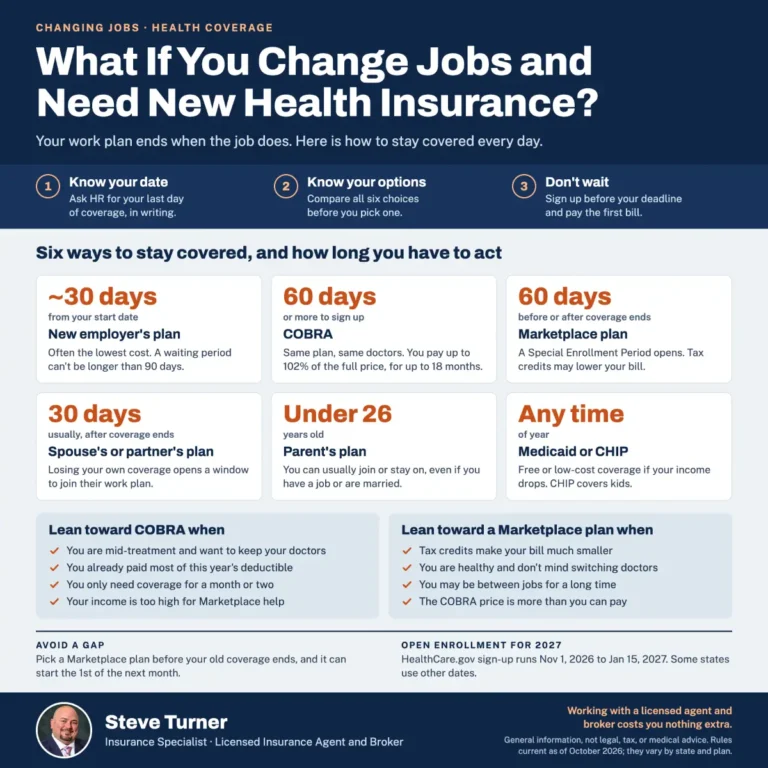
What If You Change Jobs and Need New Health Insurance?
By Steve Turner
• 2026-10-10
Changing jobs and need new health insurance? I explain COBRA, Marketplace plans, waiting periods, and the deadlines to hit so you never have a gap. -
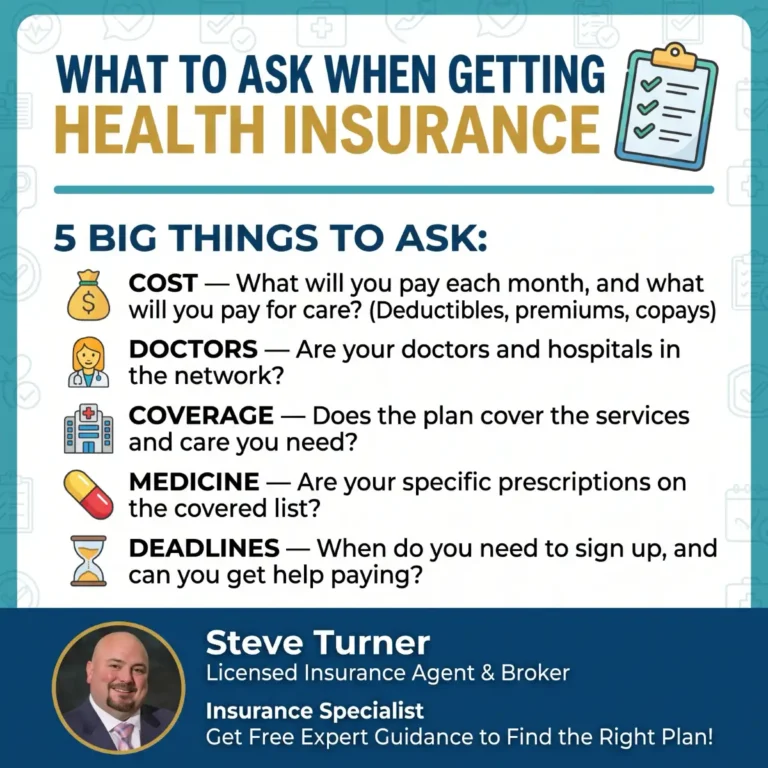
What to Ask When Getting Health Insurance
By Steve Turner
• 2026-10-08
30 questions to ask before buying health insurance, from deductibles to drug lists. Get free help from Tampa agent and broker Steve Turner. -

Save 10 Ways: Out-of-Pocket Maximum in Florida
By Steve Turner
• 2025-05-23
Stop overpaying! Learn 10 expert ways to reach your out-of-pocket maximum faster and lower your medical costs today with Steve Turner. Tap to Learn Now!
Medicare plan availability differs by state and county. Steve Turner is licensed in AL, CO, FL, GA, NC, SC, TN, and TX.
Steve Turner is a licensed insurance agent and is not connected with or endorsed by the United States Government or the Federal Medicare Program. The Medicare Annual Enrollment Period is October 15 to December 7.
MEDICARE DISCLAIMER
We do not offer every plan available in your area. Any information we provide is limited to those plans we do offer in your area. Please contact Medicare.gov or 1-800-MEDICARE to get information on all of your options.
Steve Turner

Steve Turner, CLU®, REBC® is licensed in AL, CO, FL, GA, NC, SC, TN, and TX · NPN 18030539 · Florida License W333468
Steve Turner is a licensed agent and broker and a long-standing member of the National Association of Benefits and Insurance Professionals NABIP®. Steve holds the Registered Employee Benefits Consultant® (REBC®) designation. Steve also holds the “Chartered Life Underwriter” designation (CLU®), a professional credential for individuals specializing in life insurance and estate planning, conferred by the American College of Financial Services. Since 2016 (over 10 years), Steve has helped individuals, families, Medicare beneficiaries, and small businesses find the right coverage to meet their needs. Steve has earned 180+ Google reviews from happy clients.
Steve Turner is a licensed agent appointed by Florida Blue in Florida.