

How to Afford Expensive Medications on a Limited Budget – Prescription Drugs Insurance

How to Afford Expensive Medications on a Limited Budget – Prescription Drugs Insurance – Customer Seeking Ways to Manage High Prescription Costs
I still remember the day I stood at the pharmacy counter and heard the price of my new prescription. My heart sank. The number was more than my grocery bill for the whole month. I almost walked away without my medicine.
Maybe you have felt that way too. If so, I want you to know something: you are not alone, and you have more options than you think.
Over the years, I have learned a lot about how to afford expensive medications on a limited budget. I made mistakes. I asked a lot of questions. I spent hours on the phone with my insurance company. And slowly, I found ways to cut my costs, sometimes by hundreds of dollars a month.
In this article, I will share everything I learned. I will explain how prescription drug insurance works in plain words. I will give you a list of money-saving tricks. I will tell you about help programs that many people never hear about. And I will answer the most common questions people ask me.
Let’s get started.
A quick note: I am not a doctor, pharmacist, or insurance expert. I’ve been where you are. Always talk to your doctor or pharmacist before you change how you take any medicine.
Step One: Understand Your Prescription Drug Insurance
When I first got a big drug bill, I did not really understand my insurance. I just paid whatever the pharmacy told me. That was my first big mistake. Once I learned a few key words, I started saving money right away.
Here are the terms I wish someone had explained to me sooner:
- Premium: The amount you pay every month to have insurance, even if you never fill a prescription.
- Deductible: The amount you must pay each year before your insurance starts to help.
- Copay: A set dollar amount you pay for each prescription, like $10 or $45.
- Coinsurance: A percentage of the drug’s price that you pay, like 25%. This can get very expensive for pricey drugs.
- Out-of-pocket maximum: The most you will have to pay in a year. After you reach it, your plan pays the rest.
- Formulary: Your plan’s list of covered drugs. If your medicine is not on this list, you may pay full price.
What Are Drug Tiers?
Most insurance plans sort drugs into “tiers.” Think of tiers like steps on a ladder. The higher the step, the more you pay.
- Tier 1: Cheap generic drugs. These usually cost the least.
- Tier 2: Higher-cost generics and some low-cost brand-name drugs.
- Tier 3: “Preferred” brand-name drugs.
- Tier 4: “Non-preferred” brand-name drugs. These cost more.
- Tier 5: Specialty drugs. These are often the most expensive, and you may pay coinsurance instead of a flat copay.
When I found out my medicine was on Tier 4, I asked my doctor if a similar drug on Tier 2 or 3 would work for me. It did. That one question saved me over $60 a month.
My Tip: Read Your Plan’s Drug List Every Year
Plans change their formularies every year. A drug that was cheap this year could cost more next year. I now check my plan’s drug list every fall so I am never surprised in January.
9 Ways I Save Money on Expensive Medications
These are the tricks that helped me the most. Some take just a few minutes. Others take a little more effort. All of them are worth trying.
1. Ask for a Generic Drug
Generic drugs have the same active ingredient as brand-name drugs. They work the same way in your body. But they often cost much less, sometimes 80% less or more. Whenever I get a new prescription, the first thing I ask is, “Is there a generic version?”
2. Ask About a Cheaper Drug That Works the Same Way
Sometimes there is no generic. But there may be a different medicine in the same “family” that treats the same problem for less money. Your doctor can tell you if a switch is safe for you.
3. Shop Around at Different Pharmacies
This one surprised me. The same drug can cost very different amounts at different pharmacies, even on the same street. Big-box stores, grocery store pharmacies, and small local shops all set their own cash prices. I call two or three places before I fill a new prescription.
4. Use a Free Drug Discount Card or App
Free discount programs like GoodRx, SingleCare, and others show you coupon prices at nearby pharmacies. Sometimes the coupon price is lower than my insurance copay! You can’t use a coupon and your insurance on the same fill, so compare both and pick the lower price.
Important: If you pay with a coupon instead of insurance, that money usually does not count toward your deductible or out-of-pocket maximum. Keep that in mind if you expect to hit your yearly limit.
5. Try Low-Cost Online Pharmacies
Some online pharmacies sell common generic drugs at very low, clear prices. Mark Cuban Cost Plus Drug Company is one well-known example. Always make sure an online pharmacy is licensed in the U.S. and requires a prescription. If a site sells prescription drugs without one, stay away.
6. Get a 90-Day Supply
If you take a medicine every day for a long-term condition, a 90-day supply often costs less than three 30-day fills. Many plans offer this through mail-order pharmacies too. It also means fewer trips to the pharmacy.
7. Ask About Pill Splitting (Only With Your Doctor’s OK)
Some pills cost about the same whether they are a low dose or a high dose. In some cases, a doctor may prescribe a double-strength pill that you cut in half. Never do this on your own. Some pills, like time-release or coated pills, must never be cut. Ask your doctor and pharmacist first.
8. Ask for Free Samples
Doctors’ offices sometimes get free samples of brand-name drugs. Samples won’t solve a long-term problem, but they helped me get through a tight month while I waited for a help program to approve me.
9. Use a Health Savings or Flexible Spending Account
If you have an HSA or FSA through work, you can pay for prescriptions with tax-free money. That’s like getting a small discount on every fill.
Help Programs Most People Don’t Know About
When my budget was at its tightest, these programs made the biggest difference. Many people never apply because they think they won’t qualify. Please don’t make that mistake. Apply anyway.
Drug Company Patient Assistance Programs
Many drug companies run programs that give medicine for free or at a very low cost to people who can’t afford it. You usually need to show your income, and your doctor may need to fill out part of the form. To find one, search the drug’s name plus “patient assistance program,” or look on the drug maker’s website. You can also search free tools like NeedyMeds or Medicine Assistance Tool (MAT).
Copay Cards and Savings Coupons
If you have private insurance (like from your job), many brand-name drugs offer copay cards. These can lower your copay to a small amount, sometimes even $0. One catch: copay cards usually can’t be used with Medicare or Medicaid.
Nonprofit Foundations
Some charities help people pay for drugs for certain illnesses, like cancer, diabetes, or multiple sclerosis. Groups such as the PAN Foundation, HealthWell Foundation, and Patient Advocate Foundation may help cover copays. Funds open and close during the year, so check back often.
Medicaid
If your income is low, you may qualify for Medicaid. It often covers prescriptions for just a few dollars each. Rules differ by state, so check your state’s Medicaid website.
Medicare Extra Help
If you have Medicare and limited income, a program called Extra Help can significantly lower your drug costs. It can help pay your premiums, deductibles, and copays. You can apply through Social Security.
State Pharmacy Assistance Programs
Some states have their own programs to help older adults or people with disabilities pay for medicine. Ask your local State Health Insurance Assistance Program (SHIP) what’s available in your area. SHIP counselors give free, unbiased help.
Community Health Centers
Community health centers often charge based on your income. Many can also get drugs at lower prices through a federal program called 340B. If you don’t have insurance, this can be a lifesaver.
If You Have Medicare: Big Changes That Can Save You Money
Medicare drug coverage (called Part D) has changed a lot in the last two years. Many of these changes are good news for people with expensive drugs. Here is what every Medicare user should know.
There Is Now a Yearly Cap on Drug Costs
For years, Part D had no limit on what you could pay. Now it does. In 2026, the most you will pay out of pocket for covered Part D drugs is $2,100 for the year. Once you reach that amount, you pay $0 for covered drugs for the rest of the year (HealthPartners).
For 2027, the cap goes up to $2,400, and the highest deductible a plan can charge rises to $700 (United Medicare Advisors).
You Can Spread Costs Out Over the Year
The Medicare Prescription Payment Plan lets you pay your drug costs in monthly bills instead of all at once at the pharmacy. There’s no interest. This can really help if you take a costly drug and would hit the cap early in the year. People enrolled in 2025 were renewed for 2026 automatically unless they opted out (WTOP).
Insulin Is Capped at $35 a Month.
If you use insulin, your Medicare cost for a month’s supply is capped at $35 (Healthline).
Lower Prices on Some Common Drugs
Medicare can now bargain with drug companies. The first 10 drugs with lower negotiated prices took effect on January 1, 2026. Discounts range from 38% to 79% off the 2023 list prices (Center for Medicare Advocacy). In 2027, negotiated prices start for 15 more drugs, including Ozempic and Wegovy (SeniorSimple).
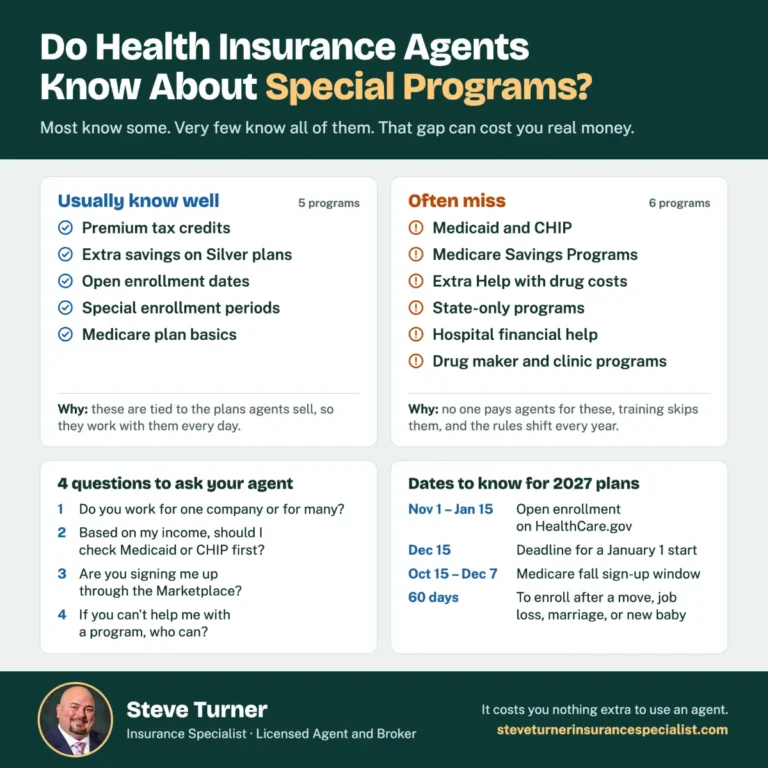
Don’t Miss Open Enrollment: October 15 to December 7
This is the most important date on my calendar each year. During Medicare Open Enrollment, you can switch to a different drug plan for next year. It runs from October 15 through December 7, 2026, and changes start January 1, 2027.
Here’s my simple checklist:
- Read the Annual Notice of Change letter from your plan.
- Enter all your drugs into the Plan Finder tool at Medicare.gov.
- Compare total yearly cost, not just the monthly premium.
- Make sure your favorite pharmacy is “preferred” in the new plan.
- Call your local SHIP office for free help if you feel stuck.
Talk to Your Doctor and Pharmacist (They Want to Help)
For a long time, I felt embarrassed to talk about money with my doctor. I thought it wasn’t their job. I was wrong. Most doctors and pharmacists would much rather help you find a cheaper option than have you skip your medicine.
Here are the questions I now ask at every appointment:
- “Is there a generic or lower-cost version of this drug?”
- “Is this drug on my insurance plan’s formulary? What tier is it?”
- “Do you have any free samples I could try first?”
- “Is there a patient assistance program for this medicine?”
- “Can I get a 90-day supply instead of 30 days?”
- “Do I still need all of the medicines I’m taking?”
That last question is a big one. Once a year, I bring all my pill bottles to my doctor or pharmacist for a “brown bag” review. One year, we found a medicine I no longer needed. That saved me money and one less pill to take.
What to Do If Your Insurance Says “No”
It’s frustrating when your plan refuses to cover a drug. But a “no” is not always the final answer. Here are your options:
- Prior authorization: Some drugs need approval before your plan will pay. Your doctor sends paperwork explaining why you need it. Ask your doctor’s office to start this right away.
- Step therapy exception: Some plans make you try a cheaper drug first. If you’ve already tried it, or it isn’t safe for you, your doctor can ask the plan to skip that step.
- Formulary exception: If your drug isn’t on the plan’s list, your doctor can ask the plan to cover it anyway. You can also ask for a lower tier price.
- Appeal: If your request is denied, you have the right to appeal. Read the denial letter closely. It will tell you the deadline and how to ask for a review.
I had an appeal approved once after my doctor wrote a short letter explaining my medical history. It took a few weeks, but it was worth it.
6 Costly Mistakes I Learned to Avoid
I learned some of these lessons the hard way. I hope you don’t have to.
- Skipping doses or cutting pills to make them last. I did this once, and I ended up sicker and with a bigger doctor bill. If you can’t afford your medicine, tell your doctor right away instead.
- Buying drugs from shady websites. Fake medicines are real, and they can be dangerous. Only use licensed pharmacies.
- Picking a plan just because the premium is low. A cheap monthly premium can hide high drug costs. Always look at what you’ll pay for your actual medicines over the whole year.
- Ignoring letters from your insurance plan. These letters often warn you about price changes or drugs being dropped. Read them.
- Thinking you earn too much for help. Some programs have higher income limits than you might expect. It costs nothing to apply.
- Not asking the pharmacist for the cash price. Sometimes the cash price is lower than your copay. Just ask, “What would this cost without insurance?”
Frequently Asked Questions
People ask me these questions all the time. Here are my honest answers.
Q: Are generic drugs really as good as brand-name drugs?
A: Yes. In the U.S., the FDA requires generic drugs to have the same active ingredient, strength, and way of working as the brand-name drug. The color, shape, or filler may look different, but the medicine works the same.
Q: Can I use a discount card if I have insurance?
A: Yes, but not on the same fill. You choose one or the other. Compare both prices and pick the lower one. Just remember that coupon payments often don’t count toward your deductible.
Q: What if I don’t have any insurance at all?
A: You still have options. Try discount cards, low-cost online pharmacies, drug company assistance programs, and community health centers. You can also check if you qualify for Medicaid or a plan on HealthCare.gov.
Q: How do I know if I qualify for Medicare Extra Help?
A: It depends on your income and savings. The easiest way to find out is to apply through Social Security or call your local SHIP office for free help.
Q: Is it safe to buy medicine from another country?
A: I’m careful with this one. It’s generally not legal for people to bring in most prescription drugs from other countries, and the FDA can’t check that those drugs are safe. I stick with licensed U.S. pharmacies.
Q: What’s the fastest way to lower my drug costs today?
A: Call two or three pharmacies and ask for their price. Then check a free discount app. Then ask your doctor about a generic. Those three steps take less than an hour and can save a lot.
Q: Should I switch my Medicare drug plan this year?
A: Maybe. Plans and prices change every year, and the cap rises to $2,400 in 2027. Use the Medicare Plan Finder during Open Enrollment to compare. Even if you’re happy with your plan, it only takes a few minutes to check.
Final Thoughts: You Can Afford Your Medicine
When I first faced a huge drug bill, I felt stuck and scared. Today, I pay far less for the same medicines. Nothing magic happened. I just learned how prescription drug insurance works, asked lots of questions, and used the help that was out there.
Here’s a quick recap of what I want you to remember:
- Learn your plan’s formulary, tiers, deductible, and out-of-pocket maximum.
- Always ask about generics and lower-cost options.
- Compare pharmacy prices and check free discount apps.
- Apply for patient assistance programs, nonprofit help, Medicaid, or Medicare Extra Help.
- If you have Medicare, review your plan during Open Enrollment, October 15 to December 7.
- Talk openly with your doctor and pharmacist about cost.
- Never skip doses to save money. Ask for help instead.
You deserve to take the medicine you need without giving up food, rent, or peace of mind. Start with just one tip from this list today. Then try another next week. Little by little, those savings add up.
You’ve got this.
Why choose Steve Turner Insurance Specialist?
Because I’m an “Insurance Specialist.” An “insurance specialist” is a broad term that includes insurance agents and insurance brokers, but the key difference is who the agent represents versus who the broker represents.
An “insurance agent” works directly for an insurance company and sells its specific policies to clients.
An “insurance broker” acts as an independent intermediary, comparing policies from multiple companies to find the best fit for their client’s needs, essentially representing the client rather than the insurance company.
I am both a licensed Insurance Agent and a licensed Insurance Broker.
My number one goal in life is to help people and ensure, without a shadow of a doubt, that you and your family are secure and protected. I will always be by your side, helping you mitigate risk by providing the industry’s best and most affordable insurance solutions.
I will find insurance plans for the entire family to help cover whatever life throws at you. I can help you save on severe medical emergencies, find a health insurance plan with low- or no-cost doctor visits and affordable prescription medications, and protect your family in the event of an unexpected accident or illness.
Best of all, it doesn’t cost you anything extra to use an experienced Insurance Agent and Broker like me to help you find the Insurance Plans that fit your individual, family, or business needs.
The companies that sell the insurance plans “you choose“ pay me – you don’t pay me. Calling any big insurance company directly won’t get you a lower price, as they will forward your call to the next available insurance agent on their list. You won’t have had any opportunity to learn about the insurance agent you’re speaking with in advance, understand their qualifications or experience level, or make an informed choice about who you want to work with.
Tap the Contact Me text or icon and get in touch by phone or email, or schedule a “No Obligation” chat through my calendar. I look forward to speaking with you!
OUR CLIENT REVIEWS


CONTACT STEVE TURNER INSURANCE AGENT & BROKER
I’m here to take your calls and emails and answer your questions 7 Days a week from 7:00 a.m. to 8:00 p.m., excluding posted holidays.
Steve Turner is a licensed agent and broker and a longstanding member of the National Association of Benefits and Insurance Professionals®. Steve holds the prestigious Registered Employee Benefits Consultant® designation. NABIP® is the preeminent organization for health insurance and employee benefits professionals and works diligently to ensure all Americans have access to high-quality, affordable Healthcare and related services.
Steve Turner is a licensed agent appointed by Florida Blue.
EMAIL ME: 24×7
OFFICE LOCATION
Website: steveturnerinsurancespecialist.com
Email: [email protected]
Phone and Text: +1-813-388-8373
Business Hours:
Monday: 7 a.m. to 8 p.m.
Tuesday: 7 a.m. to 8 p.m.
Wednesday: 7 a.m. to 8 p.m.
Thursday: 7 a.m. to 8 p.m.
Friday: 7 a.m. to 8 p.m.
Saturday: 7 a.m. to 8 p.m.
Sunday: 7 a.m. to 8 p.m.
SOCIAL FOLLOW + SHARE
Insurance Agent
MEDICARE STATEMENT
The Medicare Annual Enrollment Period is October 15th to December 7th. Steve Turner is not connected with or endorsed by the United States Government or the Federal Medicare Program. Some plans may not be available in your area, and any information I provide is limited to those offered. Please contact Medicare.gov or 1-800-MEDICARE for information on all your options.
There’s no one-size-fits-all answer. Carefully evaluate your health status, anticipated medical needs, prescription drug usage, budget, preferred doctors and hospitals, and tolerance for network rules. During the Medicare Annual Enrollment Period (October 15th to December 7th), research the specific plans available in your Florida county using the Medicare Plan Finder on Medicare.gov, compare costs and benefits, and consider free, personalized counseling from Florida’s SHINE (Serving Health Insurance Needs of Elders) program.