

What to Ask When Choosing a Medicare Advantage Insurance Plan

What to Ask When Choosing a Medicare Advantage Insurance Plan. Preparing Questions for Medicare Advantage Coverage
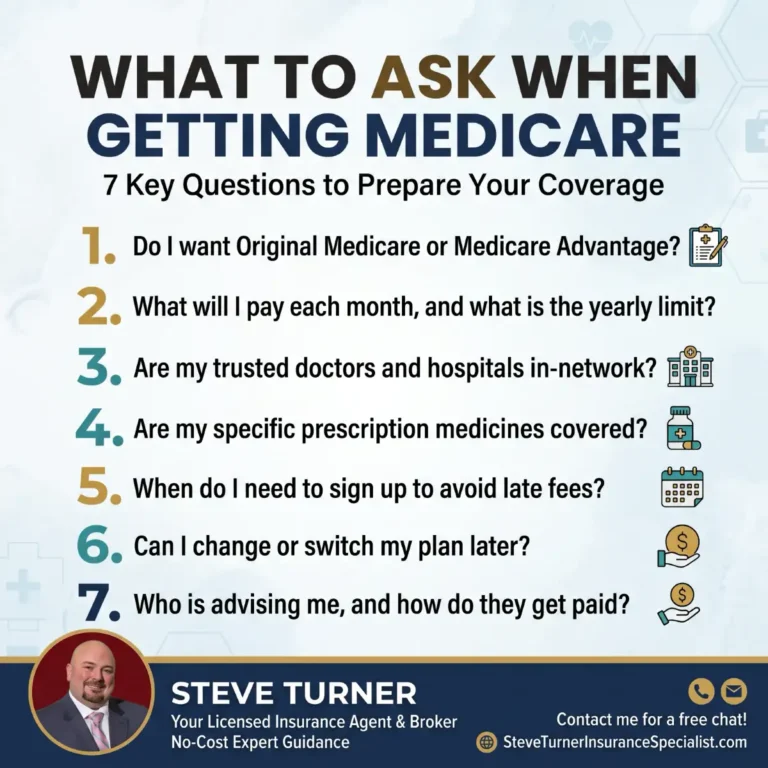
Picking a health plan can feel like reading a menu in another language. I know the feeling. Dozens of plans claim to be the best. So I use a simple trick. I stop looking at ads and start asking questions.
In this guide, I share what to ask when choosing a Medicare Advantage insurance plan. I wrote down 15 questions. Each one is short. Each one helps me see what a plan will really cost and how it will really work.
You do not need to be an expert to use this list. You only need a pen, a list of your doctors, and a list of your medicines. Ask each question. Write down each answer. By the end, the right plan is much easier to spot.
One note before we start. I am sharing general information, not personal advice. Plans change every year, and they differ from one county to the next. Always check a plan’s details before you sign up.
What to ask a Medicare Advantage plan: 15 questions at a glance
Short on time? Here is the whole list. I explain each question later in this guide.
- Are my doctors and hospitals in the plan’s network?
- Is it an HMO or a PPO?
- Do I need a referral to see a specialist?
- What is the monthly premium?
- What will I pay each time I get care?
- What is the most I could pay in one year?
- What does a hospital stay cost?
- Are my medicines on the plan’s drug list?
- Which pharmacies can I use?
- What dental, vision, and hearing care do I get?
- Which other extras will I really use?
- Does the plan have to approve my care first?
- What is the plan’s star rating?
- Am I covered when I travel?
- Can I change my mind later?
First, what is a Medicare Advantage plan?
Before I ask about a plan, I make sure I know the basics. Here they are in question-and-answer form.
Q: What is Medicare Advantage?
A: It is another way to get my Medicare. It is also called Part C. A private insurance company runs the plan, and Medicare sets the rules.
Q: What does it cover?
A: A plan must cover what Original Medicare covers. That means hospital care (Part A) and doctor care (Part B). Most plans also include drug coverage (Part D). Many add extras, like some dental, vision, and hearing care.
Q: Who can join?
A: I need both Part A and Part B. I must also live in the area the plan serves.
Q: How is it different from Original Medicare?
A: With Original Medicare, I can see any doctor in the U.S. who takes Medicare. With most Medicare Advantage plans, I use a set group of doctors called a network. In return, the plan limits what I pay each year for covered care. Original Medicare has no yearly limit.
Now, on to the questions.
Questions about my doctors and hospitals
I start here because a plan only helps me if I can see the people I trust.
1. Are my doctors and hospitals in the plan’s network?
A network is the group of doctors, hospitals, and clinics that work with the plan. If my doctor is in the network, I pay less. If my doctor is not, I may pay more. In some plans, I may pay the whole bill.
Here is what I do:
- I write down every doctor I see, plus the hospital I like best.
- I look each one up in the plan’s list of doctors. It is called a provider directory.
- I call each doctor’s office and ask, “Will you take this plan next year?”
That last step matters. Lists online can be out of date. A two-minute call can save me from a big surprise.
2. Is it an HMO or a PPO?
These are the two most common plan types. The letters sound scary, but the idea is simple. An HMO often costs less and gives me less choice. A PPO gives me more choice, and it often costs more.
| What I compare | HMO | PPO |
|---|---|---|
| Doctors I can see | Mostly the ones in the network | In or out of the network |
| Care outside the network | Often not covered, except in an emergency | Covered, but I usually pay more |
| Do I pick a main doctor? | In most plans, yes | No |
| Do I need a referral? | In most cases, yes | No |
| Emergency and urgent care | Covered | Covered |
Plans differ, so I treat this table as a starting point. Then I ask the plan to confirm each row.
3. Do I need a referral to see a specialist?
A referral is a note from my main doctor. It says I may see a specialist. Some plans ask for one. Some do not.
I ask two things. First, do I have to pick a main doctor? Second, do I need a referral for the specialists I see now, like a heart doctor or a skin doctor? If I see many specialists, a plan with no referrals can save me a lot of time.
Questions about what the plan will cost me
A low price on the cover does not always mean a low cost for the year. So I look at four numbers, not one.
4. What is the monthly premium?
The premium is what I pay the plan each month. Many plans have a $0 premium. That sounds great, and it can be. But there is a catch that people miss.
I still have to pay my Medicare Part B premium each month. The standard amount is $202.90 a month in 2026. The amount for the next year comes out each fall. Some plans help pay part of it, so I ask about that too.
A $0 plan is not a free plan. I still pay when I use care. That leads to my next question.
5. What will I pay each time I get care?
Here are three words I look for:
- Deductible: What I pay first, before the plan starts to pay.
- Copay: A set dollar amount I pay for a visit, like $20.
- Coinsurance: My share of the bill, like 20%.
I ask for the cost of the care I use most. My list looks like this:
- A visit with my main doctor
- A visit with a specialist
- Urgent care and the emergency room
- Lab tests and X-rays
- An ambulance ride
- Physical therapy
Copays are easy to plan for. Coinsurance is harder, because 20% of a big bill is still a big number.
6. What is the most I could pay in one year?
This may be the most important question on my list. Every Medicare Advantage plan has a yearly limit on what I pay for covered medical care. It is called the out-of-pocket maximum. Once I reach it, the plan pays the full cost of my covered care for the rest of the year.
Medicare sets a ceiling on this limit. For 2027, a plan’s limit can be no higher than $9,850 for in-network care. For a PPO, it can be no higher than $14,800 for in-network and out-of-network care combined. Many plans pick a lower limit. In 2026, the average limit for in-network care was $5,421.
I also ask what does not count toward the limit. In most cases, these do not count:
- My monthly premiums
- My costs for Part D drugs, which have their own cap
- Extras like dental, vision, and hearing
I think of this number as my worst-case year. If I got very sick, could I pay that amount? If not, I look for a plan with a lower limit.
7. What does a hospital stay cost?
Hospital costs add up fast. Many plans charge a copay for each day, for a set number of days. A plan might charge a few hundred dollars a day for the first five days.
I ask three things:
- What do I pay per day in the hospital, and for how many days?
- What do I pay for a stay in a skilled nursing home?
- What do I pay for surgery when I go home the same day?
Then I do the math for a five-day stay. That one number tells me a lot about a plan.
Questions about my medicines
Drug costs can turn a cheap plan into a costly one. I never skip this part.
8. Are my medicines on the plan’s drug list?
Each plan has a list of covered drugs. It is called a formulary. Drugs on the list sit in levels called tiers. A low tier costs me less. A high tier costs me more.
Here is my checklist:
- I write down each medicine I take, with the dose.
- I check that each one is on the drug list.
- I note which tier each one is in.
- I ask if any drug has special rules. Some need approval first. Some make me try a cheaper drug first. Some limit how much I can get at once.
There is good news here too. Medicare drug coverage has a yearly cap on what I pay for covered drugs. For 2027, the cap is $2,400. After I reach it, I pay $0 for covered drugs for the rest of the year. A plan’s drug deductible can be as high as $700 in 2027, so I ask about that as well.
9. Which pharmacies can I use?
Plans have pharmacy networks, too. Some pharmacies are “preferred.” That means my drugs may cost less there.
So I ask:
- Is my pharmacy in the network?
- Is it a preferred pharmacy?
- Can I get my drugs by mail, and does that save money?
If my local pharmacy is not preferred, I may pay more for each refill all year long.
Questions about the extras
Extras are the benefits that Original Medicare does not cover. They get the most space in ads. That is why I ask my most careful questions here.
10. What dental, vision, and hearing care do I get?
Many plans say they include dental, vision, and hearing. But “dental included” doesn’t tell me much. The details matter.
For dental, I ask:
- Does it cover only cleanings and X-rays, or also fillings, crowns, and dentures?
- What is the most the plan will pay in one year?
- Is my dentist in the network?
For vision, I ask how much the plan pays toward glasses or contacts, and how often.
For hearing, I ask what I would pay for hearing aids, and which brands I can pick.
A plan often pays up to a set dollar amount each year. After that, I pay the rest. So I always ask for the dollar limit.
11. Which other extras will I really use?
Many plans offer more perks. Some common ones are:
- A gym membership
- Money for drugstore items, like vitamins and bandages
- Rides to the doctor
- Meals after a hospital stay
- Visits with a doctor by phone or video
These are nice to have. But I am honest with myself. Will I use them? A free gym pass has no value if I never go. Extras can also change from year to year.
My rule is simple. I pick a plan for my doctors, my drugs, and my costs. I let the extras break a tie.
Questions about the rules and the quality
Two plans can look the same on paper and feel very different in real life. These questions help me see the difference.
12. Does the plan have to approve my care first?
A plan may ask for approval before it will pay for some care. This is called prior authorization. I see it most with things like scans, surgery, and some drugs.
I ask:
- Which services need approval first?
- How long does approval take?
- What can I do if the plan says no?
If a plan says no, I can appeal. That means I ask the plan to look again. I ask how the appeal works before I ever need it.
13. What is the plan’s star rating?
Medicare grades plans each year. The grade goes from 1 star to 5 stars. Five is the best. The stars show how well a plan cares for and serves its members.
I find the star rating on Medicare.gov when I compare plans. If two plans are close, I lean toward the one with more stars.
Here is a handy tip. If a 5-star plan is offered where I live, Medicare lets me switch to it one time between December 8 and November 30 of the next year.
14. Am I covered when I travel?
Most plans serve a set area, like a county or a group of counties. So I ask what happens when I leave home.
- Emergencies: Plans cover emergency care and urgent care, even when I am away from home in the U.S.
- Routine care: A check-up away from home may not be covered. It depends on the plan.
- Other countries: Plans generally do not cover care outside the U.S. Some offer emergency care abroad as an extra.
If I spend winters in another state, I ask about this carefully. Some plans have a travel benefit. Many do not.
A question about the future
15. Can I change my mind later?
Yes, but only at certain times. I keep these dates on my calendar:
| When | What I can do |
|---|---|
| October 15 to December 7 | Join, switch, or drop a plan. New coverage starts January 1. |
| January 1 to March 31 | If I am already in a Medicare Advantage plan, I can switch to another one or go back to Original Medicare. |
| Special times | I may be able to switch after a life change, like moving to a new area. |
One more thing I want to ask about. Many people do not hear about it until it is too late. It is about Medigap.
Medigap is extra insurance that helps pay my costs in Original Medicare. I cannot use Medigap to pay my costs in a Medicare Advantage plan.
Say I leave my Medicare Advantage plan years from now. I may want to buy a Medigap policy then. But the company may be allowed to look at my health first. It may charge me more, or it may turn me down. The rules differ by state.
There is a safety net. If I join a Medicare Advantage plan for the first time and drop it within 12 months, I get special rights to buy a Medigap policy.
So I ask myself this: Am I picking a plan for one year, or for many years?
Red flags I watch for
Some things make me slow down. Here are my warning signs:
- Pressure to sign today. A good plan will still be good tomorrow. Agents are not allowed to rush me.
- “It’s free.” A $0 premium is not the same as $0 costs.
- Vague answers. If no one can tell me the dental dollar limit, I assume it is low.
- A missing doctor. If my main doctor is not in the network, I think hard before I join.
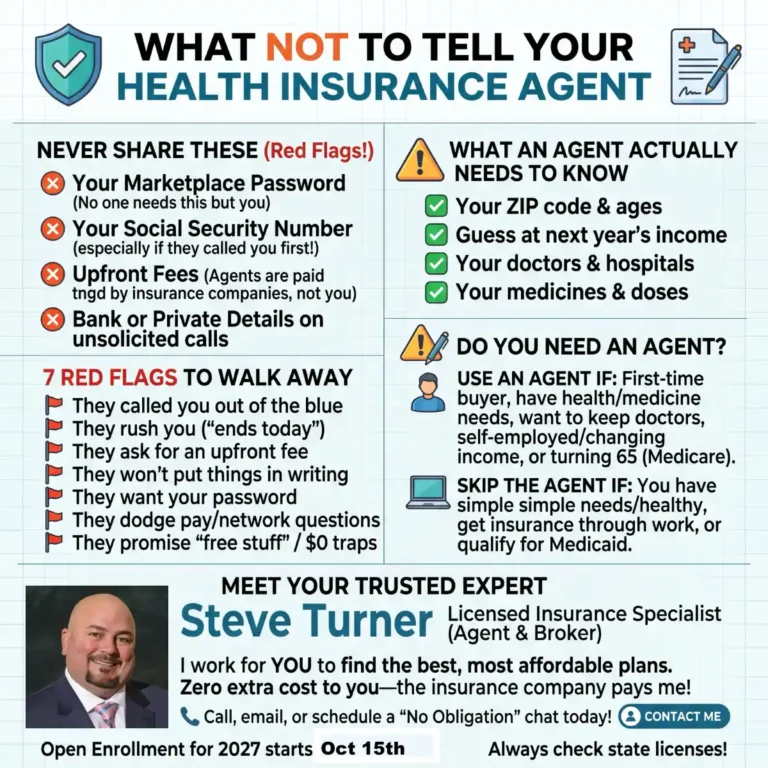
- Calls I did not ask for. A plan may not call me unless I am a member or I said it was okay. It may not come to my home without an invite.
- No written details. I ask for the plan’s Summary of Benefits. I read it before I say yes.
How I compare plans, step by step
When I am ready, I follow these seven steps:
- Make two lists. One is for my doctors. One is for my medicines.
- Go to Medicare.gov. I use the plan comparison tool. I type in my ZIP code and my drugs.
- Pick my top three plans. I look at the cost for the whole year, not only the premium.
- Ask the 15 questions. I write each answer in a side-by-side chart.
- Call my doctors. I make sure they will take the plan next year.
- Get free help. My State Health Insurance Assistance Program, called SHIP, gives free one-on-one help. It is not tied to any insurance company. I can also call 1-800-MEDICARE (1-800-633-4227).
- Sign up on time. For coverage that starts January 1, the plan must get my request by December 7.
Frequently asked questions
Q: What is the most important question to ask about a Medicare Advantage plan?
A: I start with, “Are my doctors in the network?” Then I ask, “What is the most I could pay in one year?” Those two answers tell me most of what I need to know.
Q: Is a $0 premium Medicare Advantage plan really free?
A: No. I still pay my Part B premium. I also pay copays or coinsurance when I get care.
Q: Do Medicare Advantage plans cover prescription drugs?
A: Most do. If a plan includes drug coverage, I check that my medicines are on its drug list.
Q: Can I have Medigap and Medicare Advantage at the same time?
A: No. I cannot use a Medigap policy to pay my costs in a Medicare Advantage plan.
Q: When can I sign up for a Medicare Advantage plan?
A: Most people join when they first get Medicare or during Open Enrollment. Open Enrollment runs from October 15 to December 7 each year.
Q: Who can help me compare plans for free?
A: SHIP counselors help for free, and they do not work for any plan. I can also call 1-800-MEDICARE. A licensed agent can help too. I ask which plans the agent sells, since it may not be all of them.
Q: What if I pick the wrong plan?
A: I am not stuck for good. From January 1 to March 31, I can switch to another Medicare Advantage plan or go back to Original Medicare.
The bottom line
Choosing a plan gets easier once I know what to ask. I do not need to read every page of every plan. I need clear answers to 15 questions about my doctors, my costs, my medicines, my extras, and the plan’s rules.
So print this list. Take it with you when you compare plans. Ask each question, and do not stop until you get a clear answer. A good Medicare Advantage insurance plan will have clear answers. And if a plan cannot give you one, that tells you something too.
Why choose Steve Turner Insurance Specialist?
Because I’m an “Insurance Specialist.” An “insurance specialist” is a broad term that includes insurance agents and insurance brokers, but the key difference is who the agent represents versus who the broker represents.
An “insurance agent” works directly for an insurance company and sells its specific policies to clients.
An “insurance broker” acts as an independent intermediary, comparing policies from multiple companies to find the best fit for their client’s needs, essentially representing the client rather than the insurance company.
I am both a licensed Insurance Agent and a licensed Insurance Broker.
My number one goal in life is to help people and ensure, without a shadow of a doubt, that you and your family are secure and protected. I will always be by your side, helping you mitigate risk by providing the industry’s best and most affordable insurance solutions.
I will find insurance plans for the entire family to help cover whatever life throws at you. I can help you save on severe medical emergencies, find a health insurance plan with low- or no-cost doctor visits and affordable prescription medications, and protect your family in the event of an unexpected accident or illness.
Best of all, it doesn’t cost you anything extra to use an experienced Insurance Agent and Broker like me to help you find the Insurance Plans that fit your individual, family, or business needs.
The companies that sell the insurance plans “you choose“ pay me – you don’t pay me. Calling any big insurance company directly won’t get you a lower price, as they will forward your call to the next available insurance agent on their list. You won’t have had any opportunity to learn about the insurance agent you’re speaking with in advance, understand their qualifications or experience level, or make an informed choice about who you want to work with.
Tap the Contact Me text or icon and get in touch by phone or email, or schedule a “No Obligation” chat through my calendar. I look forward to speaking with you!
OUR CLIENT REVIEWS


CONTACT STEVE TURNER INSURANCE AGENT & BROKER
I’m here to take your calls and emails and answer your questions 7 Days a week from 7:00 a.m. to 8:00 p.m., excluding posted holidays.
Steve Turner is a licensed agent and broker and a longstanding member of the National Association of Benefits and Insurance Professionals®. Steve holds the prestigious Registered Employee Benefits Consultant® designation. NABIP® is the preeminent organization for health insurance and employee benefits professionals and works diligently to ensure all Americans have access to high-quality, affordable Healthcare and related services.
Steve Turner is a licensed agent appointed by Florida Blue.
EMAIL ME: 24×7
OFFICE LOCATION
Website: steveturnerinsurancespecialist.com
Email: [email protected]
Phone and Text: +1-813-388-8373
Business Hours:
Monday: 7 a.m. to 8 p.m.
Tuesday: 7 a.m. to 8 p.m.
Wednesday: 7 a.m. to 8 p.m.
Thursday: 7 a.m. to 8 p.m.
Friday: 7 a.m. to 8 p.m.
Saturday: 7 a.m. to 8 p.m.
Sunday: 7 a.m. to 8 p.m.
SOCIAL FOLLOW + SHARE
Insurance Agent
MEDICARE STATEMENT
The Medicare Annual Enrollment Period is October 15th to December 7th. Steve Turner is not connected with or endorsed by the United States Government or the Federal Medicare Program. Some plans may not be available in your area, and any information I provide is limited to those offered. Please contact Medicare.gov or 1-800-MEDICARE for information on all your options.
There’s no one-size-fits-all answer. Carefully evaluate your health status, anticipated medical needs, prescription drug usage, budget, preferred doctors and hospitals, and tolerance for network rules. During the Medicare Annual Enrollment Period (October 15th to December 7th), research the specific plans available in your Florida county using the Medicare Plan Finder on Medicare.gov, compare costs and benefits, and consider free, personalized counseling from Florida’s SHINE (Serving Health Insurance Needs of Elders) program.